The Ghostface Industrial Complex
On Trowma, Legacy and Scream 4
This is part of a series of essays about my favourite horror sequels. Read the introduction here, and the full archive here. Subscribe for free to have it delivered to your inbox every other day in October. If you're enjoying it, you can show your appreciation by buying me a coffee or sharing it with friends.
Spoilers: I try my best not to spoil the films I discuss, but if spoilers ruin your watching experience, it might be safer to watch the films before reading.
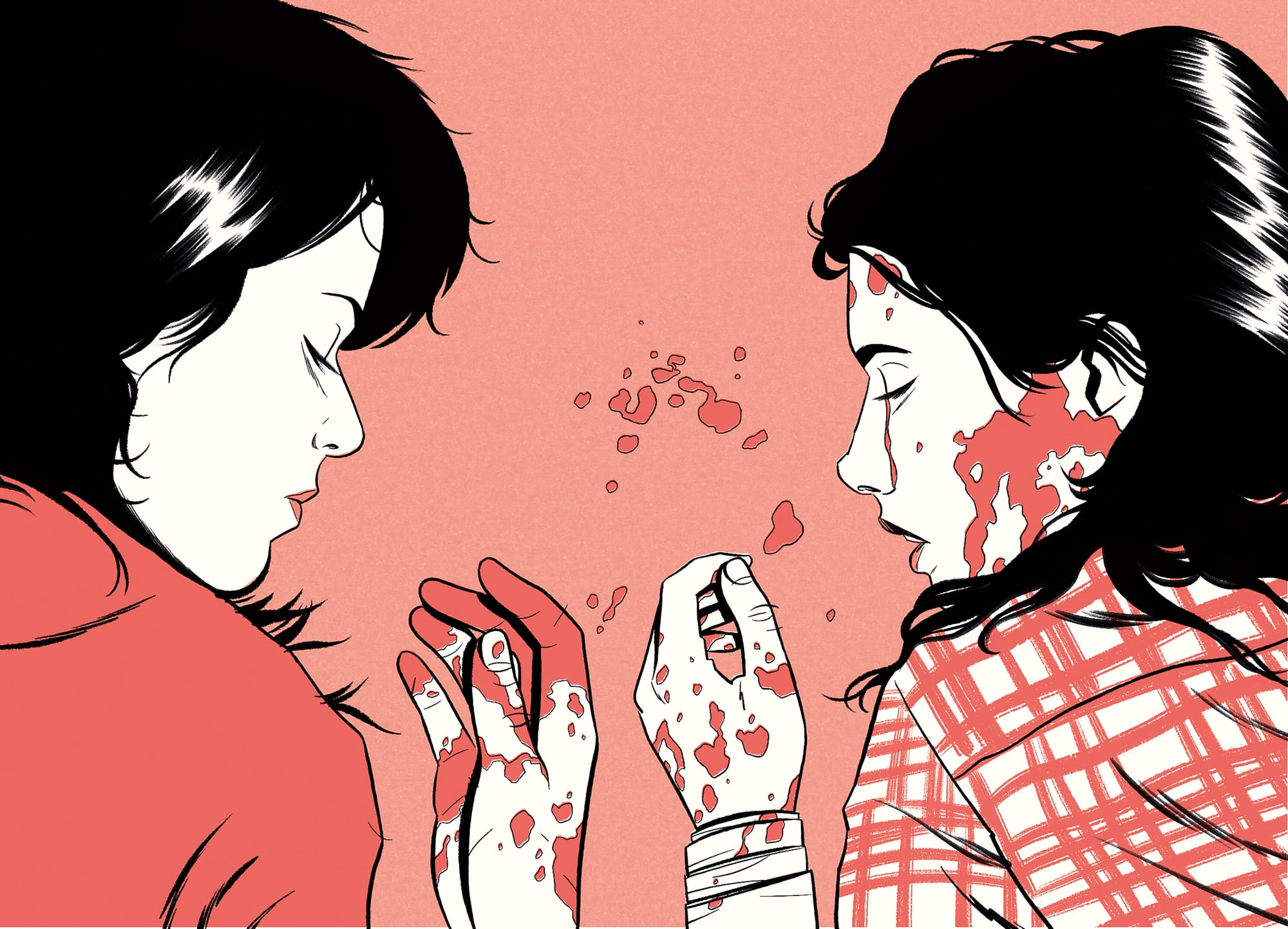
Scream 4 (2011) Dir. Wes Craven
Plot Summary: Sidney Prescott returns to Woodsboro in the final stop on a tour promoting her new book about survival. Her return coincides with a fresh slew of Ghostface killings that appear to be mimicking the original attacks.
"[The teen horror films of the 1990s] sought to portray young men and women not as victims of a malevolent force but as survivors. Those who survive these films (and there are a great deal more survivors within this horror cycle than in many others) are tasked with the weight of what that survival means. The extension of these character's narratives forces them to explore trauma, guilt and responsibility." - Alexandra West (The 1990s Teen Horror Cycle)
"One generation's tragedy is the next one's joke." - Dewey Riley
There was an unanticipated side-effect of prioritising and respecting the stories of the 1990s Teen Horror survivors. Rather than suffer the insult of callous, ignoble deaths in franchise sequels, they instead had to reckon with the same, punishing horrors being visited upon them time and again. We all want to see Sidney Prescott survive. But doing so only gives her a temporary respite until the next film is greenlit (or a studio refuses Neve Campbell's salary).
It creates an in-universe reality where you're astonished Sidney could ever bring herself to trust anyone around her for fear that within her circle of new friends, at least one of them is a budding psychopath seeking proximity to serial killer notoriety.
Seeking fame has been a consistent motive for the various Ghostface killers since the first sequel. In this way, Scream has always been about the tragedy, performance and commodification of fame. How it affects young people. How it is coveted. How it distorts and twists reality. How is a young teen/child star meant to relate to their peers if they haven't had a chance to form grounded, adult relationships before fame? In retrospect, the stunt-casting of Drew Barrymore in the flawless opening 10 minute short film/cold open at the start of Scream is almost a thesis statement on the series as a whole.
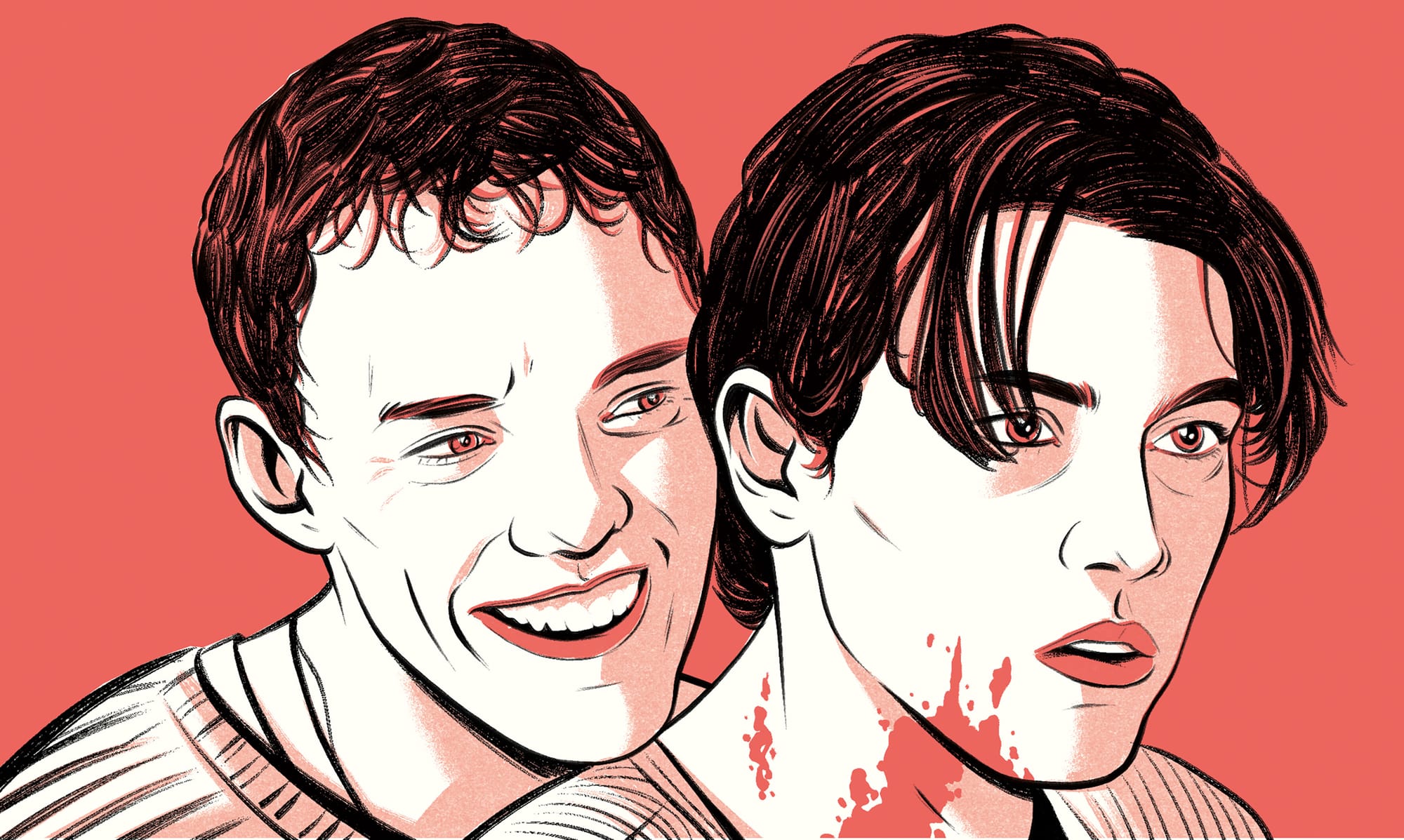
Like a lot of millennials, Scream was a formative horror film for me. It was one of the first I got to see in the cinema and thanks to the films coming out during those peak teen years of cinema-going, it is one of the few horror franchises I've followed closely with every new release.
All of the movies, including the original, were beset by stories of heavy studio interference (Dimension Films, headed by Bob Weinstein). Craven had to shut down production of the first film and cut together the rushes to appease - and avoid being fired by - Weinstein. The second was rushed into production (it was greenlit in March 1997 and released in December that same year) and the ending had to be rewritten due to a script leak. The third eventually had to bring in a new writer - Ehren Kruger - due to Kevin Williamson's meteoric rise in the wake of Scream's success (during this era, he was showrunning Dawson's Creek and Wasteland, while working on The Faculty, I Know What You Did Last Summer, Halloween H20, and Teaching Mrs. Tingle). The Columbine High School massacre also led to a nervous studio abandoning Williamson's rough outline (Matthew Lillard's Stu Macher orchestrating the killings from prison) and pushing for the film to ramp up the comedy while reducing the violence.
But, thanks to the post-modern architecture of Scream, Craven and Williamson had the perfect vehicle to wryly vent their frustrations with the studios, the film industry, and the landscape of horror itself.
"That's the whole reason I'm doing this at my age. It's not just about screams and sex, but matters that are serious to us as adults. I like to think I'm making films in the film business, where movies are making enough numbers for the studios to let me keep working, but you also want those films to have content that makes you proud you made the film. That's not easy, but it's a fun puzzle to figure out." - Wes Craven
This is something I find is missing from the modern iterations of Scream: a master of horror - who has invented and reinvented the genre multiple times in a career spanning several decades - taking a moment to reflect on his own legacy and the state of a genre that he has spent a lifetime thinking about.

"A bunch of articulate teens sit around and deconstruct horror movies until Ghostface kills them one by one. It's been done to death. The whole self-aware postmodern meta shit. Stick a fork in 1996, already." - Rachel
By the time Scream 4 entered production - a decade after the third film - the '90s Teen Horror Cycle had run it's course. In it's place, horror had experienced the rise of found footage, torture porn, and J horror. Where Craven's extreme, brutal, borderline-unwatchable first film The Last House on the Left was influenced by the appalling images on TV of the Vietnam War (and Ingmar Bergman's The Virgin Spring), the horror directors responsible for torture porn were pointing to The Last House on the Left and other video nasties of the '70s and '80s as their inspiration. What an absolutely crushing window into your own legacy.
"I don't get the torture porn films [...] they're lacking metaphor." - George Romero
And so Williamson and Craven set to work on Scream 4. A film that could let the pair explore what horror had become in their absence while picking at all their thematic preoccupations and adding a whole bunch more on top. Scream 4 was ultimately Craven's final film before his death in 2015 and I think it serves as a fitting culmination of a lot of his fascinations.
One of Craven's most persistent themes is intergenerational trauma. The sins of the elder generation being paid for by the generation that come after. It's there in A Nightmare on Elm Street, and it's there in Scream. It's also there in the incredibly flawed, if interesting, test-run for Scream 4 - Craven's own My Soul To Take. What's interesting about Scream 4 is that the events of the first film are now the Original Sin and Sidney, Gale and Dewey are the adults whose past is haunting not only them, but the younger generation of Woodsboro.
Scream 4 is also something of a companion piece with Craven's heavily meta New Nightmare wherein he wrestled with how his creation - Freddy Krueger - had become a diluted, one-liner spouting, rapping cartoon version of himself in Craven's absence. Craven's solution in New Nightmare is to suggest that the only thing keeping the real Freddy Krueger from entering our reality is a piece of art so powerful and so authentic, that it essentially neuters the nightmarish entity.
"[Horror is] like boot camp for the psyche. This is the way humans deal with the horrors of existence. If you forbid this kind of art, the actual, real horror is unleashed in a sense.” - Wes Craven
It's an argument for being purposeful in your art, and for the horror genre, but also serves as something of a warning for letting the commercial imperatives of franchises take the wheel. Scream 4 is reckoning with a different industry-wide creative dead-end: The remake.
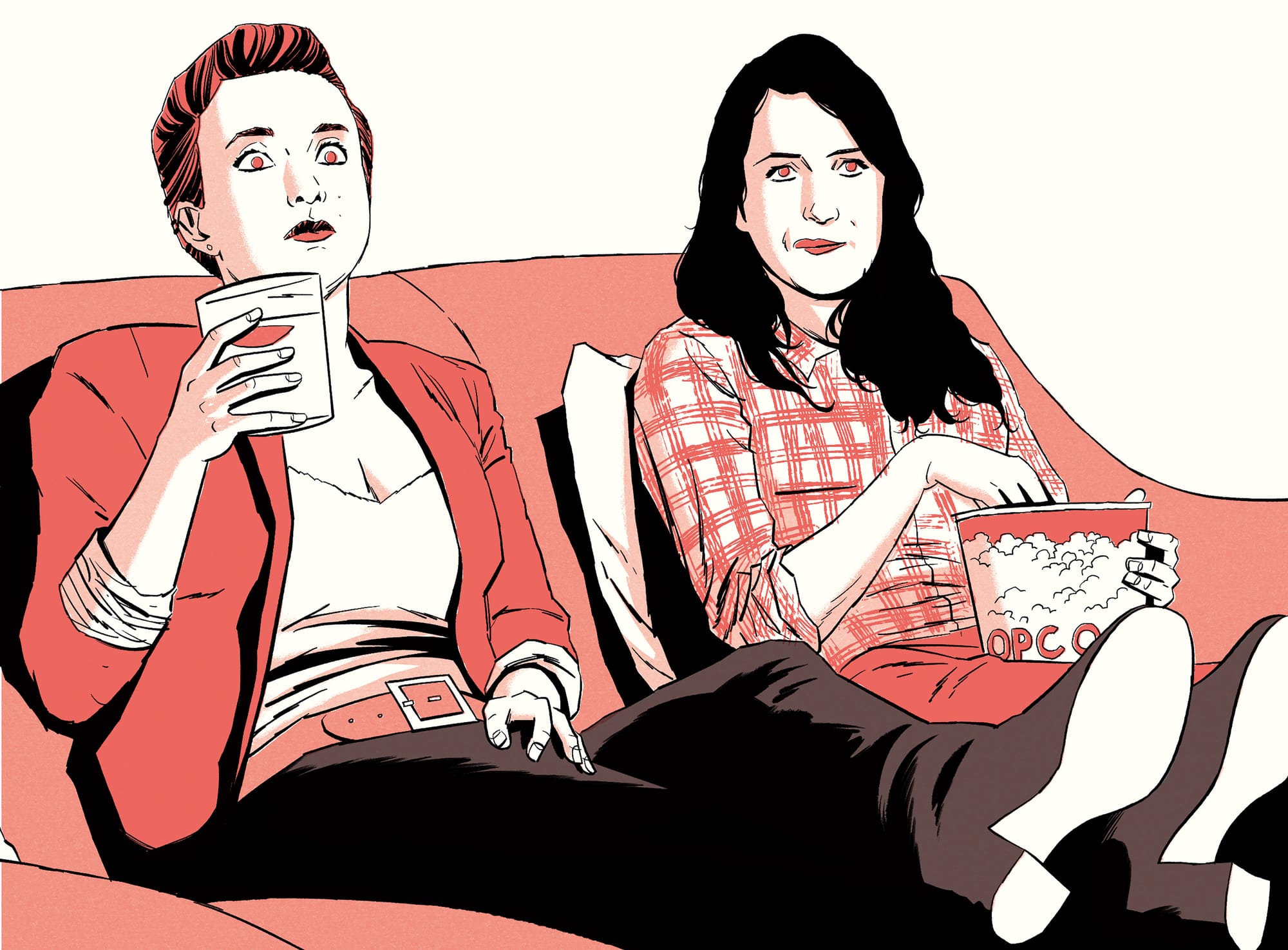
"Name the remake of the groundbreaking horror movie in which..." - Ghostface
"Halloween, Texas Chainsaw, Dawn of the Dead, The Hills Have Eyes, Amityville Horror, Last House on the Left, Friday the 13th, A Nightmare On Elm Street, My Bloody Valentine, When A Stranger Calls, Prom Night, Black Christmas, House of Wax, The Fog, Piranha. It's one of those, right? Right?" - Kirby Reed
In 2011, torture porn was largely coming to an end, to be replaced by (or rather, had morphed into) an era of horror remakes. Scream 4 references this not only in dialogue, but sub-textually, with a new cast of characters forming a funhouse mirror version of the original film. So much so I think there's an argument to put Scream 4 into doppelganger canon. We are no longer following Sid to college or on set of a Stab film. We're back where it all began with a whole new generation of teens. It is at once a remake, reboot and sequel. A "requel" if you must. The difference this time is everyone is Randy Meeks. Everyone in Woodsboro has seen the Stab films and everyone is a horror fan. The legacy of the Ghostface killings has turned the entire town into potential Stu Machers.
This is further complicated by the existence of the internet - something only vaguely gestured towards in the original (calling the police from a computer). Considering how youth-orientated the Scream films are, they have always been ever so slightly behind the curve when it came to technology and how teens engage with it. This is partly due to the age of Craven and Williamson and partly the nature of a fast-moving industry - particularly in the first decade or so of the 21st Century. Scream 4 even makes a joke of this with the cold open featuring a character using a sidekick phone - something already out-of-date by Scream 4's release - only for this to be revealed as the cold open of an older Stab film.
"A fucking 'Facebook' killer... you're kidding me right?" - Rachel
"I guess now it would be Twitter, that'd make more sense." - Chloe
While every Scream film has played with the notion of the killers trying to "direct" their own horror film, this is made more explicit in Scream 4 with a character live-streaming everything on a GoPro style headset and the killers recording everything on their phones. What felt, to me, a little unrecognisable and silly in 2011 now feels prescient in the way it addresses Twitch (a service that launched in 2011 but only started to take over the internet in 2013/2014) and social media pivoting to short-form video content. The only difference now is the psychopaths would be wearing Meta's Pervert Glasses.
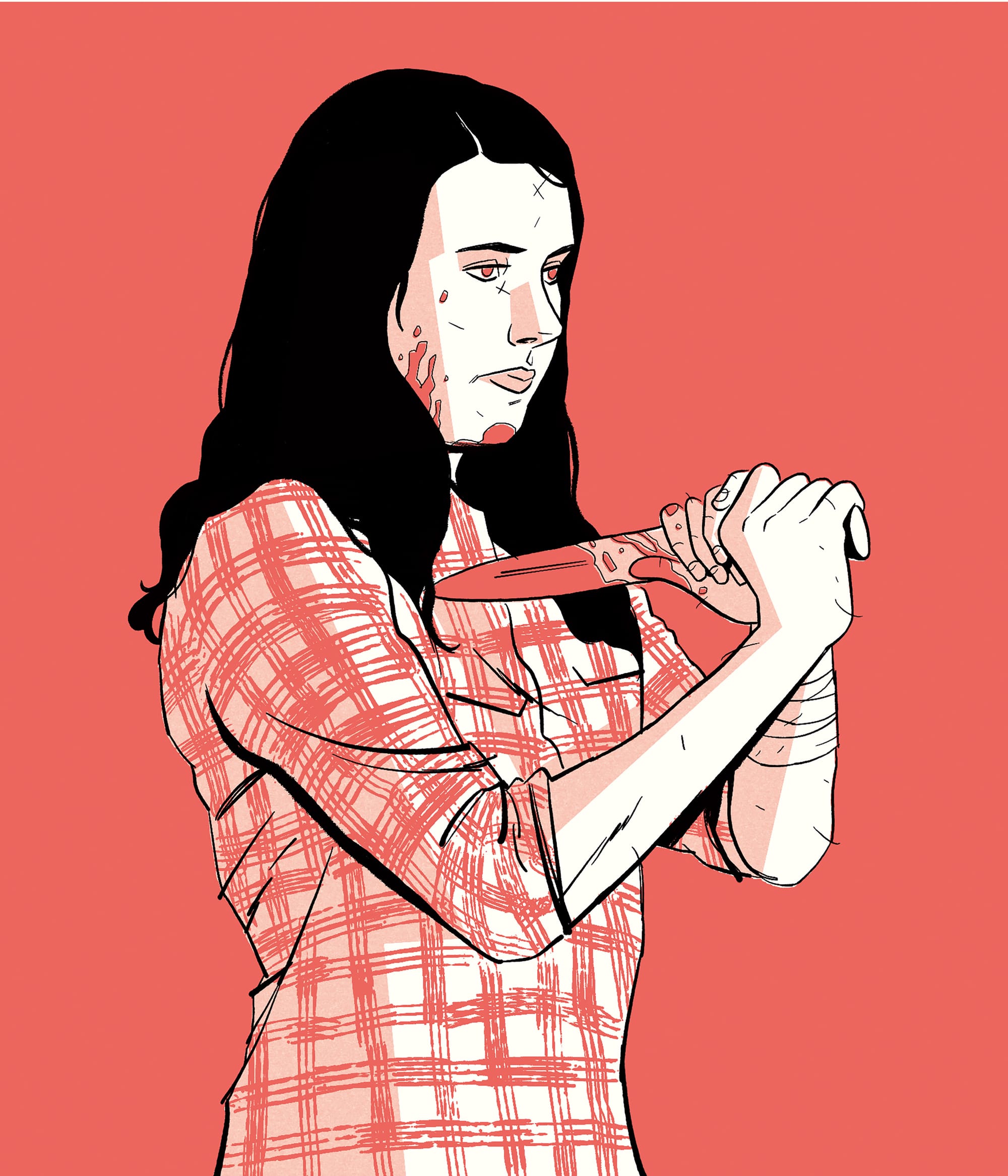
"I mean, what am I supposed to do? Go to college? Grad school? Work? Look around. We all live in public now, we're all on the Internet. How do you think people become famous any more? You don't have to achieve anything. You just gotta have fucked up shit happen to you. So you have to die, Sid. Those are the rules. New movie, new franchise. There's only room for one lead, and let's face it, your ingenue days, they're over." - Jill Roberts
As with any good Wes Craven horror film, Scream 4 is almost overstuffed with ideas. I think it's why his collaborations with Williamson work so well. Williamson's dialogue, character work and structural architecture ensures that the Scream films never get lost in all the thematic headiness. There's a key throughline to Scream 4 that is always front and centre: Long before Jamie Lee Curtis turned it into a meme, Scream 4 was concerned with Trowma (trauma).
Everyone in Scream 4 is either packaging or performing their trauma and leveraging it in some way - for good or ill. Gale has made a career off the trauma of others in true-crime literature (and, one would imagine, massive Stab royalties). Dewey has somehow risen up the ranks of the police department to become Sheriff despite objectively being (and I love you Dewey) bad at his job. Sidney is finally, reluctantly, selling her own memoir in hopes of helping other survivors. People who orbit the original cast are all, in some fashion, profiting (or hoping to profit) from their proximity to trauma.
In Darren McGarvey's book, The Trauma Industrial Complex, he explores how his own experience of sharing his own personal experiences of trauma was both helpful and unhelpful. In his words:
"It examines how trauma narratives are shaped, packaged and consumed – how they are extracted for advocacy, activism and media, often benefiting institutions more than the people whose pain forms the basis of the story. It also considers the transactional nature of storytelling in this context." - Darren McGarvey
Without strictly policing nor judging how people choose to share or heal their own trauma, Scream 4 is extremely critical of how media engages with and profits from it, ultimately setting up an incentive structure that influences the Ghostface killers. They don't just want to be famous. They want to be survivors.
In The Before Trilogy (Sunrise, Sunset, Midnight) we, as an audience, were invited to check in on two characters and their relationship every ten years. In doing so the films served as a time capsule of those actors, the prevailing societal norms about love and romance, and also ourselves when we first watched them. I think the Scream sequels, at their best, offer something similar about the cinematic trends of horror. Scream 5 followed a decade after Scream 4 and got to reflect gamergate, maddening toxic fan culture, and the rise of "elevated horror". Unfortunately, it was a huge success and spawned two sequels that had increasingly less to say.
Hopefully some studio higher up will let Scream lay fallow for another ten years and a master of the genre can use it as a State of Horror commentary in 2036. But considering the series is in the hands of Paramount and the Ellisons, I'm not holding my breath.
Order of Service
- Scream (1996)
Of course. - Scream 4 (2011)
See: this post. - Scream 2 (1997)
Considering how rushed this was, it holds up well. Some of the best set pieces in the series. - Scream (2022)
Came out at a perfect time to dissect toxic fan culture and entitlement. It's essentially a film about how everyone on the internet lost their minds seeing Star Wars: The Last Jedi. - Scream 3 (2000)
Suffers from the lack of Williamson and too many cooks but, with hindsight, the dark-side-of-Hollywood plot is remarkably apt for a series that has the Weinsteins all over it. - Scream VI (2023)
Mostly just cruel and pointless. - Scream 7 (2026)
Morally and qualitatively bad. Free Palestine.
Exhumed Contents
- And we're off! In the interests of keeping this sustainable over the month, I don't think all the posts will be this long. But Scream is one of my favourite horror films and I had a lot to say about it as a franchise. Apologies if this ended up being a little all over the place as a result.
- I'll be adding any observations that didn't fit in the main essay, related content, and Halloween adjacent recommendations in this section - so let me know if you have anything you'd like me to mention.
- Despite the length of this, I still didn't find space to rant about the pointlessness of the Scary Movies. Suffice it to say that I do not think a satire about horror needs to be spoofed when it's already making fun of the tropes.
- One tangential recommendation is that I was getting in the '90s mood while writing this by listening to lots of R.E.M. This YouTube essay by Trash Theory really helped.
- Another '90s vibes soundtrack: the new album from Chastity Belt.
- Rebooting Death: Wes Craven’s Scream 4 as Testament Film - an interesting piece of academic writing that explores Scream 4 as Wes Craven's final artistic statement.
- A fun piece in Rue Morgue about the evolving use of technology across the Scream films.
- Alice Capelle's excellent video essay about the "Trauma Industrial Complex".