Four Colour Cinema

On Colour Theory, Bad Dreams, and Inferno
This is part of a series of essays about my favourite horror sequels. Read the introduction here, and the full archive here. Subscribe for free to have it delivered to your inbox every other day in October. If you're enjoying it, you can show your appreciation by buying me a coffee or sharing it with friends.
Spoilers: I try my best not to spoil the films I discuss, but if spoilers ruin your viewing experience, it might be safer to watch the films before reading.
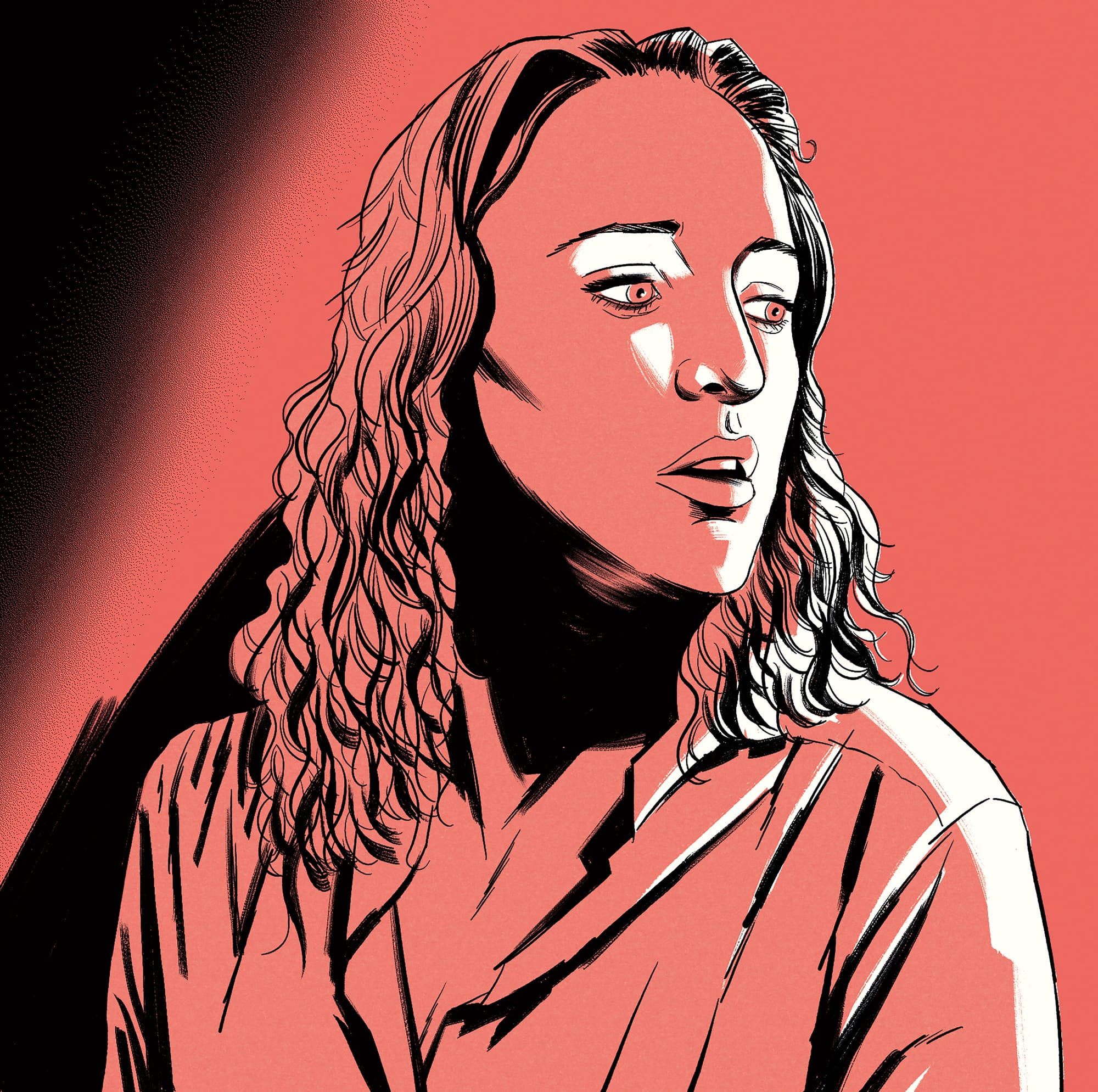
Inferno (1980) Dir. Dario Argento
Plot Summary: A man investigates the disappearance of his sister in a New York apartment building that was once the home of a powerful witch. I think.
"I tell stories like they are dreams. This is my imagination. For me, it would be impossible to do a film that is so precise, that resembles real life." - Dario Argento
While Dario Argento had made his name in Italy with a series of genre-defining Giallo thrillers like The Bird With The Crystal Plumage, The Cat O' Nine Tails, and Deep Red, he hadn't really crossed over into the global mainstream until his 1977 masterpiece Suspiria. Indeed, Suspiria was such a success in Japan that the as yet undistributed Deep Red was subsequently marketed there as Suspiria Part 2.
For me, Suspiria might be the best looking and best sounding horror film of all time. There are certain images and sequences in it that are indelibly burned into my brain even if I, after several watches, can't quite recall the plot beats of the film or strictly tell you exactly what happened in it and why. That's partly by design, Argento is less interested in character arcs and story structure than he is in imagery and feeling. If a sequence doesn't quite make logical sense but makes emotional sense, it's going in. The effect is for his films to feel like waking dreams. Somnambulant cinema. That may leave some audiences cold or unsatisfied, but damned if I don't feel slightly unnerved whenever I'm walking towards the exit of an airport.
This makes it even more bizarre that Argento was known in his home country as "the Italian Hitchcock." While both directors were masters of suspense and often worked in the same genre, Hitchcock was much more of a Swiss watch formalist compared to Argento's impressionistic, instinctual brushstrokes. In a lot of ways, the two directors couldn't be more different.
Perhaps the comparison started with both directors having an outsize influence on the birth of the slasher genre. Hitchcock with Psycho, and Argento beginning his directorial career making Giallo classics. Giallo, for the uninitiated, is an Italian literary genre of pulp thrillers, most often featuring serial killers stalking women, that were usually printed on cheap paperstock with garish yellow covers - hence the name (Giallo literally translating as 'yellow'). When these migrated to cinema, the name followed. Although these films were also sometimes referred to as Spaghetti Slashers or Spaghetti Thrillers, in reference to the other burgeoning Italian cinematic export, the Spaghetti Western.
During the production of Deep Red - arguably the most revered and influential Giallo film - Argento met the actor Daria Nicolodi, where they started a relationship. It was Nicolodi's influence that pushed Argento out of the more "realistic" serial killer fare into the supernatural phantasmogoria of Suspiria. They both read Thomas DeQuincey's book Suspiria De Profundis, and their fascination with it led to Nicolodi writing the screenplay for Suspiria - a sort of 100 minute long bad dream that also feels like a macabre fairy tale.
"I wrote Suspiria for Dario Argento; title, subject and script. The inspiration came from a tale my grandmother, Yvonne, used to tell me when I was a child, after an experience she had in a northern acting academy where she discovered the teachers were teaching arts, but also black magic. I was fond of this story of hers more than Pinocchio by Carlo Collodi, and when I told it to Dario it was natural for him to fall in love with it too. It was his first step from thrillers to fantasy-alchemy movies and we did it together." - Daria Nicolodi
It feels appropriate that Argento made his reputation in a genre that is named after a colour. Even before Suspiria, Argento had always painted the screen with these bright, vivid palettes. His mentor and fellow master of Giallo, Mario Bava, was also well known for his use of colour and arguably set the template (please seek out his 1964 classic Blood and Black Lace to see just how good his use of colour was.) I sometimes look at the desaturated, washed out, colour-graded-to-death "realism" of modern cinema (I'm looking at you Nolan) and wish we could return to some of this impressionistic anti-realism. I maintain that the place to find it consistently, while cinema is getting greyer, is in comics. Comics are always playing with impressionistic colour combinations. Partly due to it's origins in the four colour printing process creating certain aesthetic standards, and partly because of the budget constraint of comics: time.
But it's also fair to say that Christopher Nolan's grip on modern cinematic aesthetics is loosening and there are many more examples of sumptuous shocks of evocative colour in film these days. Just not enough for my liking!
Personally speaking, Argento's use of colour directly chimes with how I like to use it, especially when I'm printing my work via risograph machines. While I love the bright, luscious colours you can achieve with those rice-based riso inks, their use wouldn't have any utility if it wasn't used to direct the eye and highlight the important parts of the page/panel. Argento is great at this: moving characters into and out of blocks of colour for specific emotional beats, or to indicate a change in power dynamics. Sometimes, the way scenes switch from blue to red and back again, it feels like the scene is foreshadowing the arrival of a police car or ambulance. Where the flashing siren light is coating the scene in the colours of warning. An emergency is around the corner and you should be on edge. Colour as storytelling. He pushed the technicolour labs to their absolute limit (and specifically sent the prints to Rome where he trusted the development process more.)
If you're keen to dig into this more, I'd recommend this piece on Dyerbolical.
"Each film I make changes me in some way. When I start the picture I'm one person and by the time I finish I'm another." - Dario Argento
If Suspiria's fairy-tale dream logic had always left me satisfied but a little uncertain about what I'd seen, it's spiritual sequel - Inferno - is positively, wilfully, abstract (complimentary).
Inferno is part of what Argento and Nicolodi call their "Three Mothers Trilogy." With the witch Mater Suspiriorum the antagonist of Suspiria, and Mater Tenebrarum the antagonist in Inferno. Argento concluded the trilogy, after a 30 year wait, in 2007 with The Mother of Tears featuring the final witch, Mater Lachrymarum.
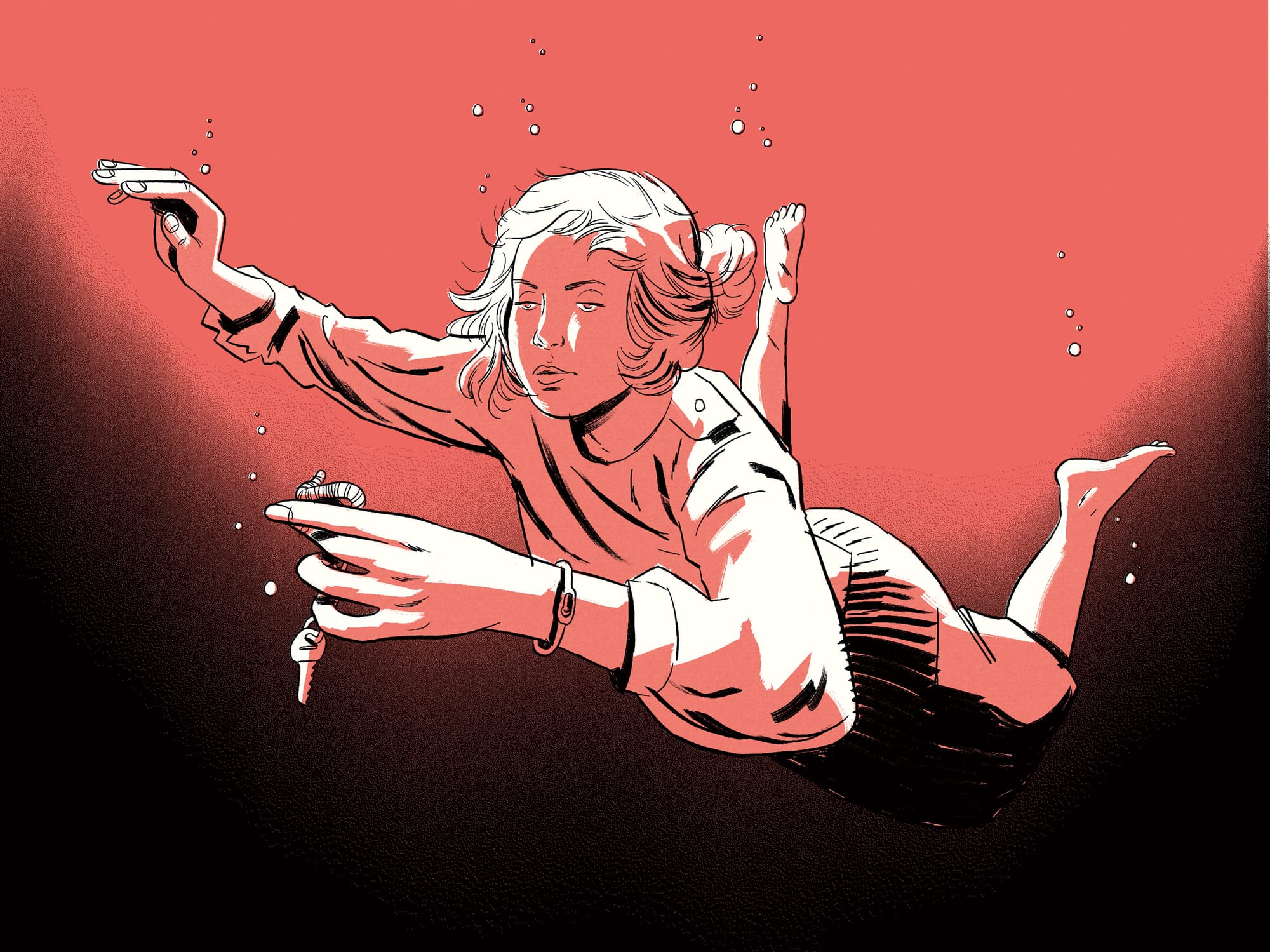
But I'd be lying if I said all of this was what I was thinking about - or even understood - while watching these films. Rather, Inferno is best enjoyed, for me, as a series of unrelated, visually stunning, atmospheric vignettes that imprint on your subconscious. There's a scene early in the film where a poet called Rose goes into the basement of a bookstore and dives into the crystal clear flooded waters directly under it, in search of a key. It's odd, beautiful, and stressful, and I haven't been able to stop thinking about it since I saw it.
An Argento film has a very specifically European, baroque, opulence on display. A feast for the eyes beyond just the pools of reds, blues, pinks and greens that suffuse every frame. A comparison point would be Stanley Kubrick's Eyes Wide Shut that employs a similar aesthetic (both in the lavish sets and vivid reds and blues) to create an equally unsettling sense that the main protagonists are being played in some way. Toyed with. Interestingly Inferno and Eyes Wide Shut are both set in New York but filmed in Europe. I'd be surprised if Argento's work wasn't an influence on Kubrick but I couldn't find anything to back that up.
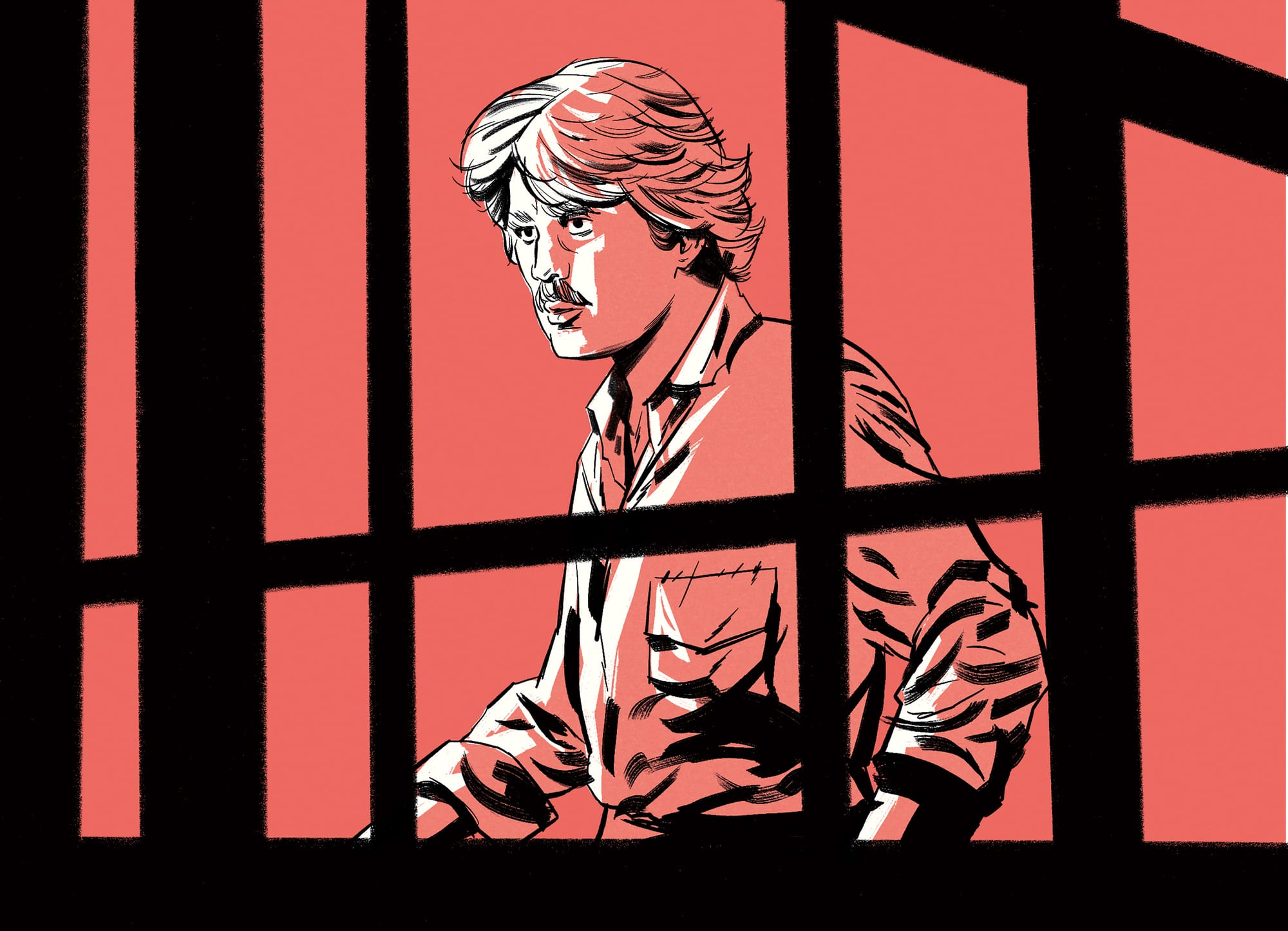
As you can imagine, as the purveyor of classic Giallo, Argento's films have often been labelled misogynistic on account of the number of women who face gruesome deaths. While you can make the argument that an equal number of men and women die in his films, it's hard to dispute the fact that women's death are lingered over in a way that the men's deaths are not. I would say, because of the uncanny unreality of his films, it doesn't strictly bother me in Suspiria or Inferno, but I am a man (near enough at least) and so your own mileage here may vary.
Certainly, Inferno, while based on another screenplay by Daria Nicolodi, was rewritten by Argento and she didn't receive on-screen credit for her script. Their relationship was fractious and eventually ended five years later. The result of Argento's rewrites is that the film feels more unstructured and unmoored than Suspiria - jumping, jarringly, from protagonist to protagonist as each woman is killed investigating the Three Mothers. It eventually settles on Mark, Rose's brother, as our final protagonist. Mark, bless him, is desperately dull and not the brightest bulb in the pack. That he's the one who survives the whole thing, is kind of rude to the women in the film.
Another ding on the film: there's a whole unnecessary sequence in which a mean bookstore owner called Kazanian puts a bunch of cats (who have, until this point been fun visual omens of impending doom) in a bag and drowns them. He gets what's coming to him - eaten alive by rats before a random butcher comes and delves a cleaver into his neck - but viewers beware. Also, there's a scene when a woman gets attacked by cats and it feels like someone is just off-camera throwing these poor cats at the actor.
When Argento finally tackled the third part of the trilogy in 2007, Daria Nicolodi starred in it, alongside the couple's daughter, Asia Argento, but her script wasn't used. In an interview she suggested the Three Mothers trilogy still hadn't been finished. Not her version anyway. Argento's vision involved the Catholic church, hell and demonic agents. According to Nicolodi, that was the very antithesis of what her secular trilogy was dealing with.
Luckily, these films are not obviously interconnected or, if they are, I don't need them to be to enjoy them. For all of it's faults, there's a strange, inviolable power to Inferno that works its magic in spite of everything. It is, at times, one of the most beautiful horror films to look at. With a soundtrack by Keith Emerson that, while never hitting the highs of Goblin's iconic score, still kind of slaps.
Worth giving a go if all the caveats above haven't put you off!
Exhumed Contents
- A great BFI video essay on the films of Dario Argento.
- Dario Argento - An Eye For Horror. An interesting hour long documentary about the director.
- Inferno isn't available to stream or rent online on any platform (in the UK) and the blu-ray appears to be out of stock, so if you're interested in watching it, you can find it, for now, on YouTube here. That is also a decent way of watching a bunch of Giallos if you're in the mood.
- Argento in conversation with Censor director Prano Bailey-Bond.