Send More Paramedics

On Eyeball Kicks, Chest Bursting, and The Return of the Living Dead
This is part of a series of essays about my favourite horror sequels. Read the introduction here, and the full archive here. Subscribe for free to have it delivered to your inbox every other day in October. If you're enjoying it, you can show your appreciation by buying me a coffee or sharing it with friends.
Spoilers: I try my best not to spoil the films I discuss, but if spoilers ruin your viewing experience, it might be safer to watch the films before reading.
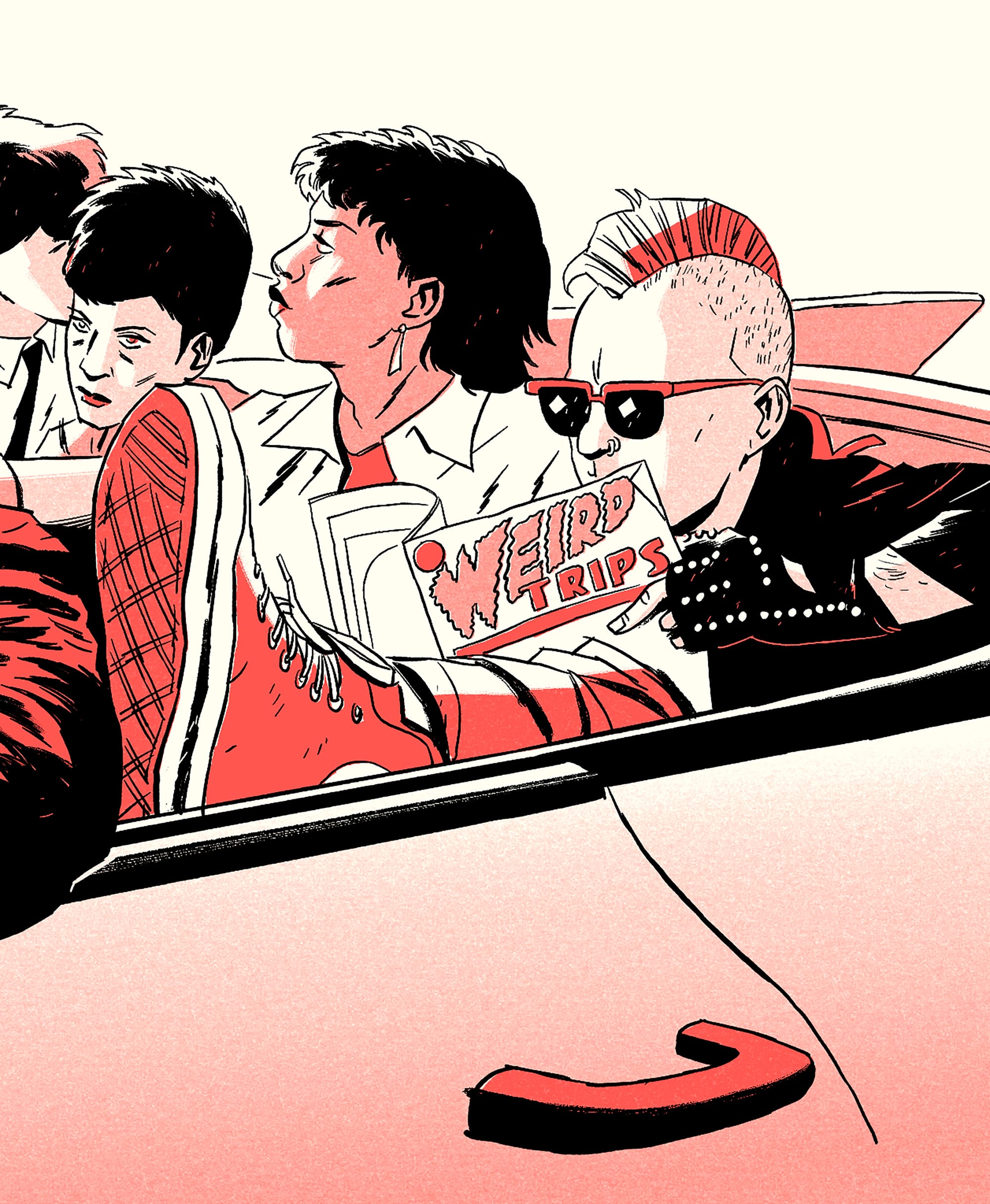
The Return of The Living Dead (1985) Dir. Dan O'Bannon
Plot Summary: Two workers in Louisville, Kentucky accidentally release a military toxin that reanimates the dead.
"This guy screaming in here... you're sure he's a dead cadaver?" - Burt
"Why don't you open the door and find out?" - Frank
"No, that's alright Frank, I'll take your word for that." - Burt
A couple of things you need to know about me for this piece: 1. I was diagnosed with Crohn's disease when I was 11 and 2. Alien is one of my favourite films of all time.
These things may seem completely unrelated. They did to me. But there I was one evening, watching Memory: Origins of Alien, when the film discussed Alien writer Dan O'Bannon. It's a story I thought I knew well...
O'Bannon had always wanted to direct movies. He went to USC to study film where he met John Carpenter. They decided to make a film together, with Carpenter directing. Out of necessity, O'Bannon wrote the screenplay, starred, edited, and oversaw most of the special effects. The result was Dark Star - a sci-fi comedy about a group of space miners who encounter an alien. It was made on a budget of $6,000 but eventually got theatrical distribution.
"We had what would have been the world's most impressive student film and it became the world's least impressive professional film." - Dan O'Bannon
It caught the eye of French-Chilean filmmaker and comic writer, Alejandro Jodorowsky. Jodorowsky was in the process of adapting Frank Herbert's Dune and wanted O'Bannon to handle the special effects. During production of that film, O'Bannon met legendary French comic artist Moebius. Together they worked on a comic for Metal Hurlant called The Long Tomorrow - a sort of futuristic noir parody - which went on to influence Blade Runner, The Abyss, Escape From New York and William Gibson's Neuromancer. It has sometimes been described as the first ever cyberpunk story.
"As we were still in the stage of preparations and concepts, there was almost nothing to do and he was bored stiff. To kill time, he drew. Dan is best known as a script writer, but is an excellent cartoonist. If he had wished, he could have been a professional graphic artist. One day, he showed me what he was drawing. It was the storyboard of 'The Long Tomorrow'. A classic police story, but situated in the future. I was enthusiastic. When Europeans try this kind of parody, it is never entirely satisfactory, the French are too French, the Italians are too Italian … so, under my nose was a pastiche that was more original than the originals." - Moebius
Jodorowsky's Dune eventually lost its funding and the production collapsed. O'Bannon was back in LA, broke, sleeping on friend's sofas and completely demoralised. He decided his best bet was to transition to writing screenplays and started writing something called Alien. During that film's production, as various challenges came up along the way, O'Bannon was quick to suggest people he'd worked with before. He brought Ron Cobb and Chris Foss on board, both of whom worked on Dark Star, to design the ships and graphics (Cobb going on to design the Semiotic Standard). He also recommended Moebius (who provided various concept designs - most significantly, the spacesuits) and HR Giger (another Dune exile), to design the alien.
All of this, more or less, I knew. What I didn't know was that while O'Bannon was broke and writing Alien, he was diagnosed with Crohn's. It was the pain he was going through with that nasty little inflammatory bowel disease, that ultimately inspired the chest-burster scene.
This completely unlocked something in terms of why Alien has become such a seminal film for me.
All of which is a long way of saying - Dan O'Bannon is somehow at the centre of a lot of my interests and inspirations. My love of John Carpenter, of comics, of sci-fi, of Alien, of cyberpunk, of horror and of comedy... He's had a hand in all of it.
So I don't know why it took me so long to sit down and watch The Return of the Living Dead.
I've written about zombie cinema before when discussing the playfully experimental Pontypool or the more recent 28 Years Later films. You'd think the obvious choice for me, when examining a zombie sequel, would be to discuss George A. Romero's Dawn of the Dead. It's one of my favourite films, it explores American consumerism and Reagan-era politics, and it's a great excuse to dunk on Zack Snyder's extremely dumb, conservative remake - this is all Tom catnip.
But I feel like I don't have much new to add to what's already been said about Romero's Dead trilogy. Indeed, the idea of critiquing shopping malls feels especially redundant now in the time of Ghost Malls and liminal horror.
Instead, I find the divergent fork of the Return of the Living Dead movies fascinating. Where the two writers of Night of the Living Dead - George A. Romero and John Russo - mutually agree to veer off in separate directions and not get possessive about their shared screenplay. This was all possible, in part, due to a copyright mistake that meant no-one owned the words "of the [Living] Dead."
None of this happened particularly quickly. It took a decade for Romero to get Dawn made in 1978 which itself impacted Russo's ability to secure funding for Return. When it finally got the money it needed, Texas Chainsaw Massacre director Tobe Hooper, who was set to direct the sequel, had to leave the project to work on Lifeforce. The co-screenwriter of Lifeforce - Dan O'Bannon - was then asked if he'd like to step into the director's chair. Finally, an opportunity to fulfill his dream. He agreed, but only if he could rewrite the script. O'Bannon didn't want to step on the toes of Romero and so was keen to go in a completely different direction entirely. He took Russo's fairly serious script and infused it with a parodic sense of chaotic, gleeful comedy. Eschewing the socio-political commentary of the first film and instead building something that resembled a MAD magazine version of an old EC comic.
That's a comparison that the creative crew of the film would likely embrace. On the commentary track, production designer William Stout talks about packing background jokes into the set decoration of every frame; Hidden messages in posters; Gag names on gravestone engravings; Funny photos on the walls... He references cartooning legend and MAD magazine creator Harvey Kurtzman who called this sort of attention to background detail "eyeball kicks." A reward for attentive fans who go back and reread panels.
The EC influence on the aesthetics of the zombies is especially apparent in William Stout's designs, with one of the "principal" zombies even going by the name of "EC." Similarly, "Specs" is modelled after horror comics legend Bernie Wrightson.
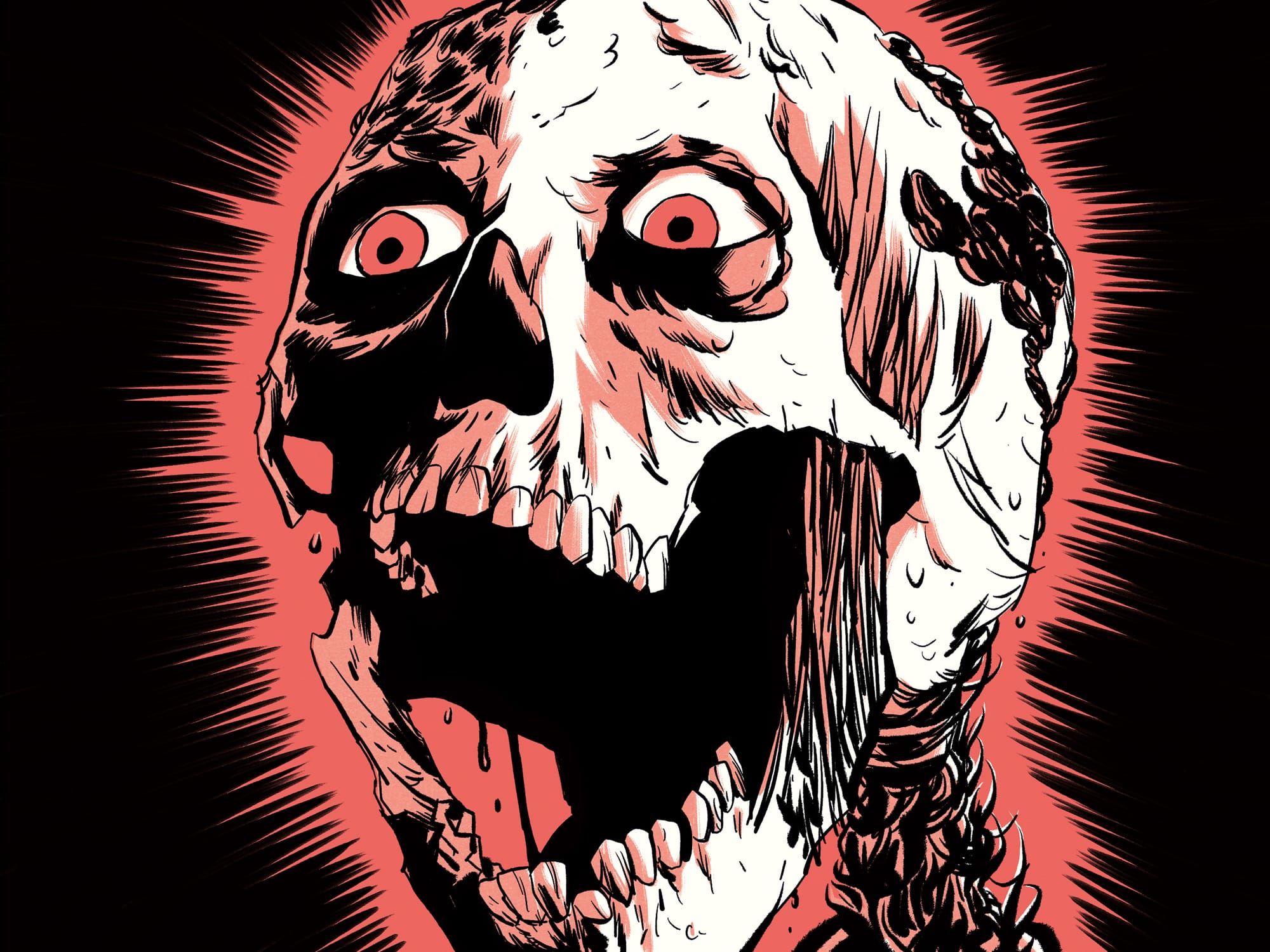
I keep calling them zombies here but Russo would prefer they were called "ghouls." It's true, these are creations that bear little resemblance to the zombies we've become accustomed to beyond the fact they're the reanimated dead. In this film, literally nothing baring cremation can put an end to the monsters. A well placed shot to the head is next to useless here. The ghouls can also talk, run and solve simple problems. The only thing that might slow them down, as in the case of the "Tarman", is the state of their decomposition. That being said, the film is responsible for a bit of zombie lore that would become canonised over the decades: the taste for human brains.
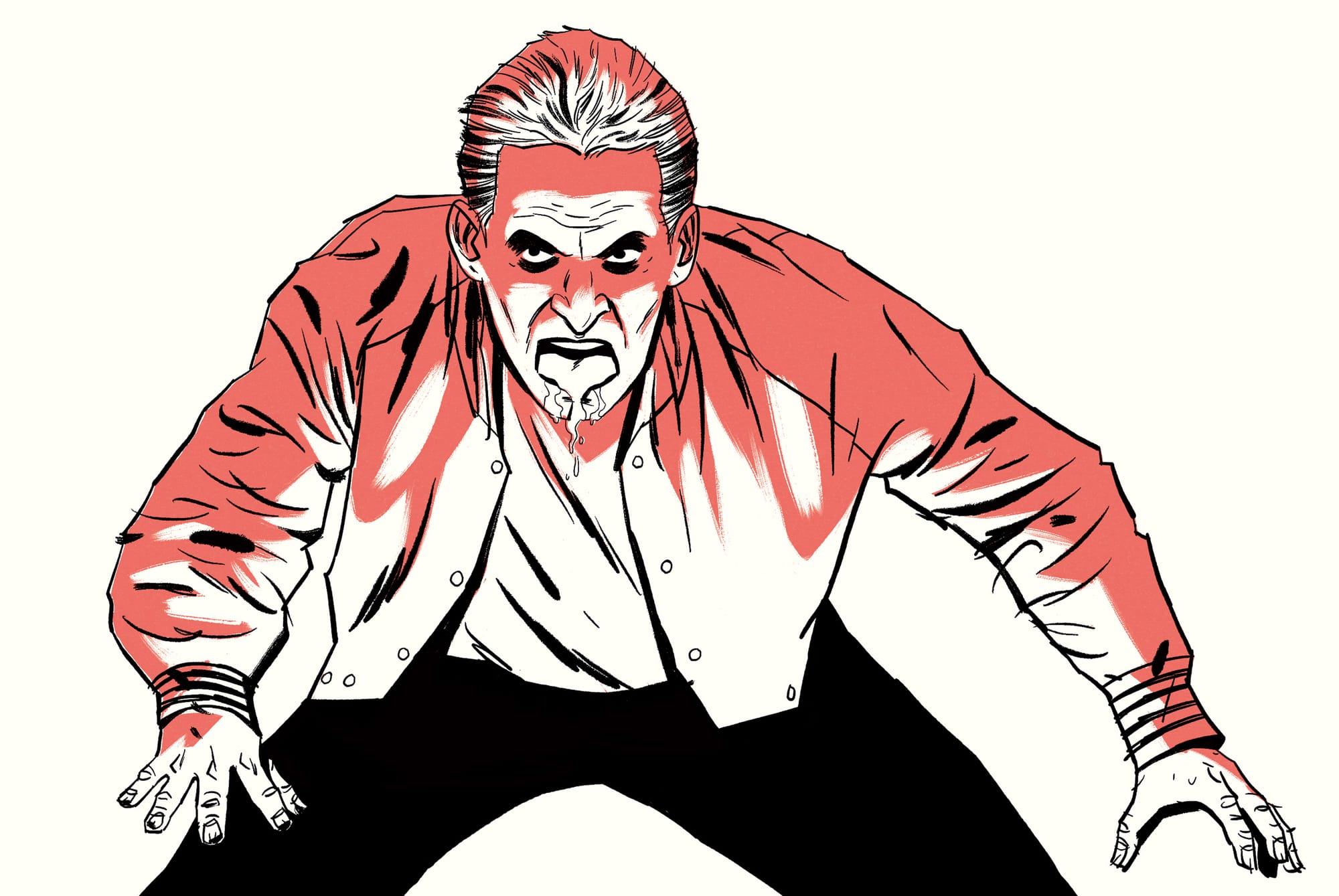
"The events portrayed in this film are all true. The names are real names of real people and real organisations." - Opening title card
The movie gives itself permission to play with what were starting to become the rules of the zombie sub-genre by adding a post-modern twist: It starts with a character asking if another has seen The Night of the Living Dead. In this "real world", everyone has seen the first film, but we're told it was based on true events that were covered up by the military. Because the story was leaked, some of the details are incorrect. It's a fun spin that establishes the irreverent tone of the film. Not quite a full-on spoof, but willing to poke fun at itself and the sub-genre while doing it's best to offer up scares.
You could argue the success of this film's careful balance of tone gave Sam Raimi permission to run with it for his own horror-comedy classic, 1987's Evil Dead 2.
My favourite gag of the film is when paramedics arrive on the scene, only for the ghouls to immediately consume their tasty cerebellums. Over the radio, we hear their colleagues check in. An enterprising ghoul raises his head, grabs the receiver and politely asks: "send... more... paramedics." We return to this group every so often as they delightedly repeat their cunning ploy. A kind of Deliveroo for ghouls. Could that be a commentary on the soul-sapping effect of takeaw– STOP IT TOM, THIS ONE IS SUPPOSED TO BE A FUN ONE.
One of the great additions to the film is having a gang of '80s punk rockers at the centre of the mayhem. Obviously it provides some great, iconic costume designs, but it also allows the soundtrack to lean into punk rock, horror punk, and psychobilly. The film features The Damned, TSOL and The Cramps. It made me curious as to whether O'Bannon had seen 1984's Repo Man while he was writing the film or if the two films coming out so close to each other was more of a reflection of the strength of the LA punk scene. For what it's worth, I couldn't find any interviews with O'Bannon in which he references Repo Man.
One of the principal punks is played by the now legendary Scream Queen Linnea Quigley. There's a scene of absurdly cynical gratuitous nudity in which she does a naked dance atop a grave. I'd understand if that makes you want to give the film a swerve. For his part, O'Bannon admitted he added it in for what he considered was the demographic of the film. When he attended a screening and saw that the audience for horror was 50/50 men and women, he said he would have filmed it differently and made sure the men were naked too.
It's a silly, horny, gloopy riot of a film. With incredible practical effects and some genuinely laugh-out-loud moments. O'Bannon is a strong director too. It would have been nice to see him get more opportunities to flex that muscle. It's also not without moments of pathos. In Return, O'Bannon comes back to the theme of inescapable pain. There's a moment when the protagonists tie a ghoul down and ask it why they are so intent on eating brains. It responds:
"To make the pain go away [...] The pain of being dead [...] I can feel myself rot." - Ghoul on the merits of eating brains
Dan O'Bannon died of complications due to Crohn's disease in 2009. He was 63. He's still a relatively obscure figure in mainstream circles, but horror fans know how crucial he's been to the culture. He deserves to be a household name. Let The Return of the Living Dead make a really slimy, ludicrous, bad taste case for why.
Exhumed Contents
- In 1971, O'Bannon starred in a short film called Foster's Release about the urban legend of "the babysitter and the man upstairs". A few years before Black Christmas and Halloween.
- I haven't done my due diligence this time and watched the four sequels to this film. Apparently there's a reboot on the way too with Devon "Final Destination/Idle Hands" Sawa in the lead cast. By all accounts the second one isn't very good and misunderstands the tonal balance of the first. The third is directed by Society maestro Brian Yuzna so I must admit to being curious about that one. Any readers seen them all? What are the best ones? Sound off in the comments. Hmm... no, even typing that doesn't feel right. I don't think I should even type "sound off in the comments." Even in jest. Apologies.
- If you want to see someone else dunk on Zack Snyder and his Dawn of the Dead remake, here is Maggie Mae Fish.
- If you're curious about MAD magazine creator Harvey Kurtzman, there's a documentary called The Mad World of Harvey Kurtzman which I saw this year at the Edinburgh International Film Festival. I can't seem to find information on when it's getting distribution, but keep an eye out for it.
- Memory: The Origins of Alien is much more readily available and can be rented from most streaming platforms.
- Appropriately, there's a crossover thrash band called Send More Paramedics named after Return of the Living Dead. They're from Leeds and all their songs are about zombies.
- ALERT! Jeremy Saulnier is apparently out of Netflix jail (Rebel Ridge deserved a proper cinema release) and has an A24 film on the way. The trailer looks great. Corey Michael Smith! Imogen Poots! A haunted House! Set at Halloween! Slayground should be out in Jan 2027. As regular readers will know, I'm a big Saulnier fan. Green Room remains one of my favourite horror films and, fittingly to this piece, also features punks as the protagonists.