Living In Unsubtle Times
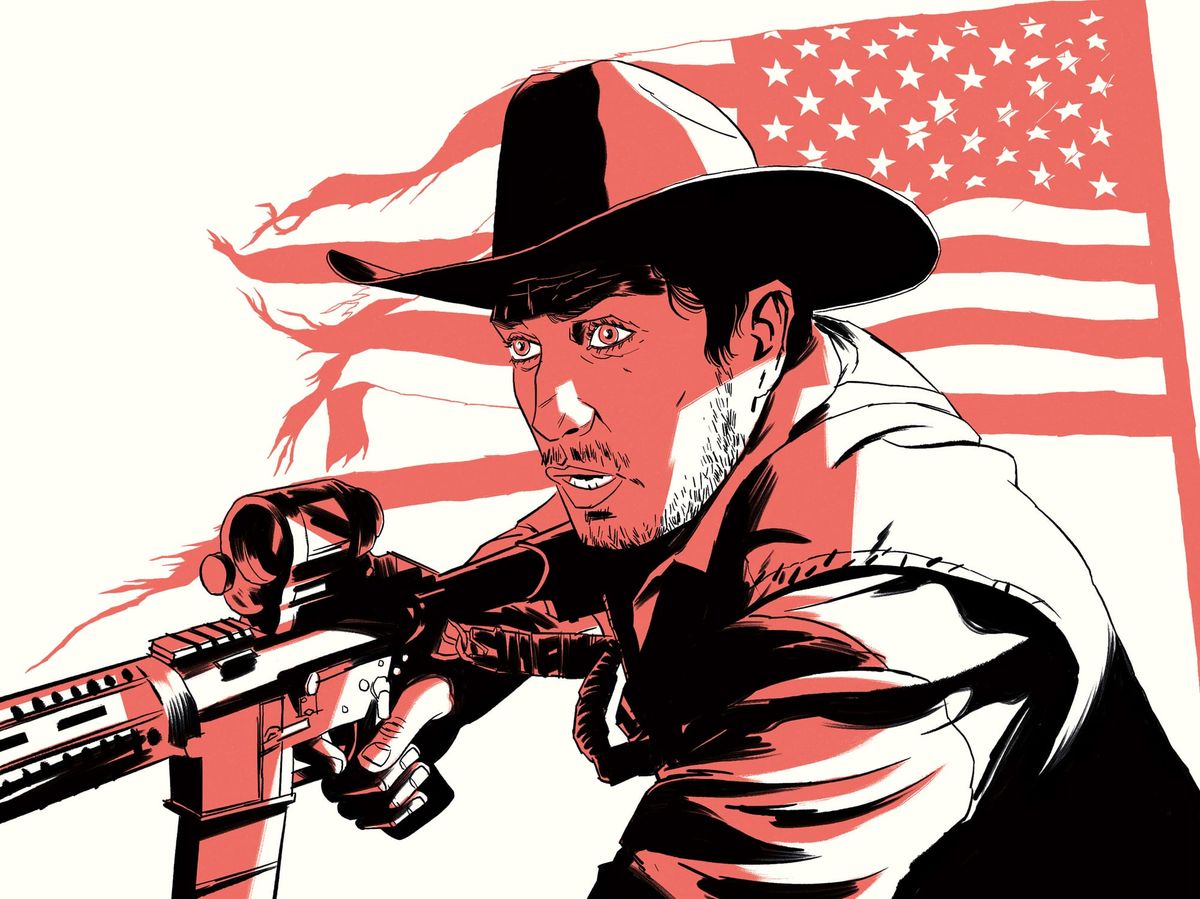
On Kronia, the Imperial Boomerang, and The Forever Purge
This is part of a series of essays about my favourite horror sequels. Read the introduction here, and the full archive here. Subscribe for free to have it delivered to your inbox every other day in October. If you're enjoying it, you can show your appreciation by buying me a coffee or sharing it with friends.
Spoilers: I try my best not to spoil the films I discuss, but if spoilers ruin your viewing experience, it might be safer to watch the films before reading.
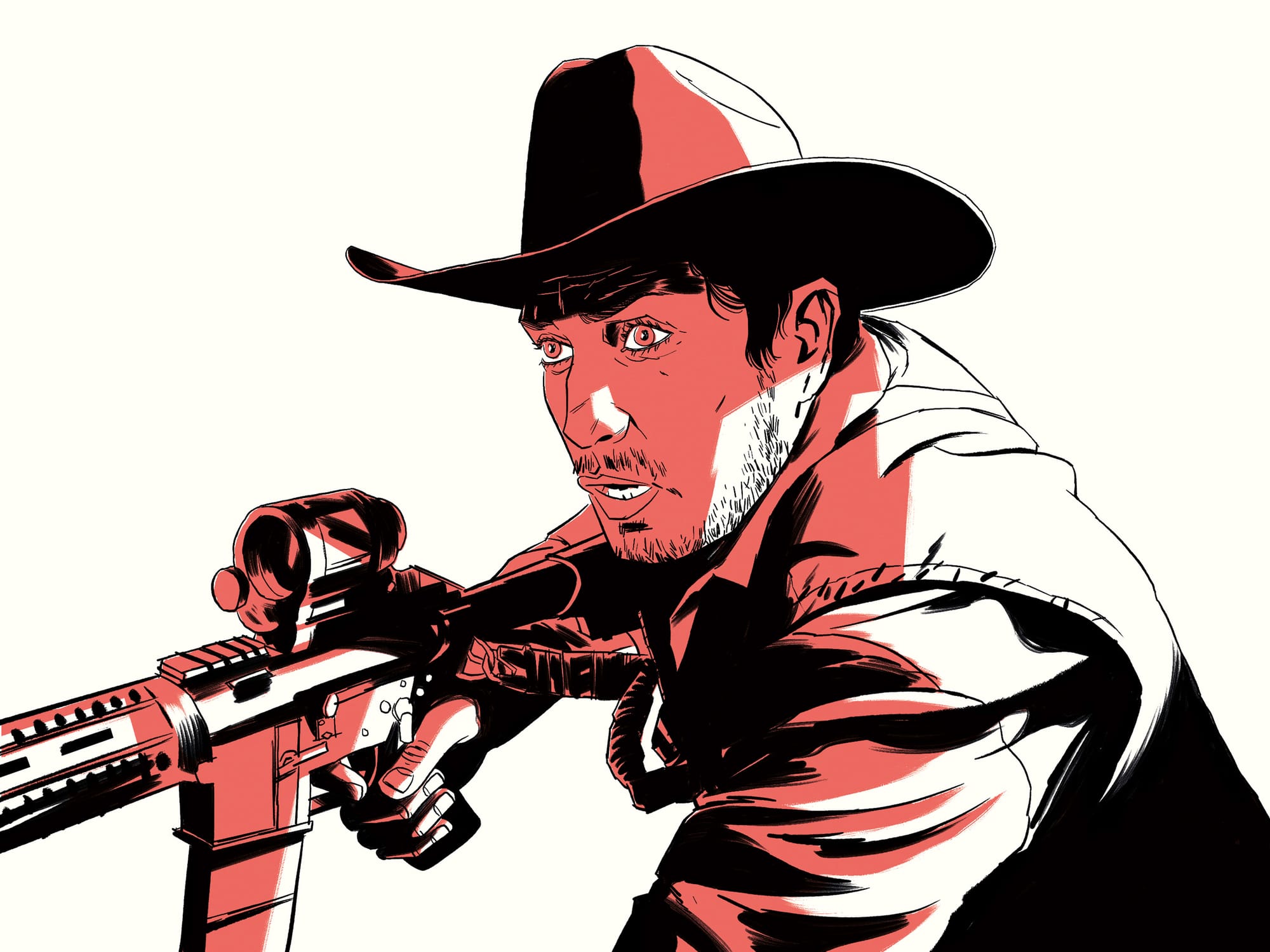
The Forever Purge (2021) Dir. Everardo Valerio Gout
Plot Summary: In 2049, the annual Purge has been reintroduced by the re-elected New Founding Fathers of America. But come morning, the killing doesn't stop.
“I came across the anti-Communist ‘McCarran Act’, or the ‘1950 Internal Security Act’, as it was also known. This draconian U.S. legislation provided for the setting up of places of detention (in effect concentration camps) for those accused by the government of subversion, or of even considering subversion. From this nightmarish piece of legislation I devised the idea of ‘punishment parks’ being set up by the U.S. government.” - Peter Watkins
Peter Watkins' 1971 masterpiece, Punishment Park, is one of my all-time favourite horror films. He presents a world where conscientious objectors, civil rights activists, and student protestors are given absurdly punitive sentences for their "crimes". They are offered an opportunity to commute these by voluntarily going into a "punishment park." In these parks, they must run 50 miles across the California desert before the pursuing National Guard can catch them. If they succeed, they earn their freedom. If they don't, they die. Needless to say, the game is rigged from the start. The film is a mockumentary which cuts between the sentencing/trial of Group 638 and the fates of Group 637 within a punishment park.
It’s a powerful and incisive work brimming with righteous fury. I think about it a lot whenever I see news footage of ICE officers executing civilians in cold blood, or our own government arresting pensioners under the Terrorism Act for holding signs that say "I oppose genocide".
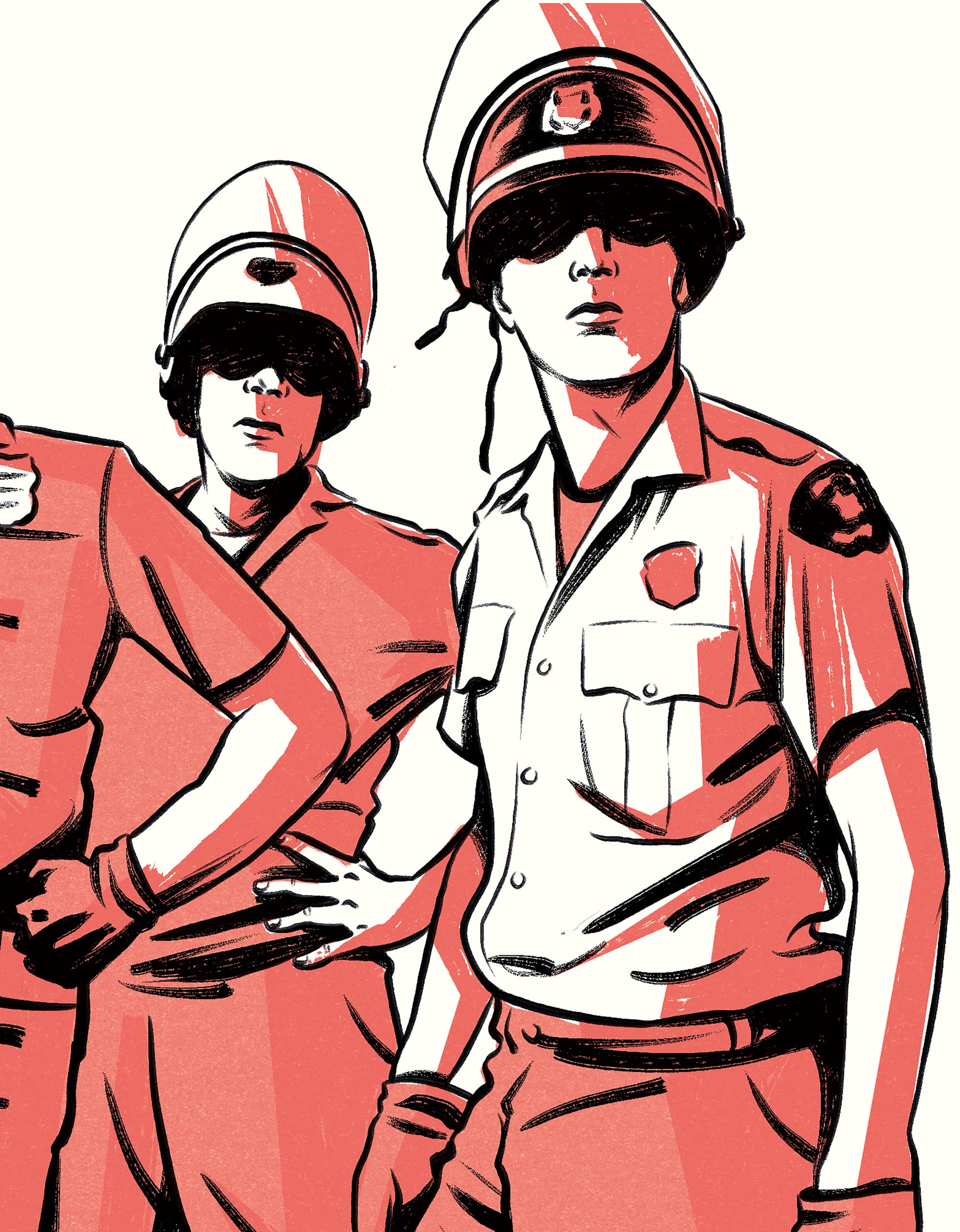
This week, Ken McCallum, the head of MI5, warned of the increased danger of actual terrorist attacks from right-wing extremists in the UK. I don't think that was surprising to anyone paying attention at this point. Every summer we're seeing an increase in far-right, anti-migrant attacks and the rhetoric by politicians and the media continues to get worse.
All of which brings me to The Forever Purge. Writer James DeMonaco's fifth film in the Purge series.
The Purge films began with a fairly standard, self-contained, low-budget home invasion film. In it, we meet Ethan Hawke - a successful security contractor who sells Purge proof home security systems to the rich, gated communities he and his family are a part of. In this near-future world, following an economic collapse, an authoritarian party known as the New Founding Fathers of America, are voted into power in 2014. They institute an annual 12-hour event called The Purge in 2017, in which the population can do any illegal activity - including murder - without facing any consequences. We're told in the opening sequence that this has reduced crime and unemployment and that the NFFA attribute this to the Purge.
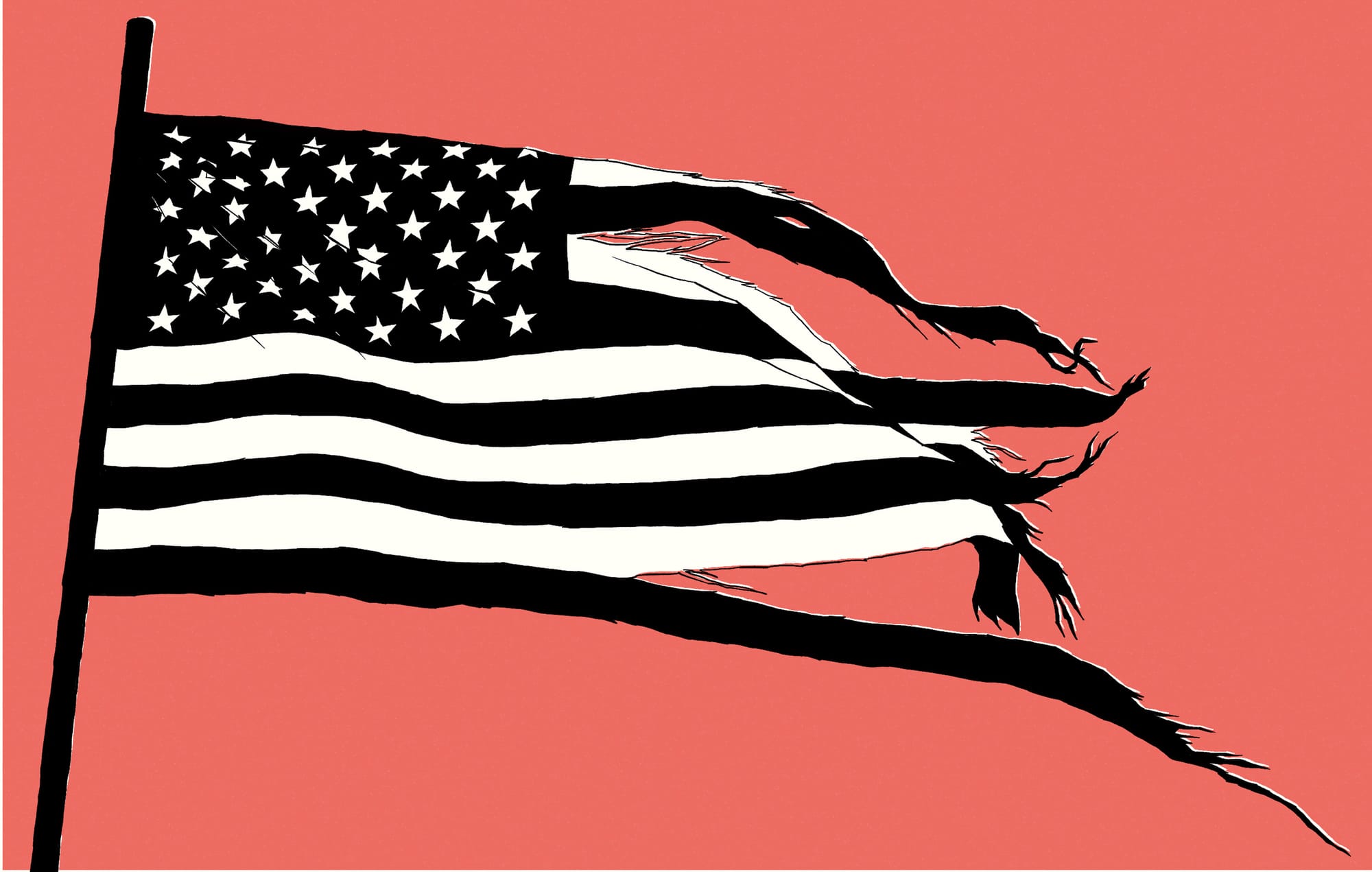
"I think in America, we don’t need haunted houses anymore, we have our own country to be scared of." - James DeMonaco
At the time the film came out, everyone couldn't wait to tell you that the premise was just a riff on a classic Star Trek episode called "The Return of The Archons." That episode was itself a play on the ancient Athenian festival Kronia, or the Roman festival of Saturnalia. Take your pick. You could also see Shirley Jackson's short story The Lottery as an influence. Or the "Two Minutes Hate" of 1984. Which is to say nothing of the Century of adaptations of The Most Dangerous Game in film/TV. DeMonaco, for his part, has noted the influence of the Star Trek episode as well as briefly living in France and being able to see America from an outsider's perspective. He says he wanted to use the premise to address his fears about gun crime and critique the lack of gun control measures in America. Indeed, he struggled to find a studio willing to fund the film due to it being "too un-American."
The film is fine. The set-pieces are unimaginative and poorly lit and you can see the film pushing up against its budgetary limitations. This does not have the wit, playful creativity or style of a Wingard/Barrett class conscious home invasion. The film also makes the mistake of giving us protagonists who are essentially fascist profiteers, so it's a struggle to find anyone to root for. As a big John Carpenter fan, I love a siege movie and my tolerance for mediocre ones is fairly high. The Purge tested that tolerance.
But what do I know? The film went on to gross over $90 million on a budget of $3 million. Sequels were all but inevitable.
This, however, is a rare series that bucks the trend of diminishing returns. Indeed, the films get increasingly better (more or less) as they go on. Because for all the problems with the execution of the first film, the premise itself sets the imagination on fire in terms of the things it could be used to explore.
It's worth remembering that the first film was released in 2013. The spectre of a Trump Presidential Primary campaign was still two years away. It came out in the middle of Obama's second term. I think at that time, for most people, the premise was too absurd, too nihilistic, and too silly for anyone to take seriously as socio-political satire. But frankly, as someone who lives in the UK, the Purge films have always felt like an America that is being honest with itself. It is a ridiculous, turn-the-dial-up-to-eleven, kabuki theatre version of it yes, but it accurately captures how wild and self-destructive the country looks to anyone on the outside looking in.
"The intent of the piece was something I was writing as a treatise or a reflection of the lack of gun control laws in America. Also, the treatment of the disenfranchised in America. And some people actually look at The Purge as wish-fulfillment, like they would love to be able to Purge." - James DeMonaco
The Purge series has continued through the proceeding decade of MAGA, and Trump, and ICE detention centres, and COVID, and Trump 2.0, and... look, you've lived through the past 13 years, you know. I don't think there's a better, more reflective film series out there that is putting on screen the dark shadow version of America and saying: "This is us. Two steps removed." It is deeply scary to say that the concept of The Purge doesn't feel quite as unrealistic as it once did. Recently, Secretary of "War" Pete Hegseth announced that a firing squad execution would be made public and livestreamed. He announced this while talking to a podcaster.
It's a low bar, but of all modern American pop culture - save for the work of Boots Riley and Andor - this dada-ist, gonzo action-horror series might be the most politically astute, clear-eyed vision of the authoritarian, fascist creep of America.
In the first sequel, The Purge: Anarchy, the scope and budget widens to show us more of what American cities look like during the annual event. The focus smartly switches to poorer and more marginalised communities. The ones who can't afford to lock themselves away behind panic rooms and steel shutters. If the first film is Assault on Precinct 13, this is more Escape From New York or The Warriors. We discover various underground economies that spring up out of the Purge: Rich bellends bidding in auctions to hunt the poor in controlled environments, desperate people selling themselves as "Martyrs" to rich families, etc.
But more pointedly, we're also introduced to mercenaries hired by the NFFA to enact greater carnage. Apparently the majority of people don't partake in the annual event in high enough numbers. Instead, these former soldiers go around decimating communities and their environments on behalf of the government. American Imperialism turned on its own people. What's known as the Imperial Boomerang.
We learn that, of course, the Purge is all about money. Arms manufacturers, the NRA, security contractors, insurance companies and armed mercs are the real beneficiaries of the event. It's ultimately an insurance scam. Meanwhile the poorest and most vulnerable Americans are culled in order to reduce the NFFA's responsibilities to its own people. The end-stage of American capitalism. Hoard the wealth at the top and turn the poor against each other.
In The Purge: Election Year, we see the NFFA using this legitimised systemic violence to assassinate its political rivals. The political rival being, of course, Juliet from Lost. The mercs drape confederate flags behind them and sport neo-nazi tattoos. American Fascism no longer lurking behind dog whistles but proudly out in the open. However, it's not unrelenting hopelessness. The Purge films continue to believe in the good of humanity. We get instances of mutual aid, solidarity and communities organising together to fight back. First responders, doctors, and nurses volunteering to help people in need even though the hospitals and services are officially closed.
In the next film, The First Purge, we're shown how the NFFA manufactured consent for the Purge by cooking the stats. It's the War on Drugs. Once again, we see how communities come together to protect one another in the face of this. The media are shown to be complicit, both sides-ing what is clearly a monstrous, self-destructive policy that normalises violence.
At the end of Election Year, Senator Roan survives her assassination attempt and wins the Presidential election in a landslide, bringing an end to the Purge. But in The Forever Purge, we join the series eight years later, with the end of the Roan Presidency and the re-election of the NFFA. Apparently they have won back the public by stoking anti-immigration hatred and proceed to reinstitute the Purge. Except, this time, the Purge doesn't end after 12 hours. Well armed and organised militias across the country begin what they call the "Forever Purge."
The film came out three years before Trump won re-election, but you can see DeMonaco already wrestling with the legacy of his first term here and how it had irrevocably poisoned American politics.
“The saddest thing was, we shot before January 6th happened. People thought that we based Purge 5 on January 6th. I'm like, ‘No, it was way before that.' We’re in a bad place, and I don’t see it getting better right now.” - James DeMonaco (in 2023)
The Forever Purge is about what happens when you normalise and desensitise a society to violence while stoking fear and resentment. The Forever Purgers, with more class consciousness, might have turned their violent designs on the billionaires, politicians and those with power. I'm not saying that would be good either, but it would have made some sort of sense to target those responsible for their diminishing quality of life. Instead, they turn on the poor, the powerless, and the marginalised while shattering the infrastructure that they themselves rely on. America finally destroying itself.
While all of the films have a fairly workmanlike approach to the direction, with little of the visual flair of a lot of horror directors, Everado Valerio Gout is probably the most stylish of the bunch. He plays a lot with the horror of a Purge in daylight and makes good use of the Texas setting to give us a dusty, golden-lit Western at times. He even gets to flex a little with a decent oner set-piece in El Paso.
"I directed the first three. But on 4 and 5, we brought in directors to direct what I had written. They were as political, if not even more than me. And I think together we collaborated - especially with Everardo - we really pushed, I think, almost some people too far on Purge 5, our political agenda." - James DeMonaco
"I always say Universal and Blumhouse hired me to do a movie and I ended up doing a documentary." - Everado Valerio Gout
In a bit of on-the-nose irony the film ends with a xenophobic Texan cattle-rancher and his family forced to seek refuge in neighbouring Mexico. The wall, erected to keep others out, now helpfully keeping Americans in.
Yes, it is not subtle. But we live in unsubtle times.
I think there's always been a critical sniffiness about the Purge films. They came along at the height of the Elevated Horror cycle and I don't think the culture was necessarily in the mood for a Grand Guignol, nihilistic, violent mirror of American society. The dialogue is broad, sometimes bad. The aesthetics are garish and baroque. I get it, it might not be for you.
But if you've been avoiding these films thinking they're dumb, gratuitously violent spectacles, I'd recommend giving them a try. They might surprise you.
Order of Service
- The Forever Purge (2021)
Or: Anti-migrant racism and the threat of armed insurgency. - The Purge: Anarchy (2014)
Or: Wealth inequality and the destruction of welfare. - The First Purge (2018)
Or: Manufactured consent and the War on Drugs. - The Purge: Election Year (2016)
Or: The Imperial Boomerang and authoritarianism. - The Purge (2013)
Or: America's gun fetish and the securitisation of the home.
Exhumed Contents
- Related to this, I wrote about a Century of adaptations of The Most Dangerous Game for Beneficial Shock and you can read the piece in full, for free, here.
- A Writer's Panel podcast chat with James Monaco about his writing process.
- An interview with James DeMonaco, reflecting on a decade of The Purge.
- Further to my last post, sign this petition and tell Andy Burnham to put the arts in his 10 Year Plan.
- And that's me hastily pressing send and running out the door to TAGS Festival at the Drill Hall in Edinburgh! Come say hi if you're nearby. 10am-5pm.