Soldiers Like Guns
On Evil Corporations, Killer Soundtracks, and The Guest
This is part of a series of essays about my favourite horror sequels. Read the introduction here, and the full archive here. Subscribe for free to have it delivered to your inbox every other day in October. If you're enjoying it, you can show your appreciation by buying me a coffee or sharing it with friends.
Spoilers: I try my best not to spoil the films I discuss, but if spoilers ruin your viewing experience, it might be safer to watch the films before reading.
The Guest (2014) Dir. Adam Wingard
Plot Summary: A mysterious man arrives on the doorstep of a grieving family, claiming to have fought alongside their son in the Middle East.
"I guess you can say that we’re not very optimistic people when it comes to the current state of affairs with the military industrial complex." - Adam Wingard
In April 2024, +972 Magazine and Local Call published an exposé on Israel's deployment of AI warfare in Gaza. It detailed the use of a program known as "Lavender" which was used to process and select Palestinian targets for bombing. In just seven months, it had put 37,000 Palestinians in the crosshairs of air strikes. It was used alongside another piece of software called "Where's Daddy" which would follow suspected targets to their family home before launching strikes.
Alongside the use of automated drones, AI is now making the barbaric acts of war and indeed, genocide, something that the human perpetrators don't even need to look at. There is now an extra level of plausible deniability for those committing war crimes. It wasn't them. Computer did it. Not only this, but their "soldiers" are now automated systems without a conscience or the ability to say "no."
These systems rely on mass surveillance and AI data processing software which are being sold by companies such as Palantir and Google. With most AI tech firms having to face that the profitability of AI has been overinflated to their investors, they are all looking towards government military contracts to avoid any chance of the AI bubble bursting (and swerve any government intervention on regulation).
In a lot of ways, the real defence contractors of 2026 make the actions of fictional defence contractors - KPG - look quaint by comparison.

I love a good fictional evil company. OCP, Wayland-Yutani, Wolfram & Hart, Skynet, Tyrell, Umbrella... The majority were invented during the '80s as a response to Reaganomics and a raft of corporate deregulation. If anything, things are a lot worse now and I feel let down by modern sci-fi that we don't have our own generation of iconic, awful businesses that let filmmakers satirise their very real, very destructive, counterparts.
"Will that be a problem for you babe? Having dinner with fascists?" - Crispian Davison (You're Next)
The KPG Corporation is one of the exceptions. They make their first appearance in Adam Wingard and Simon Barrett's low budget, ruthlessly efficient 2011 home invasion, You're Next. During the course of the movie we learn that the rich Davison family being hunted by masked killers, built that wealth through arms sales. The father is a marketing executive working for defence contractor, KPG. Not only that, but the killers themselves are mercenary contractors, hired by members of the family looking for a sizeable inheritance. It's a neat, enjoyable neo-slasher with a point to make about wealth disparity, the corrupting legacy of blood money, and how methods of war overseas will eventually be used against a country's own population.
Wingard and Barrett decided to spend the trust and increased budget that the success of You're Next bought them, on The Guest. A knowing action horror comedy built like an '80s cult classic.
Here, KPG become a bigger part of the story as we discover that David (Dan Stevens), the mysterious and eponymous guest, is some sort of failed military super-soldier experiment. One who has escaped the clutches of KPG and will do anything to avoid being found.
A "KPG Trilogy" will be concluding later this year (in the UK) with Onslaught in which Wingard and Barrett reunited with Dan Stevens, albeit in a different role which lets him flex his German accent.

"I considered it my mission to assist you all while I was here. There were just too many complications." - David (The Guest)
A "spiritual sequel" like The Guest is not uncommon in horror. Successes like Cloverfield or Open Water, can sometimes be retroactively used to greenlight/sell projects that were originally completely unrelated (10 Cloverfield Lane and Open Water 2: Adrift respectively). Similarly by 2014, with the Marvel Cinematic Universe still in the ascendency, culture had already become accustomed to the concept of the "shared universe". Indeed, horror fans are no stranger to them at all, having spent many an hour in Castle Rock (or Derry, or Jerusalem's Lot), Maine.
The interesting thing with Wingard and Barrett's shared universe is there was seemingly no financial incentive to tie these films together. You're Next was not a big enough movie for The Guest to skitch on the back of. Neither You're Next or The Guest made the writer/director pair household names. In fact, The Guest bombed and remains fairly obscure even today. Wingard retreated into studio franchise work (directing Godzilla vs Kong and its sequel) while Barrett spent five years struggling to get his own directorial debut - Seance - financed. But in the meantime, their original indie collaborations had become beloved cult classics with a passionate fanbase. Layering in the KPG connection had accidentally future-proofed them - allowing the pair to tease a return to their indie roots with a thematic "military industrial complex trilogy".
Both filmmakers are refreshingly honest about their careers and how they've navigated (and sometimes failed to navigate) the industry as two working class outsiders. You're Next was written to be as cheap as possible - picking the home invasion sub-genre because it was both cheap to produce and wildly popular at the time. The Guest, with a bigger (though still modest) budget of $5 million, allowed them to aim higher.
"[The Guest takes place in] an idealised synthy John Carpenter '80s wonderland where it's always Halloween." - Adam Wingard
Barrett, originally, was writing a revenge thriller. An anti-war drama about PTSD and America's treatment of war veterans. He got stuck 60 pages into it when he realised he was writing a film he didn't want to watch. Wingard, on the other hand, had just watched a double bill of Halloween followed by The Terminator. Two hugely influential films that on the face of it don't seem that similar, but were both low-budget indie slashers about unstoppable killing machines. Barrett pulled the war script off the shelf and started rewriting it based on Wingard's cinematic mood board. What they ended up with is a tonally bizarre delight that is at once a grounded anti-war tale of a grieving suburban family dealing with the consequences of America's forever wars AND a mad, entertaining '80s neon-drenched action slasher.
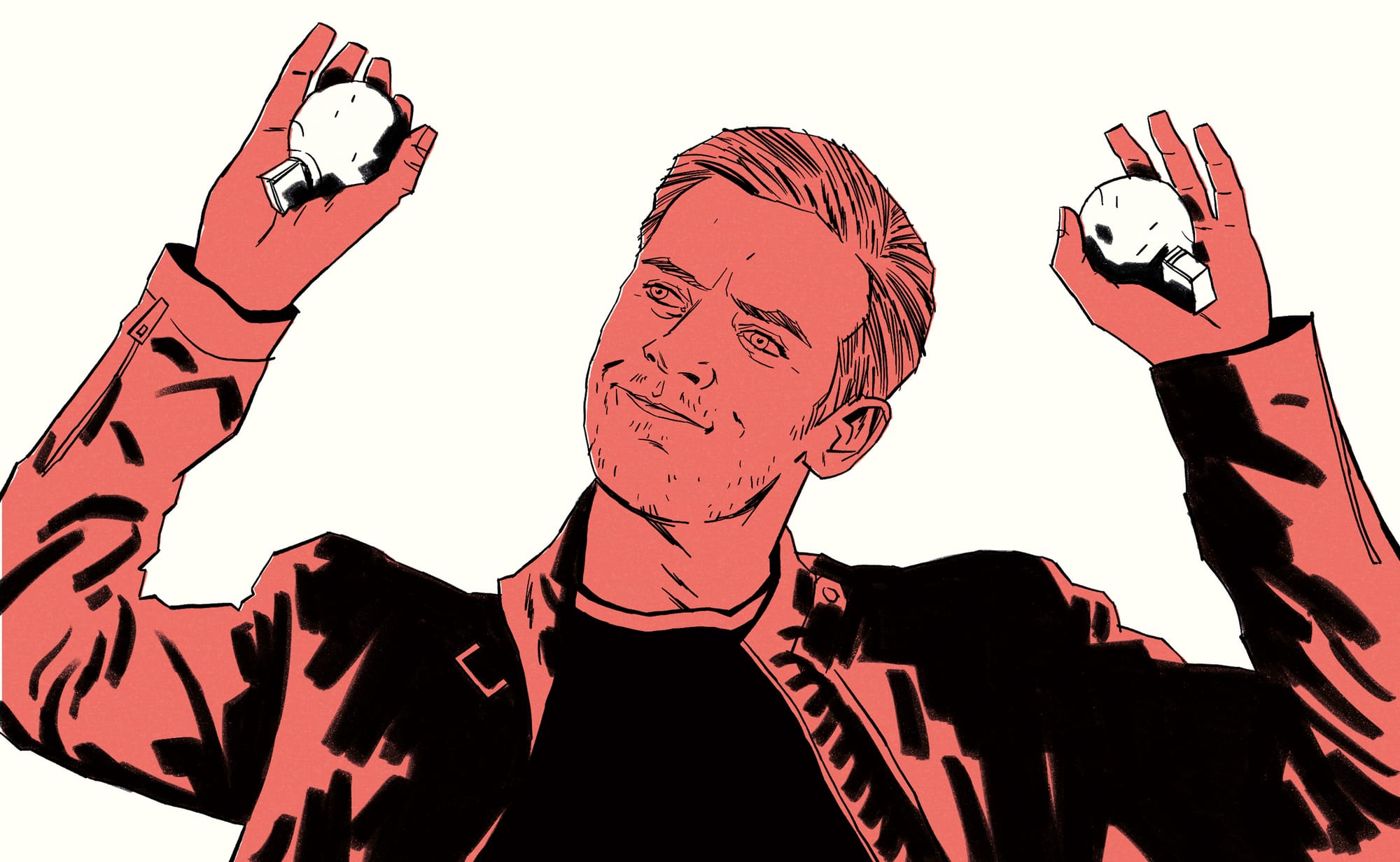
"He [Adam Wingard] found the idea of putting the guy from Downton Abbey in it funny, as did I." - Dan Stevens
It's extremely funny too. The editing and musical cues are sometimes laugh out loud hilarious, while Dan Stevens delivers a career-defining performance as David. All Aw-Shucks Kentucky charm in one moment, and cold-bloodied unblinking killer the next. You can absolutely understand why a grieving family might invite this stranger into their home - and how he could manipulate those around him - but Stevens also sells the darkness. The calculating, Captain America-gone-wrong super-soldier underneath. Stevens knows how to play that tonal whiplash for laughs. His winking delivery seems designed to give the audience permission to chuckle. Indeed, the looks of exasperated annoyance that cross David's face as he once more has to murder a witness are funnier than any self-styled "comedy-horror" film. There's a sense that his Jason Bourne programming won't allow him to leave any loose ends while a small, human part of him just wants it all to be over. The little rueful, almost embarrassed smile he gives the patrons of a diner, just before he unleashes two grenades into it, always delights me even when the reality of what is happening is desperately bleak. His expression seems to be saying: "I'm very sorry about this, folks."
"There's obviously British charm and Southern American charm... which are... there are some overlaps there, I would say, in terms of passive aggression." - Dan Stevens
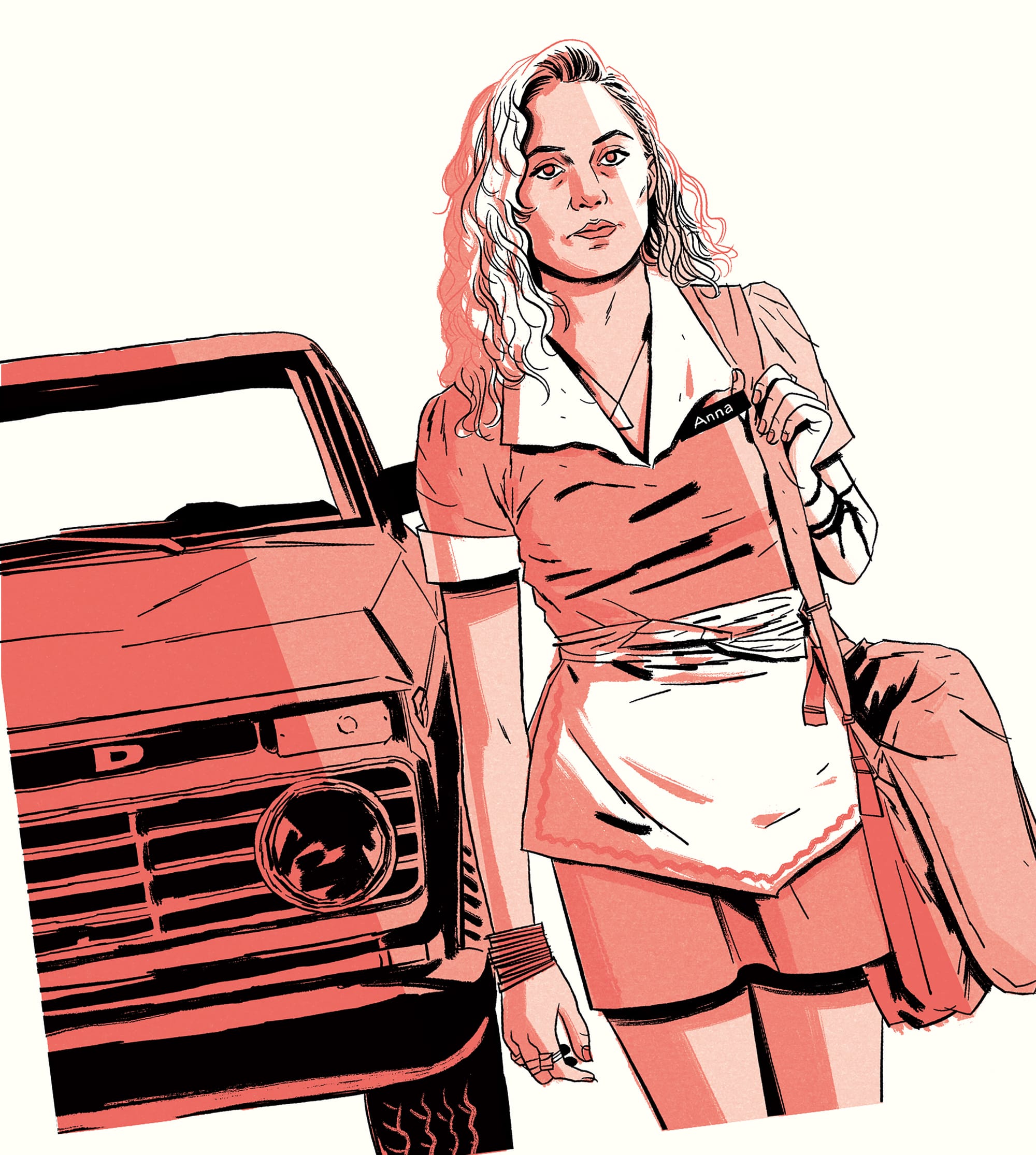
Maika Monroe is excellent too as the older sister who first suspects something doesn't add up about David. Monroe and Stevens have, I think, established themselves now as the Scream Queen and King of the 2010s. Between them they've been dominating the horror landscape ever since The Guest with It Follows, Apostle, Villains, The Rental, Cuckoo, Longlegs, Abigail, The Ritual, Onslaught, and soon - They Follow.
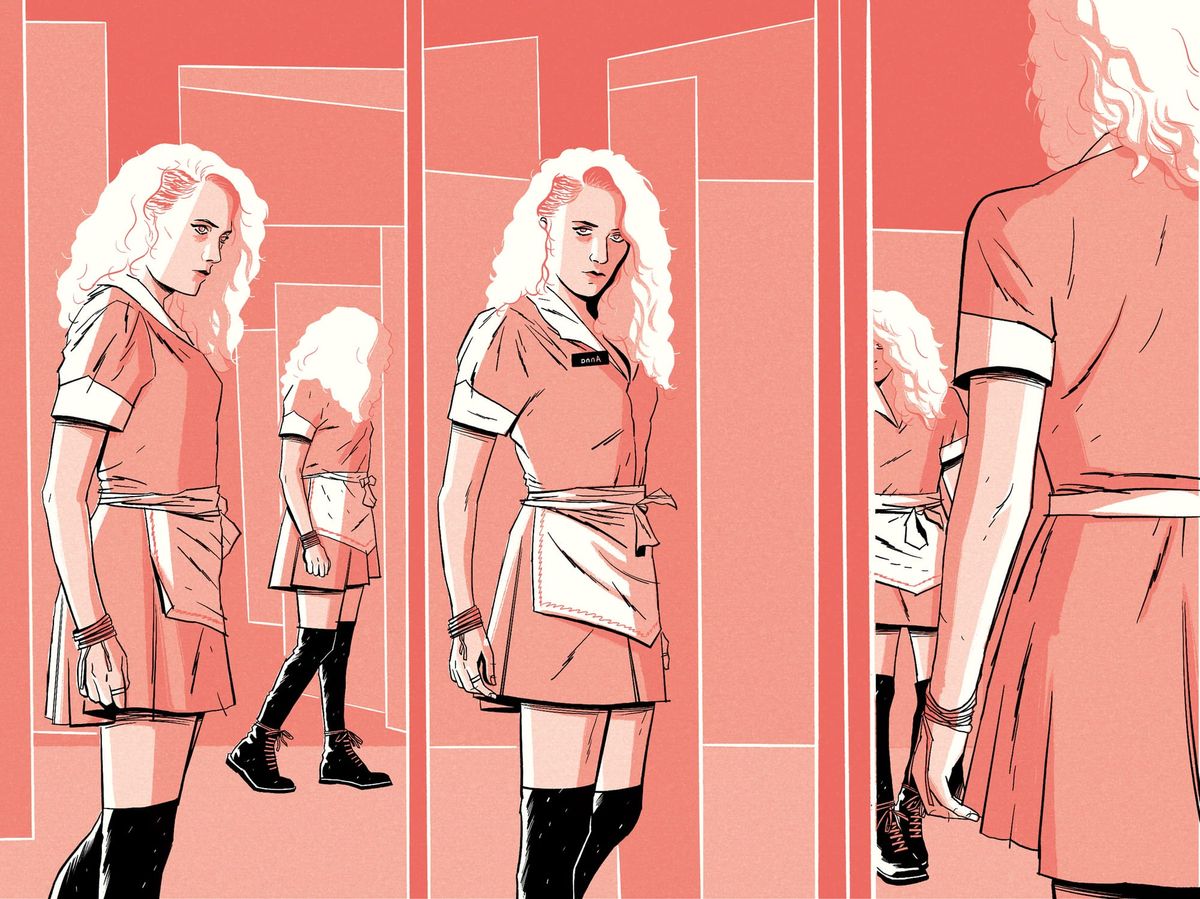
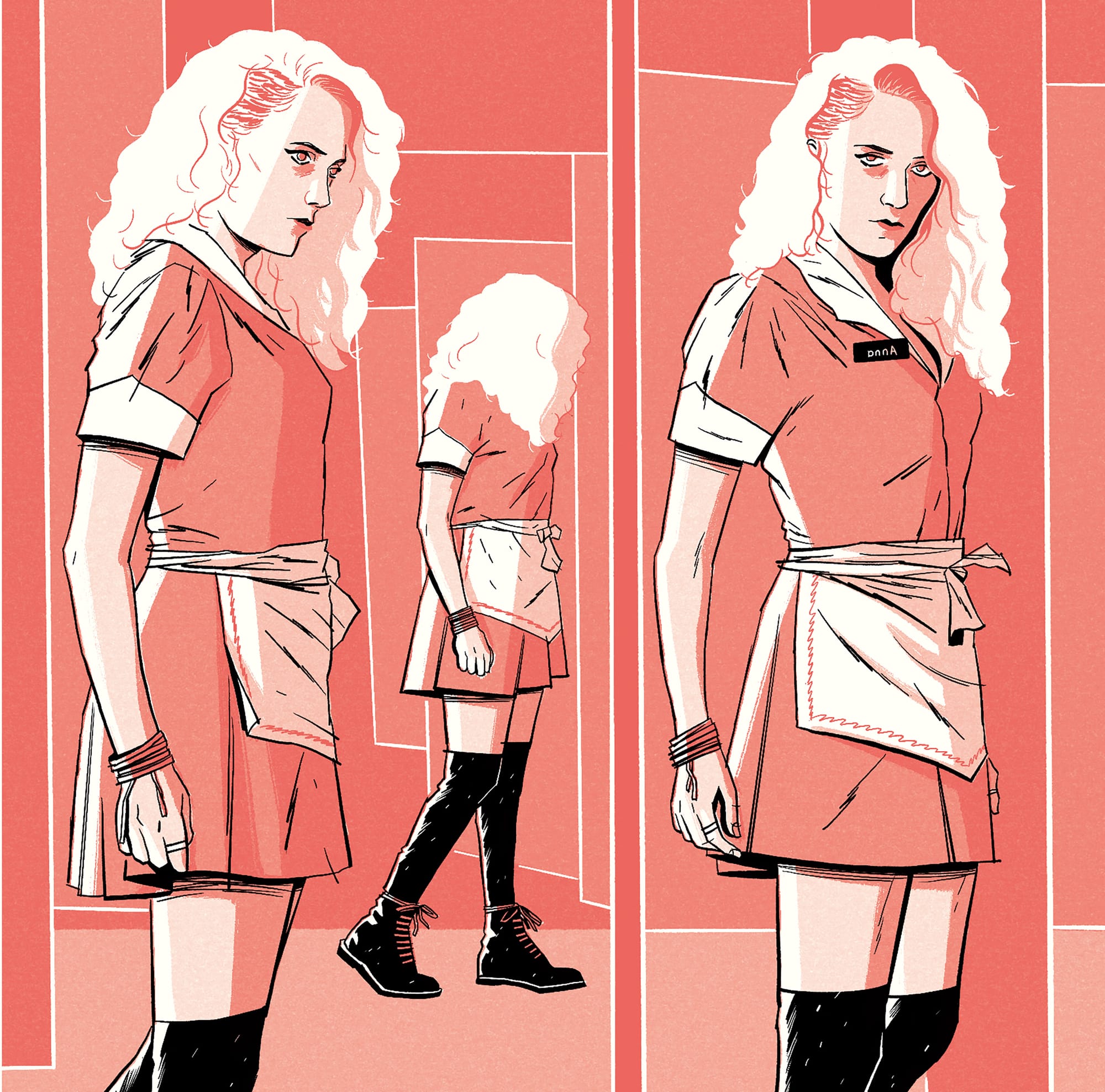
Monroe's character, Anna, was originally written to be similar to Lydia in Beetlejuice. You can still see the seed of that in Monroe's performance. A dry, sarcastic, hipster goth teen who is desperate to escape suburbia and her grief. Her diner uniform is one of the more iconic final girl outfits of the 21st Century.

"In the same way Carpenter says all his movies are westerns, I think all my movies are musicals." - Adam Wingard
Wingard's most stylistic flourishes occur with the music. The Guest has one of the finest soundtracks of a modern horror film. Full of excellent goth and synthwave needle drops, plus an original score heavily influenced by John Carpenter and Alan Howarth's work on Halloween 3: Season of the Witch.
It's a soundtrack that's had an outsize influence on film scores and the popularity of synthwave, despite The Guest's lack of mainstream success. The creators of Stranger Things later cited The Guest as having introduced them to Survive, who soundtracked the show. In fact, the music left such an indelible impression that Wingard later released, with original composer Steve Moore, the soundtrack to an unproduced sequel.
"We must guard against the acquisition of unwarranted influence, whether sought or unsought, by the military industrial complex." - Dwight D. Eisenhower, 1961
You're Next and The Guest, arrived at the end of the torture porn cycle and helped usher in a new era of neo-slashers that eschewed the gratuitous cruelty and misogyny of those films without sacrificing the gore. The films are not quite satires in the vein of Scream, but retain a knowing, tongue-in-cheek flourish that make them, I'd argue, spiritual successors.
They are both, in a sense, home invasion slashers, and have at their thematic centre a deeply critical view of the military industrial complex. David himself is ultimately a metaphor for America in the Middle East - manipulating his way into a new territory and leaving only death and destruction in his wake.
I'm very curious to see how the filmmakers' new work responds to Iran, Pete Hegseth, and the renaming of the "Department of Defence" to "Department of War." It feels like fertile ground for the continuing adventures of KPG.
Exhumed Contents
- American Meat Grinder: Bloody Disgusting tracks Wingard and Barrett's history of Military Horror.
- I'd recommend the Second Sight 4k releases of The Guest and You're Next if you're thinking of splashing out on some physical media. The Guest has an especially lovely new colour grade and a ridiculous amount of bonus features that I leaned on while writing this.
- Simon Barrett does a nice bit of paying it forward and answers aspiring filmmakers' questions here.
- An incredible viral moment on Good Morning Britain when Dan Stevens is asked what he had to do to get the role of David.
- If you haven't seen The Guest and you're not sure if you'll enjoy it - I think this scene should give a good sense of if the tone will work for you.