The World's A Hungry Place
On Recovery, Psychic Anime Battles, and Doctor Sleep
This is part of a series of essays about my favourite horror sequels. Read the introduction here, and the full archive here. Subscribe for free to have it delivered to your inbox every other day in October. If you're enjoying it, you can show your appreciation by buying me a coffee or sharing it with friends.
Spoilers: I try my best not to spoil the films I discuss, but if spoilers ruin your viewing experience, it might be safer to watch the films before reading.
Doctor Sleep (2019) Dir. Mike Flanagan
Plot Summary: Years after the events at the Overlook Hotel, Danny Torrance struggles with his own alcoholism and recovery in adulthood. His quest for a peaceful life is interrupted when he meets Abra, a child with the same ‘shining’ he has long since learned to hide. Together, they find themselves pitted against a group of psychic vampires known as the True Knot.
Note: I wrote a version of this essay as part of my first Grave Offerings series in October 2023. I've updated and reworked it for this year as it remains one of my favourite horror sequels. Is this essay itself a sequel now?
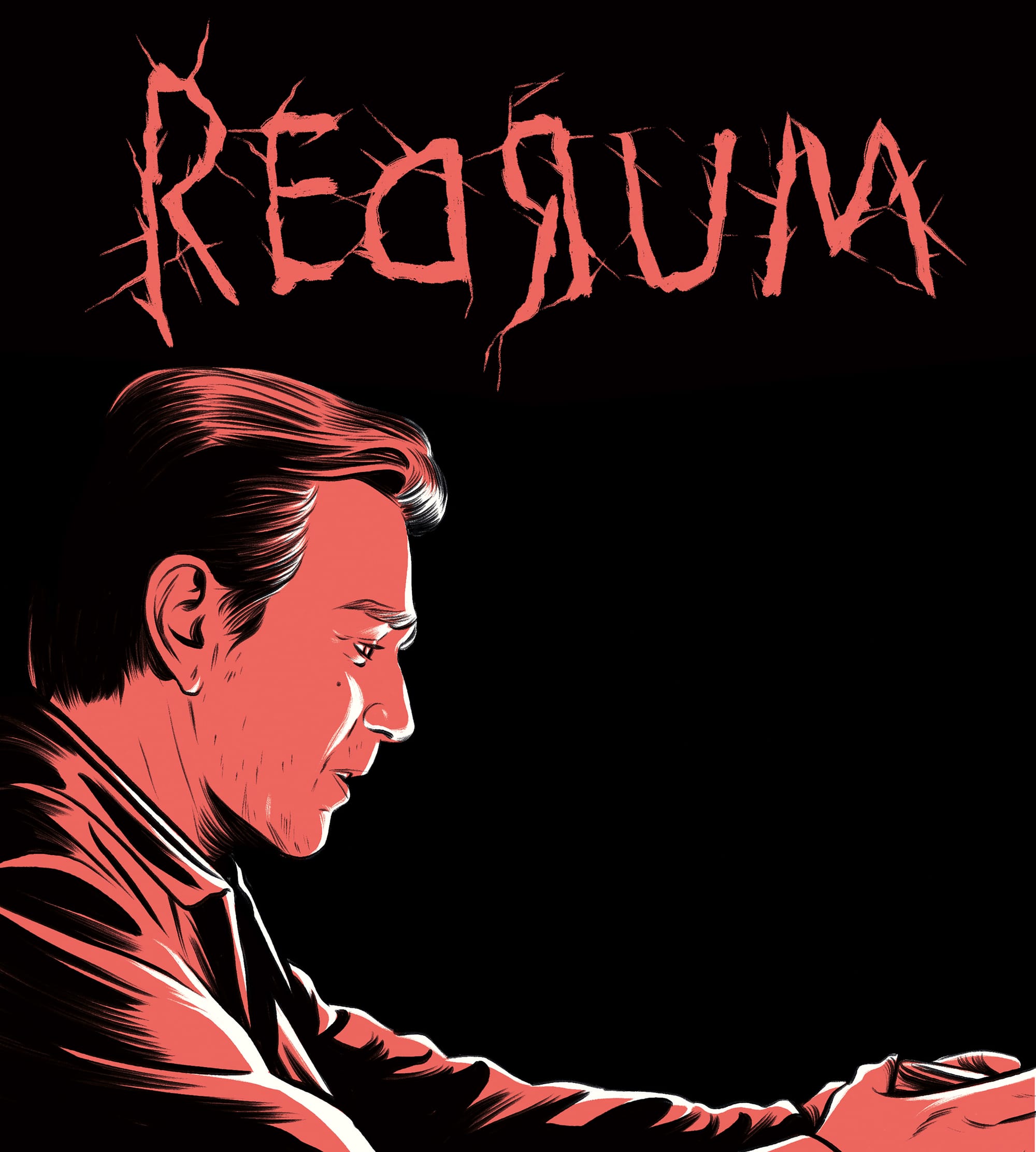
“Man takes a drink. The drink takes a drink. And then the drink takes a man. Ain’t it so, Dad?” - Danny Torrance
I think this quote - sometimes attributed to Fitzgerald - is an old Irish proverb rather than a King/Flanagan original, but whatever the provenance, I think it might be the most efficient horror story ever told. It’s essentially The Shining in a sentence.
"Medicine. Medicine is what it is. Bona fide cure-all. The mind is a blackboard, and this is the eraser." - The Bartender
Since I first recommended this film in 2023, I've had several friends come up to me and say they gave this film a go and couldn't get on board. Couldn't see what I saw in it. Even those who generally like Mike Flanagan's work (and a lot of people just bounce off him entirely). I'm not particularly sure I can mount a defence of it - sometimes a film just works for you and it's hard to completely articulate why that is - but I'm going to try anyway.
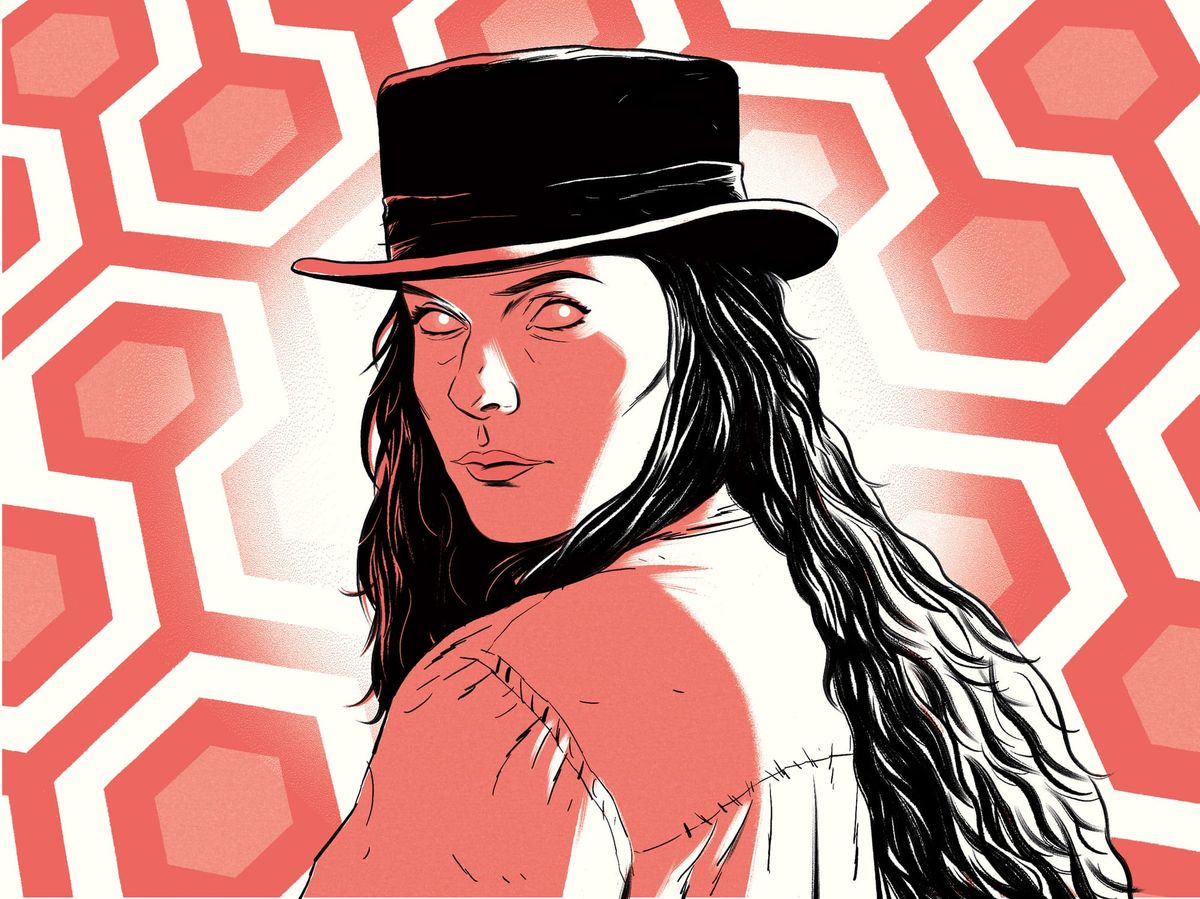
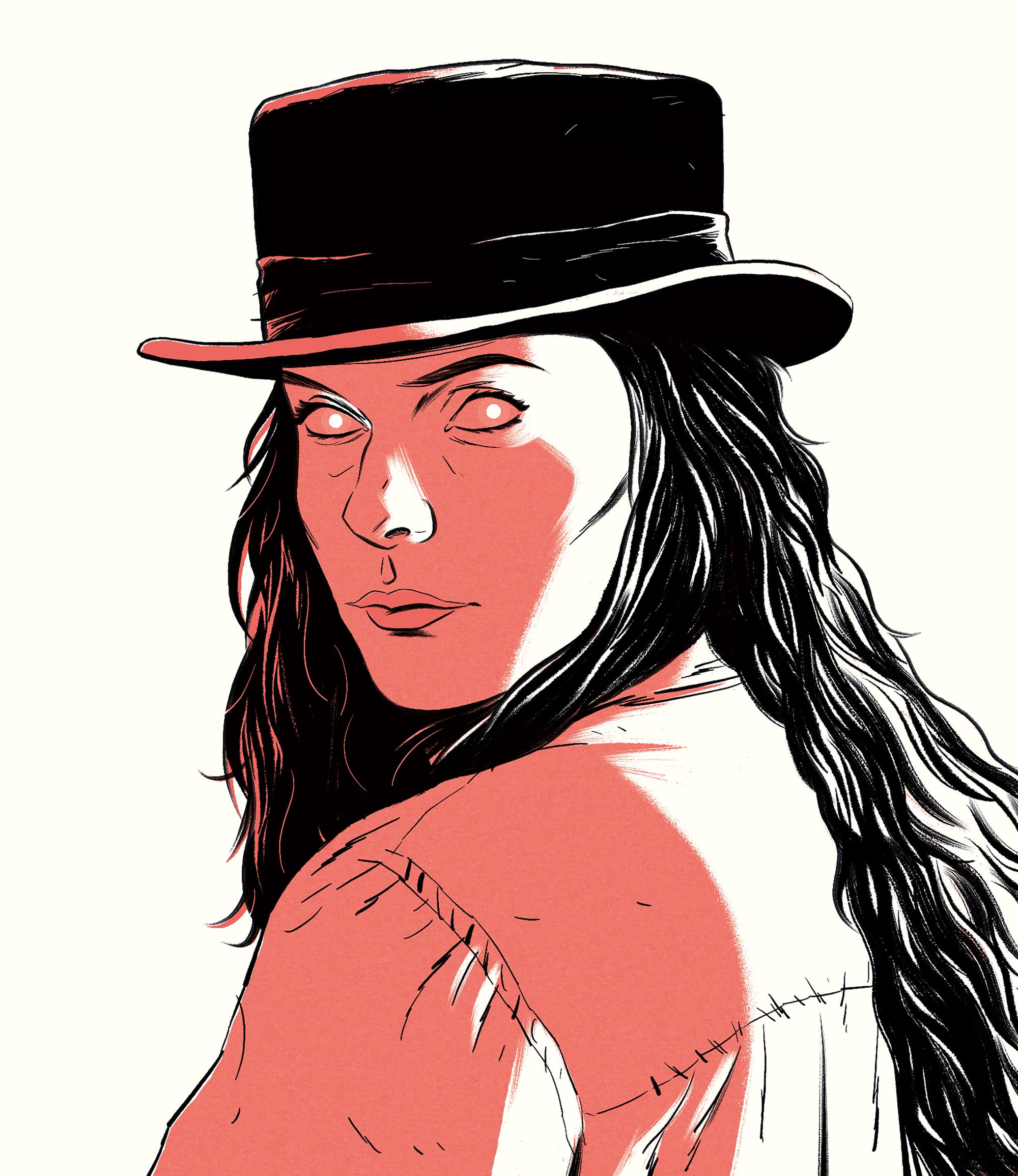
Certainly, the film has a lot going against it. Firstly, the central antagonist, Rose The Hat (played by Rebecca Ferguson) is a character design that feels straight out of the mind of Neil Gaiman or Amanda Palmer (derogatory). More concerningly: Roses' band of boho chic travelling psychic vampires, the True Knot, move from town to town in a caravan feeding on gifted children - calling to mind racist, fear mongering stories around the Roma community.
Secondly, despite being the treasurer of the Mike Flanagan Apologist Club, even I will admit he is no Stanley Kubrick. He is an excellent director in many ways, but very few will hold up well when compared to Kubrick. Even the choice to direct a sequel to one of his films is viewed by many as an act of absurd hubris that immediately puts most cineastes' backs up.
Thirdly, the story of Doctor Sleep - on the face of it - is essentially a deep dive into Stephen King lore. And as we've established, the more you understand about the thing hiding under your bed, the less scary it becomes. There are times when Doctor Sleep feels like Stephen King writing his own take on The X-Men. And for many, that sounds objectively awful (but be honest with yourselves, it does actually sound a little bit fun).
Even something that you might consider in the plus column for Flanagan - his experience showrunning several Netflix TV shows and honing his storytelling craft - results in a film that runs, if you watch (and you should) the director's cut, to three hours. As someone who strongly believes that you have to have a really good reason for your horror film to be longer than 90 minutes, this should be a dealbreaker for me.
But it isn't. When I throw Doctor Sleep on I don't even notice the runtime. It completely transfixes me, and before I know it I've lost three hours. I think this is one of those rare instances where the indulgent runtime feels necessary. It plays to Flanagan's strengths at creating characters and relationships you care about. If the explanations, lore and world-building ultimately defang the ghosts of The Overlook or the True Knot, a secondary fear is established in their place. The thing that scares me about Doctor Sleep is that Danny might fail in his efforts of redemption and recovery and that Abra might suffer because of it. Is Abra doomed to follow the same self-destructive path of Danny?
"Our beliefs don't make us better people. Our actions make us better people." - Danny Torrance
Doctor Sleep had an impossible job. How do you make a sequel to one of the most beloved and revered horror films of all time? How do you put yourself up for comparison to Stanley Kubrick? While at the same time making Stephen King, who famously hated Kubrick’s adaptation, happy?
The skill of Flanagan is that he takes what could be irreconcilable problems: that of The Shining's legacy, the conflicting outlooks of two masters of their craft, and living in the shadow of what came before - and folds these into the thematic text of the film itself. The story is already about dealing with intergenerational trauma, redemption, and finding closure. The meta-textual layers just feed it.
The Shining is a masterpiece. Like any horror fan, I like The Shining. But more so for the craft, the visuals, the mise-en-scène. On an emotional level, it has always felt cold and nihilistic to me. That’s by design of course, but I don’t really feel anything when I’m watching it. Maybe like is the wrong word. I admire it. I can understand why Stephen King had issues with it. The book was about King’s own battles with addiction and as such, Jack’s love for his family and redemptive final act were crucial to a story that was deeply personal to King. Kubrick’s vision, in contrast, is a bleak and uncompromising portrait of toxic masculinity, and domestic abuse.
Horror stories say a lot about the worldview of the author/creator and I find the disagreements between Kubrick and King particularly revealing.
“Man isn’t a noble savage, he’s an ignoble savage. He is irrational, brutal, weak, silly, unable to be objective about anything where his own interests are involved—that about sums it up. I’m interested in the brutal and violent nature of man because it’s a true picture of him. And any attempt to create social institutions on a false view of the nature of man is probably doomed to failure.” - Stanley Kubrick
Stanley Kubrick, the original doomer.
While I’m not immune to feeling like this at times, I just inherently disagree with Kubrick’s indolent and defeatist view of humanity. A lot of Kubrick’s films are very good at pointing out the problems with the world: with patriarchy, with colonialism, with white supremacy. But they do so with an almost bored shrug. As Maggie Mae Fish points out in her video essay about Kubrick: “description is not analysis.”
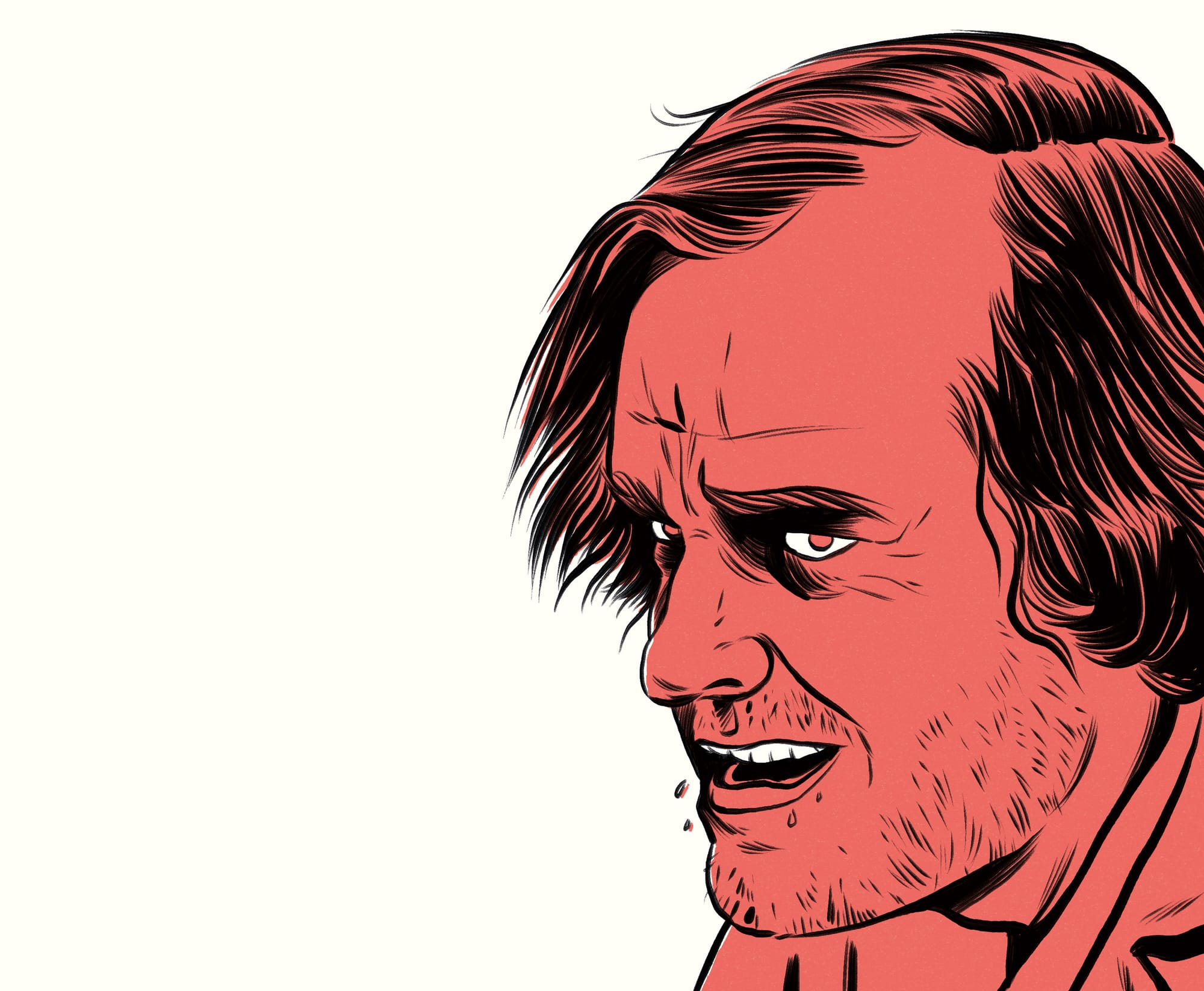
“There can be no horror if there isn't caring and love.” - Stephen King
While I disagree with this quote as an absolute, universal truth about horror, I think it’s a strong guiding principle to understanding the horror of Stephen King. If I’m being completely honest, I also think it’s the sort of horror that I’m most drawn to. I like a bit of nihilism in my horror now and again, but it’s the stories that offer a way out - and empathy - that stay with me.
Which, in a very roundabout way, brings me to Mike Flanagan.
In contrast to Kubrick, Mike Flanagan’s work is warm, earnest and human. In that way he’s a perfect fit for the broadly optimistic horror of Stephen King. If The Shining, as a film, was about the traumatising impact of patriarchy, alcoholism and domestic abuse, Doctor Sleep is about recovery. In that sense alone, I think it makes a compelling case for its existence. A worthwhile bookend. An answer to The Shining's question.
But it isn't just Danny Torrance's sobriety that we see in Doctor Sleep, we also see what unrepentant, unrestrained addiction looks like in the form of the True Knot. Their continued, eternal existence relies on terrifying, hurting, and ultimately consuming young children. No doubt something King worried he was doing to his own children at the height of his alcoholism.
"Eat well. Stay young. Live Long." - Rose The Hat

While the film returns to The Overlook in the final act, and deploys some of the iconic visuals from The Shining by doing so, it never feels like it is trying to ape Kubrick in any way. It very deliberately tries to develop it's own visual language and steers clear of too many Kubrickian tics. For me, it is at it's best when it leans into inventing entirely new flavours of horror. Ones that I don't feel I've seen anywhere else. This is especially successful when dealing with psychic battles/invasions. There are a lot of anime-adjacent mind battles in Doctor Sleep and the way Flanagan adapts them into decipherable, visual, and cinematic sequences is kind of astonishing. These are the sorts of passages in the book you might read and say "I think this might be unadaptable", but Flanagan pulls it off and makes it look easy. There's an especially beautiful and haunting sequence, in which Rose geolocates Abra, that is unlike anything I've seen.
"We don’t end Charlie. I know that for certain. I don’t know much else, but I know that we don’t end." - Danny Torrance
Despite not having the greatest American accent in the world, I find Ewan McGregor as watchable as ever in this. His childlike portrayal of Danny as a broken, but recovering, adult is one of his best performances I think. I wonder if that has something to do with McGregor himself being a recovering alcoholic. There's a sort of halting, uncertain immaturity to the way he talks and acts that slowly fades away as his confidence in himself returns. His speech to his AA group when he collects his 8 year chip is one of the more moving scenes of the film. He rounds out an excellent cast across the board who all somehow manage to deliver great performances without being driven to the state of nervous exhaustion.
When Flanagan started working on Doctor Sleep, he was still drinking, though it had become “obviously problematic in my life”. I find it interesting that someone still in the throes of addiction could tell such a powerful story about sobriety, but I think it’s telling that he got sober during production.
“I never told you this, but I sobered up while we were shooting Doctor Sleep, and I don’t think I would have done it without your words. Living in that story, and marinating in the concepts of recovery and redemption made it possible. I just want to thank you.” - Mike Flanagan (to Stephen King)
When it came out, Doctor Sleep bombed in the cinemas. I think people are starting to appreciate it more now, but it still feels underrated. If you skipped it assuming it’s just another cynical franchise sequel, I’d urge you to give it a try. I think it's a rich, moving, weird and rewarding text as long as you're willing to meet it where it is. I adore it.
Exhumed Contents
- Part of why I wanted to revisit this, and post it early in October, was because Mike Flanagan's TV adaptation of Carrie is getting released this Weds (Oct 7th). Once again, to try to follow in the footsteps of, and draw comparisons to, a visionary director like Brian De Palma feels like another act of creative hubris that can only backfire. Like a sequel to The Shining, it also just didn't feel, to me, like something especially necessary. But having watched the trailer, I realised what Flanagan clearly already knew - exploring how a teenager is bullied in an American high school in 2026 could actually be fascinating and vital. In the decades since the publication of the book, school shootings have become commonplace, as has cyber-bullying. In King's shared universe, Carrie is just another kid with the shining, like Danny Torrance. The story didn't have to end the way it did. That line in the trailer: "All I ever wanted, was to go to school" already has me welling up.
- In fact, this all reminds me of one of my favourite modern horror films: Eighth Grade by Bo Burnham. I'm only half joking when I call it a horror film.
- I am so pleased to see Matthew Lillard become part of Flanagan's repertory theatre. He is, in my opinion, a perfect fit for Flanagan. Just a raw emotional nerve of an actor, seemingly only seconds away from exploding into tears.
- Don't take it from me, here's Regular Eyepatch Wolf admitting his fondness for Doctor Sleep despite himself: "It's just a confident, weird, insane movie and I kind of love it?" Which is a much more concise version of this essay.
- Fangoria on Alcoholism and Recovery in The Shining and Doctor Sleep. Some interesting thoughts here about the ways that the 12 Steps of AA are incorporated into Doctor Sleep.
- Accept The Expanding Ball of Infected Corpses You Cannot Change. Relatedly, Sophie Abromowitz has written an excellent piece about the new Resident Evil film and how it (and survival horror in general) is a perfect metaphor for addiction.
- Daniel Netzel’s video essay on how Doctor Sleep reconciles King and Kubrick is great.
- Script Apart interview Flanagan on how he wrote the screenplay for Doctor Sleep here. They also did a great interview with him for Midnight Mass. I found both interviews illuminating.
- An excellent Skip Intro video about the way Mike Flanagan - once an editor for RuPaul’s Drag Race - edits horror.
- Maggie Mae Fish’s video about the Myth of Auteur Theory - comparing Kubrick’s approach to filmmaking with Lynch - is essential viewing. Especially in regards to Kubrick’s abusive treatment of Shelley Duvall.
- Kings of King - a podcast discussing the adaptations of Stephen King - on Doctor Sleep. What is funny about the podcast is that as time goes on, Doctor Sleep creeps higher and higher up their ranking of Stephen King adaptations as they become increasingly fond of it - as all right-minded people do.