It Is Said A Monster Came Here

On American Interventionism, Big Game Hunters, and Prey
This is part of a series of essays about my favourite horror sequels. Read the introduction here, and the full archive here. Subscribe for free to have it delivered to your inbox every other day in October. If you're enjoying it, you can show your appreciation by buying me a coffee or sharing it with friends.
Spoilers: I try my best not to spoil the films I discuss, but if spoilers ruin your viewing experience, it might be safer to watch the films before reading.
Prey (2022) Dir. Dan Trachtenberg
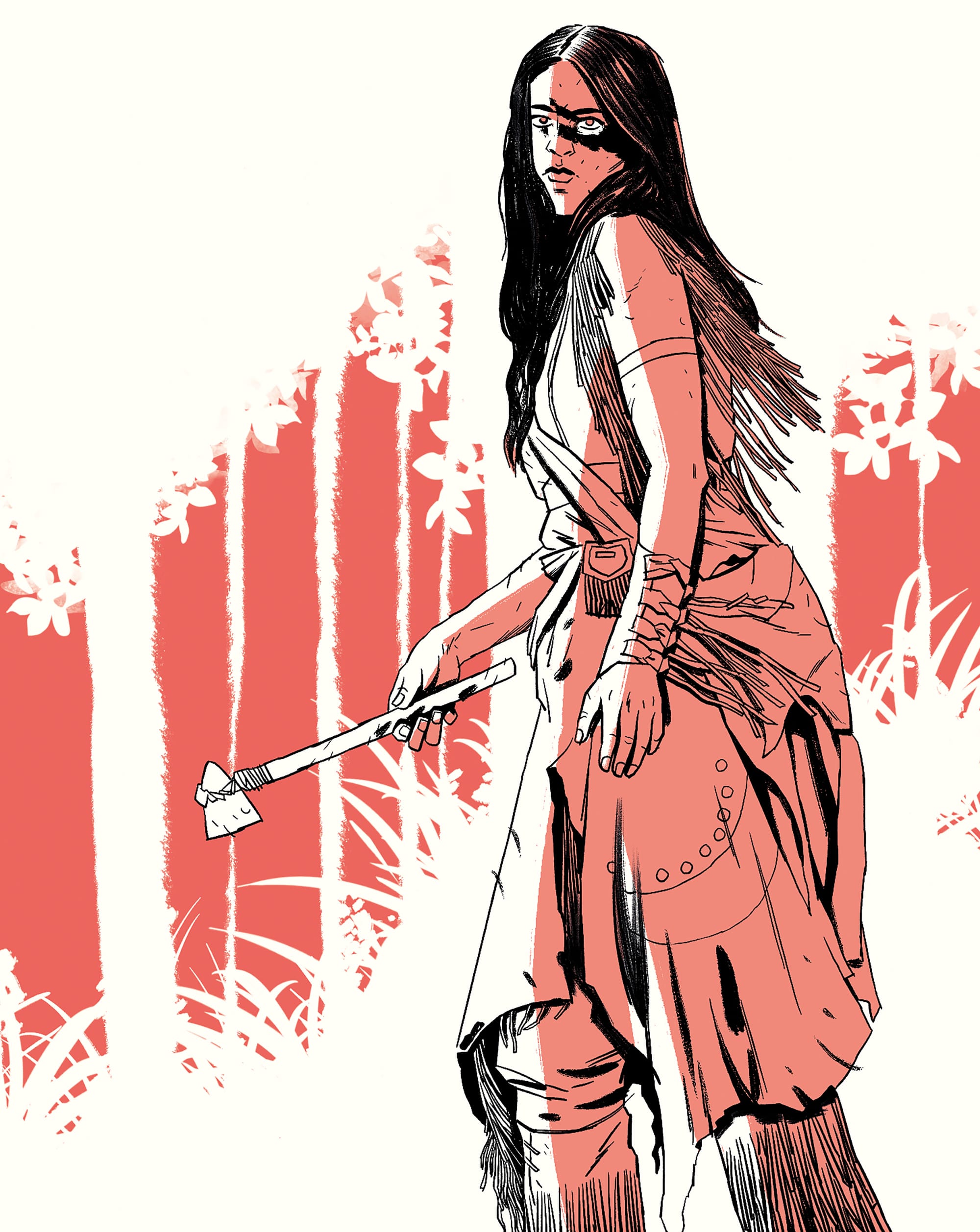
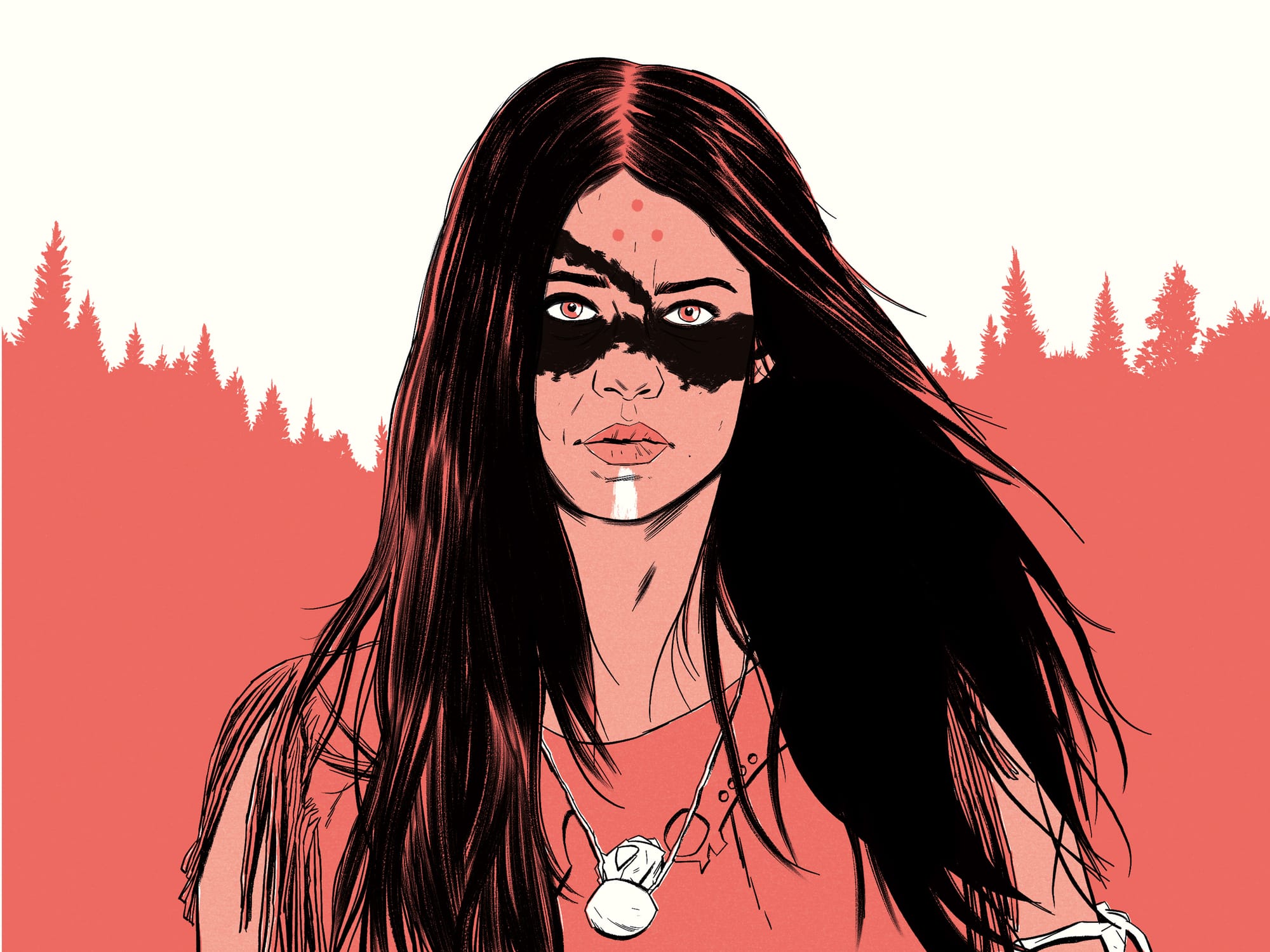
Plot Summary: In 1719, in the Northern Great Plains, a young Comanche woman called Naru wants to prove herself as a hunter.
"The cult of American hyper-masculinity is one of the worst things that has happened in the world during the last fifty years. Hundreds of thousands of people died because of this stupid illusion. So how is it possible to watch a movie called Captain America?" - John McTiernan
Even though John McTiernan's Die Hard came out in 1988, late into that decade, I feel like it has become synonymous with what we think about as the prototypical masculine '80s action film. It's success led to a decade or more of Hollywood iterating on a formula that felt, for a while there, idiot-proof: Die Hard on/in an X.
If Die Hard was Die Hard in a building, we were subsequently treated to: Die Hard in an airport, Die Hard on a plane, Die Hard on Air Force One, Die Hard on a bus, Die Hard on a boat, Die Hard on a mountain, Die Hard on a train, Die Hard on Alcatraz, Die Hard in a sports stadium etc.
A year before Die Hard, McTiernan delivered another seminal '80s action classic: Predator. But what's been surprising is how much Hollywood has struggled to process the success of that film into a reliable, repeatable formula in the same way. At least, that was the case until Dan Trachtenberg finally figured it out with the fifth/seventh (depending on if you include the Alien vs Predator films) instalment - Prey - 35 years after the original film's release.
McTiernan was an unlikely action director: he studied at Juilliard and graduated at the AFI conservatory under Ján Kadár. His dad was an opera singer and John started out working in theatre. His first film, Nomads, was a low-budget horror he wrote himself. None of this points to him making a coked out, Arnold Schwarzenegger led, sci-fi action-horror mash-up as his second feature.
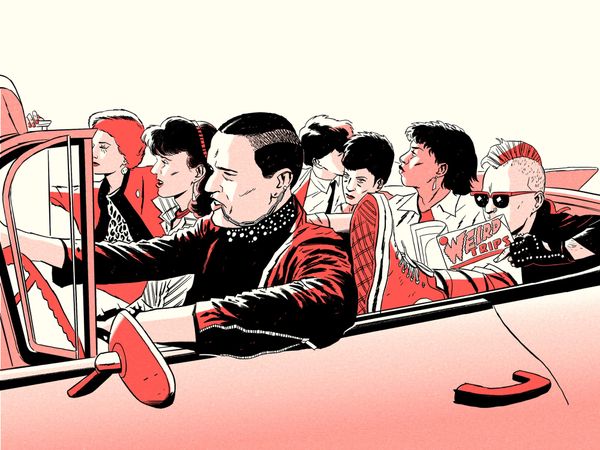
The script - by brothers Jim and John Thomas - was a riff on The Most Dangerous Game. Replacing a Russian aristocrat who targets human prey for sport with an alien who does the same. Even as future instalments have tried to add lore to the Predators, I've always imagined that their species, seemingly solely - myopically - focused on hunting, has stolen all their high tech weaponry from the cultures they've invaded and colonised. Essentially aristocratic, British big game hunters with admittedly much cooler outfits.
McTiernan took the premise and racheted up the '80s American military bravado to absurd, almost farcical levels. When the studio demanded more of what McTiernan described as "gun porn," he added in a scene in which his gang of soldiers empty their weapons into the bushes for about five straight minutes. It's like a Stewart Lee routine that keeps going and going and going.
"Finally I got mad and I said, 'Alright, I will give you a gun scene that ends all gun scenes. I will give you so much gun pornography that you just don't need anymore.' So I invented that scene. 'Okay, guys, we're going to spend five minutes where we do nothing except blaze away with stupid guns.'" - John McTiernan
The punchline that undercuts it all?
"Not a thing. Not a fucking trace. No blood, no bodies... We hit nothing!" - Poncho
[As a quick side note, just quoting this film is making me want to rewatch it immediately.]
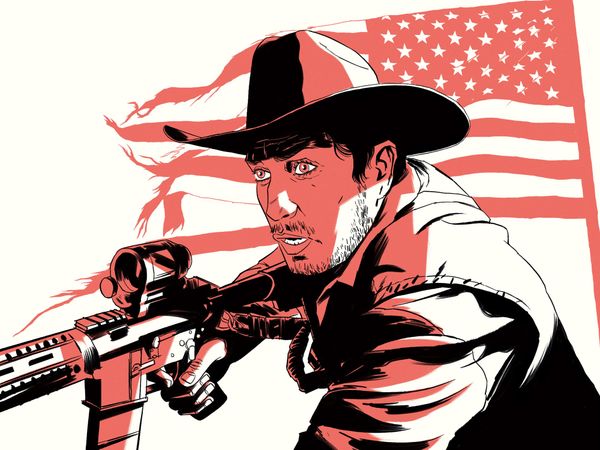
In retrospect it feels surprising that McTiernan, at the height of the Reagan era's gung-ho imperial supremacy, got to make a film that so deliberately deflated America's view of itself. Predator takes that pumped up jingoistic hubris, embodied by the obnoxious hyper-macho muscle-men soldiers, and then proceeds to undermine them at every turn. All their guns and superciliousness and they still get brutally executed one by one.
There's even a critique of American interventionism in South America and the drug war in there. It's Verhoeven adjacent satire hidden, like Verhoeven's best work, in plain sight as unquestioning triumphalism. McTiernan gets away with it because that triumphalism is played so straight - with a rousing, iconic score from Alan Silvestri and Arnie prevailing in the end.
It's the satirical edge of the film that the ensuing sequels seemed to either ignore, forget or completely misunderstand (although Predator 2 at least continues the critique of America's War on Drugs). I'm not even convinced that Dan Trachtenberg, current steward of the Predator films, and producer of the best sequels so far, necessarily registers this side of the original film.
The Predator franchise has always been compared, unfavourably, to the Aliens series. Partly due to both being owned by 20th Century Fox (now Disney), but mostly thanks to a background gag in Predator 2 where we glimpse a wall of hunting trophies on the Predator's ship. One of which is the skull of a xenomorph. This naturally inflamed the imaginations of fans everywhere and a showdown between the two iconic creatures was all but inevitable (I remember avidly reading the Dark Horse comic series all the way back in 1990).
But where Alien was a rich text that could be, and has been, interpreted and played with in a variety of ways by an array of visionary filmmakers, Predator was always, at it's heart, a fairly straightforward action film. Alien's dumb cousin.
One of the interesting connections between the two franchises is that the original design of the Predator was a complete dud and so the production team sought out Stan Winston to design something better. According to Winston, he was sat on a plane drawing designs next to Aliens director James Cameron. Cameron said: "you know, I've always wanted to see something with mandibles..."
The Predator sequels spent two or three decades scrambling for a point of view or reason to exist. The films weren't awful, but they always felt brainless and unfocused to me. There was no satirical bite, and the more the Predators became central characters of the films, the less interesting they became. Because, crucially, the Predators are seasoning. Not the main dish.
This is a conclusion Dan Trachtenberg had appeared to reach (or so I thought) with his first entry in the franchise: 2022's Prey.

In the excellent 2019 Brazilian horror-thriller Bacarau, filmmakers Kleber Mendonça Filho and Juliano Dornelles introduce us to the community of the small, near-future titular town. The film spends time establishing the inhabitants of this town, their relationships to one another, and their day-to-day problems. But this quotidian, social realist drama is invaded - colonised - by a group of rich Americans who are there to hunt the town for sport. Metatextually, their presence turns the film into an entirely different genre - something the filmmakers reflect with a John Carpenter needle drop.
This is the smart structural move that Prey employs. For the most part, the film is a coming-of-age story of Naru, wanting to prove herself to her family, and community, as a hunter. The film takes it's time here. Makes you care about the dish: the characters, the relationships, the beautiful, untouched landscape - before adding the teaspoon of paprika that is a massive big game hunting alien who can turn invisible.
This is how a good Predator film should work. An interesting situation that is rudely interrupted by a Predator. As the saying goes: "Life is what happens when you're busy making other plans, and then a Predator shows up."
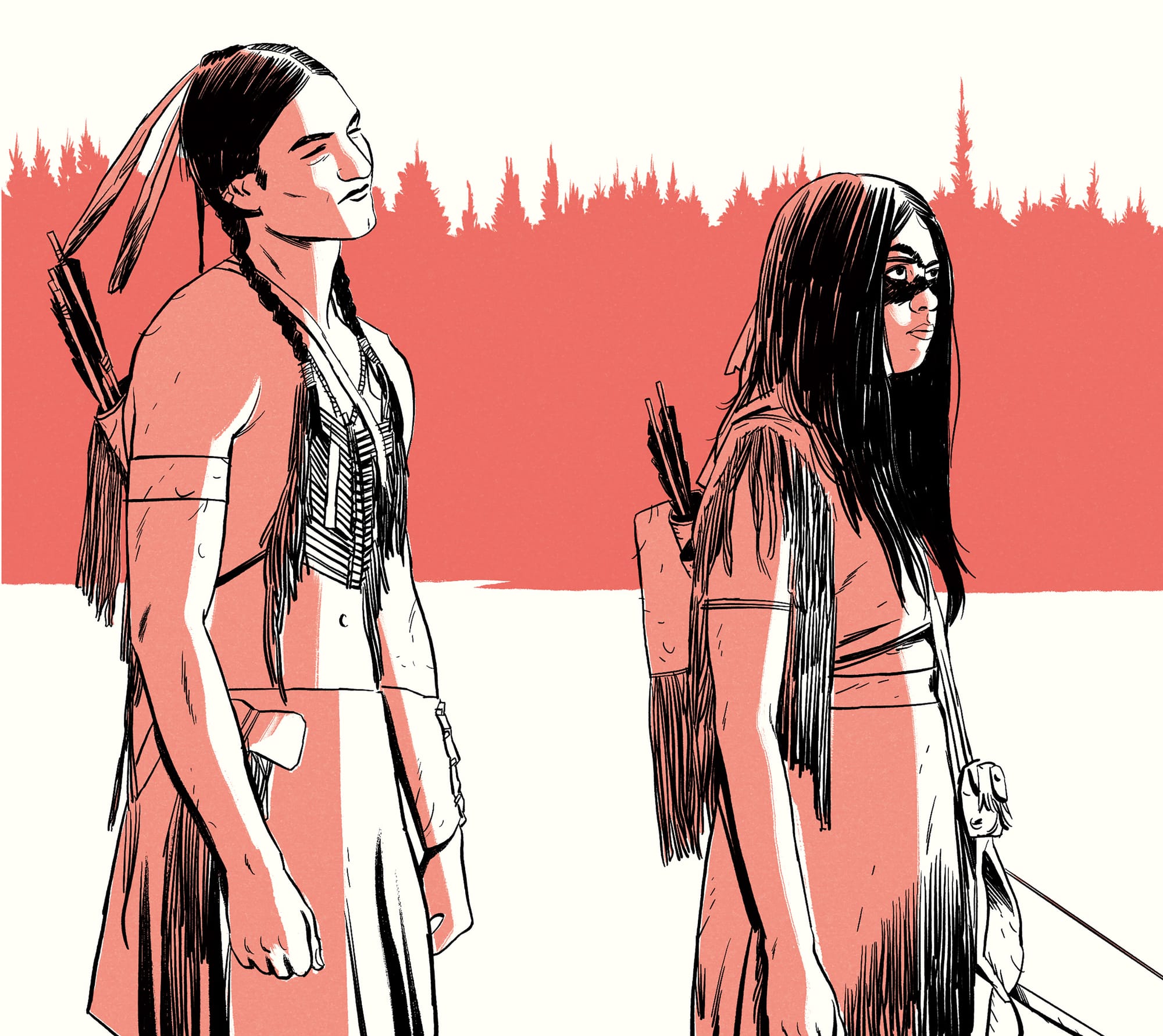
That idea works in several ways with Prey because while the Predator invading the land, and the story, of an indigenous population works on a metaphorical level, the very literal threat of European invasion is also a big part of the text.
Naru is beset on all sides by predators and traps of all forms. From quicksand, to snakes, lions, and bears, to the European voyageurs with their foothold traps, and of course, the Predator itself. Prey understands this is a fun genre film, but it also knows the real threat is not the Predator.
"A long time ago, it is said a monster came here." - Naru
That'll be us (Europeans).
Trachtenberg makes the limited (for a movie of this size and ambition) budget stretch well here and makes the case that future Predator films don't need to have excessive blockbuster budgets. Or if they do, that the money doesn't need to go on the monster, which can turn invisible. A smart director can use a Predator like Spielberg uses the shark in Jaws - mostly with the power of suggestion.
I wish I could have watched Prey without knowing what franchise it was a part of beforehand. Because this is shot unlike any other Predator film. I love the original Alan Silverstri score, but Prey abandons it here for a soaring, romantic soundtrack from Sarah Schachner. The film is short with anamorphic lenses, and fills the frame with the beautiful, expansive Canadian landscape. In direct contrast to the oppressive, sweaty Jungles of Predator and Predators. In Prey, there's a majesty and awe. It's all shot, as much as possible, with natural light sources and the production took advantage of the double-length "magic hour" that Calgary gets in the summer.
All of this goes to show that most Predator sequels took the wrong lessons. They all decided that the thing to duplicate was the militaristic bravado, the hyper-masculinity, the kitchen-sink score, the gun porn, and the "you're one ugly motherfucker" line. That's just the dressing. The core of it was always about pitting an underdog and their smarts against a grossly overpowered monster. Arnie doesn't win by being Arnie and bashing heads. He wins by being smart. Brains over brawn. The sequels forgot this. The fun of Predator's final act is setting the sneaky traps, covering yourself in mud, and being a little stinker!
This film makes such a strong case for Predator to become a franchise of lean, efficient anthology films with a great hook: Major historical event/warrior + a Predator. Pop a Predator into the Boxer Rebellion. Or the Genpei War. Or the American Revolution. Put a Predator up against a Gladiator. Or a Cowboy. Or a Pict. Make it a metaphor for resisting your oppressors.
Instead, bewilderingly, Trachtenberg followed Prey with Predator: Badlands - a variation on Lone Wolf and Cub with a Predator as the protagonist. Making the whole dish out of paprika. It works better than you might assume. Trachtenberg is a great director of action and is good at telling a story with it (surprisingly few action directors are good at that). But I can't help but be disappointed by the direction he's gone in. Simply put, I don't want to know more about the Predators or that I should apparently be calling them the Yautja. Mostly, all attempts at filling in their backstory or constructing their society has resulted in a poor facsimile of Klingon culture. But without the fun stuff like bloodwine and operas. I liked my head canon version of them as just cosmic aristocrats on safari. Ultimately, Trachtenberg's Predator: Badlands just felt like he'd forgotten all the things that made Prey so good.
Perhaps knowing that people might feel that way he also produced an animated feature: Predator: Killer of Killers. A portmanteau of three "Historical Figure + a Predator" stories that culminates in all three survivors facing a big boss Predator on an alien world. The short stories work well enough, but the rest all feels in service of a fairly rote, familiar world-building exercise that I have no interest in. Give me The French Revolution + a Predator! Give me The Crusades + a Predator!
But for all my disappointment of Trachtenberg's franchise ambitions, I put Prey on again the other night and had such a great time with it. It holds up well. Hopefully Trachtenberg will remember why.
Order of Service
- Predator (1987)
Of course. - Prey (2022)
See: this post. - Predator: Killer of Killers (2025)
The short stories work even if I have no interest in the larger world-building attempts. - Predator: Badlands (2025)
Dan Trachtenberg delivers a well crafted audition tape to direct a Star Wars. - Predator 2 (1990)
I admire the big swing of relocating the action to the concrete jungle of a near-future LA. But the execution provides mixed results. - Alien vs. Predator (2004)
An average Predator film, and an abysmal Alien film. But has a certain goofy charm to it. - Predators (2010)
Has an IDF soldier as one of the lead protagonists and that really lost me. - The Predator (2018)
Shane Black shows he didn't understand the original film that he starred in and delivers some uncritical rah-rah American militainment. - Aliens vs. Predator: Requiem (2007)
Mystifyingly, this opts to make the second meeting of two cinematic icons into a badly lit, boring, teen slasher.
Exhumed Contents
- If It Bleeds, We Can Kill It: a one hour making of featurette of Predator which really highlights the egos on that film.
- I'd recommend the Blank Check mini-series on John McTiernan's filmography. The Predator episode is a treat.
- Funnily enough, comics embraced the formula of "Iconic Figure + a Predator" long before the films did. We've had Judge Dredd vs Predator, Batman vs Predator, Tarzan vs Predator, and so many more.
- Dan Trachtenberg had good horror sequel priors before he gave us Prey. He also directed the very strong "spiritual sequel" 10 Cloverfield Lane which is worth watching if you haven't seen it already.
- I think you could make the argument that The Hunger Games series is also a horror franchise, and I have a real soft spot for those films. But having now written about The Purge films and Predator, I feel a third post about a variation of The Most Dangerous Game might be pushing it. For what it's worth, I think Catching Fire is my favourite of the Katniss films. But if I was to write about one of them, I think I might have chosen The Ballad of Songbirds & Snakes as it's about the political resistance of folk music and is, arguably, a musical.
- And yes, very excited to see Sunrise on the Reaping!
- The Goldsmith's University and College Union has now been on strike for 16 weeks, making it the longest strike in UK university history. The strike is protesting cuts totalling £22 million. As you can imagine, hardship funds are running low at this point, so they're asking for donations to help out. You can donate here.