
Another Glorious Day in the Corps
On Colonial Marines, The East India Company, and Aliens
This is part of a series of essays about my favourite horror sequels. Read the introduction here, and the full archive here. Subscribe for free to have it delivered to your inbox every other day in October. If you're enjoying it, you can show your appreciation by buying me a coffee or sharing it with friends.
Spoilers: I try my best not to spoil the films I discuss, but if spoilers ruin your viewing experience, it might be safer to watch the films before reading.
Aliens (1986) Dir. James Cameron
Plot Summary: A salvage crew discover Ellen Ripley 57 years after the events of Alien. After contact is lost with a colony on LV426, Ripley joins a group of Colonial Marines who are sent to investigate.
It had to be, right?
James Cameron - arguably the filmmaker who has repeatedly solved the riddle of how to make a sequel a creative, critical and commercial success - had to make an appearance in this series. His first film - Piranha 2: The Spawning - was one. Of the ten feature films he's directed, five of them are sequels. He's been responsible for at least three of the better regarded sequels in genre cinema: Aliens, Terminator 2: Judgement Day, and Rambo: First Blood Part II.
“A sequel walks a very fine line. You have to be satisfying to the fans with familiarity. You also have to twist and turn in really unpredictable ways and make it fresh and make it surprising. But surprise itself is a double edged sword. You can surprise people in ways that are not satisfying, which offend them. So all surprises must be pluses. You also have to be creative, and you have to make it yours, and you have to do your own thing, but you can’t do that at the expense of what the audience cares about.” - James Cameron
Aliens is not only a great horror sequel, it's one of my favourite films of all time. It had a huge impact on me as a kid and, like a lot of people I think, sort of unlocked or nudged something loose in my brain that created a cinematic sci-fi taste profile that I've been chasing every since.
All of which has made this the hardest piece to write and why I've left it until last. I didn't know where to start. I had too much to say. But also, what's new to say about Aliens that hasn't already been said a thousand times?
Did you know, when James Cameron went in to Fox to pitch his idea for Alien 2, he wrote "ALIEN" on a piece of paper, then added an "S", and then put two lines through it to turn it into a dollar sign? Probably.
Did you know, while filming in Pinewood, Cameron was so frustrated with British tea breaks that he physically attacked a tea trolley? Also probably. His speech to the crew when production wrapped:
"This has been a long and difficult shoot, fraught by many problems. But the one thing that kept me going, through it all, was the certain knowledge that one day I would drive out the gate of Pinewood and never come back, and that you sorry bastards would still be here." - James Cameron
But you've probably seen that quote somewhere before too.
When Cameron and his producer, the legendary Gale Anne Hurd, hired Arnold Schwarzenegger for The Terminator, they had to wait for him to finish work on Conan The Destroyer. That gave Cameron six months. Not long enough to make a film, but enough time to try and get a writing gig (he was broke at the time). He took a bunch of meetings and ended up being offered two: Alien 2 and Rambo 2. In response, he bought two desks, putting one in the bedroom and one in the living room. He worked on a different script at each desk, physically moving between them when he got stuck.
Interestingly, I think there's a lot of thematic crossover between the two screenplays. Both focus on the fallout of American interventionism in Vietnam and the consequences of the Cold War going hot. Plus, both are led by a protagonist who is essentially a veteran of war who has PTSD.

"Corporations have neither bodies to be punished, nor souls to be condemned, they therefore do as they like." - Edward, First Baron Thurlow (1731-1806)
"You know, Burke, I don't know which species is worse. You don't see them fucking each other over for a goddamn percentage." - Ripley
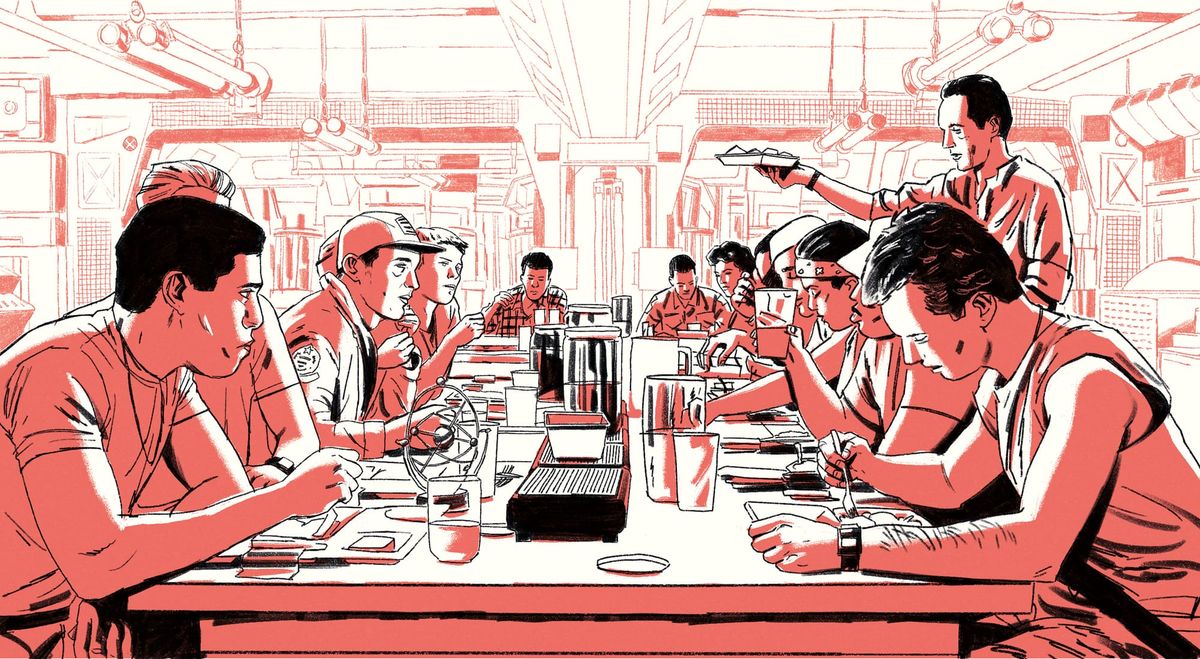
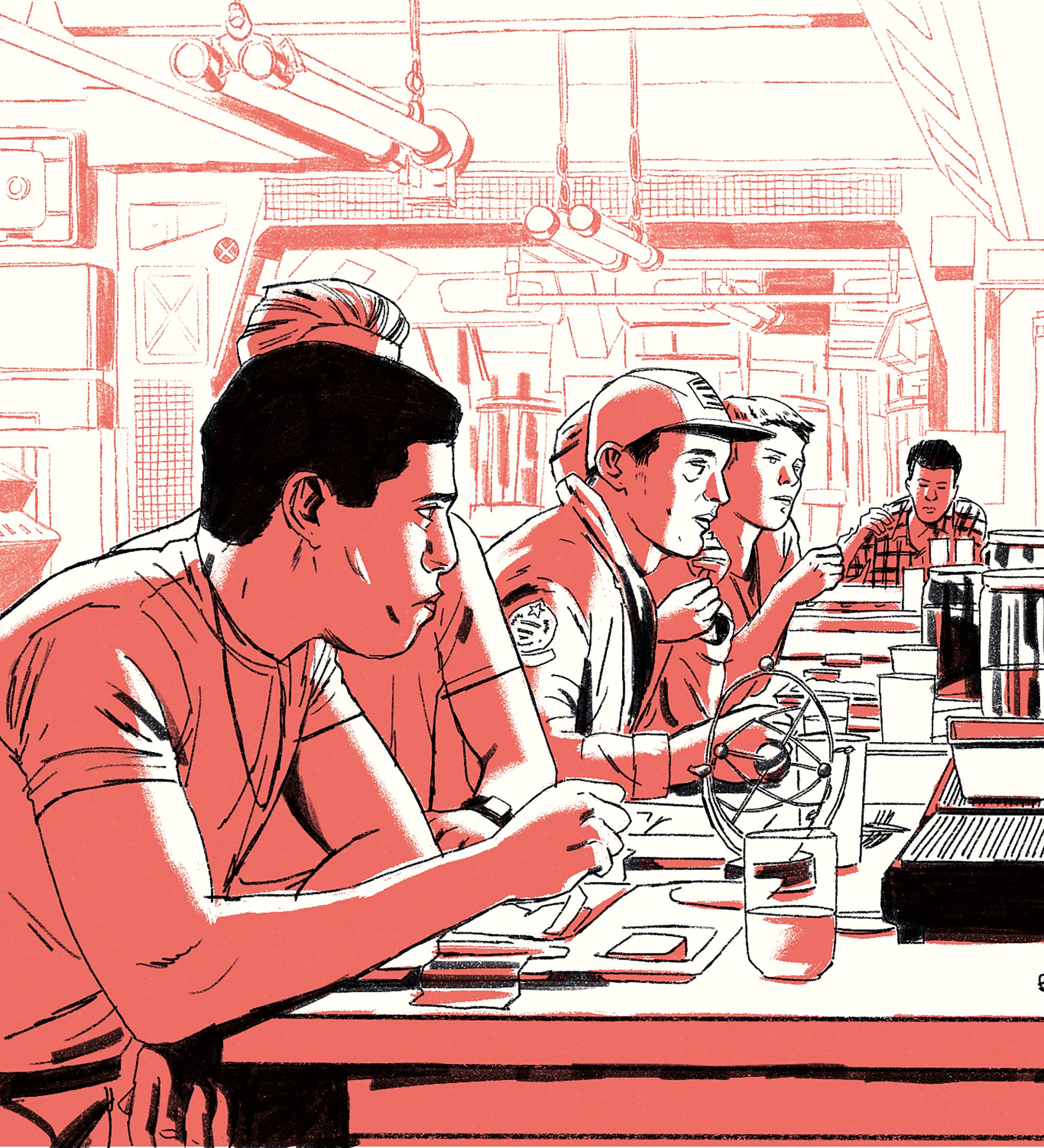
Aliens is a bombastic, loud, obnoxious war film in contrast to Ridley Scott's quiet, psycho-sexual haunted house original. For a lot of people, that make Aliens something of a fatuous follow-up. Entertaining, but dumb. I don't think anything can really hold a candle to Alien. It's a perfect movie. But I think people sometimes overlook Cameron's working class continuity with Alien. He switches the blue-collar focus from space truckers to space marines. Not just any marines though: Colonial Marines.
"We still speak of the British conquering India. In reality, the conquest of the Indian subcontinent between 1756 and 1803 was the work not of a nation-state but of a private company, the East India Company. Headquartered in a small office in London, it was answerable to nobody but its shareholders." - William Dalrymple
This is a history of Britain that was never really taught in schools when I grew up. If we learned anything, it was that Britain had an Empire and lost it in the wake of WW2, but the fact that a lot of that colonisation happened at the behest of one company - The Company - was something I only really came to understand much later.
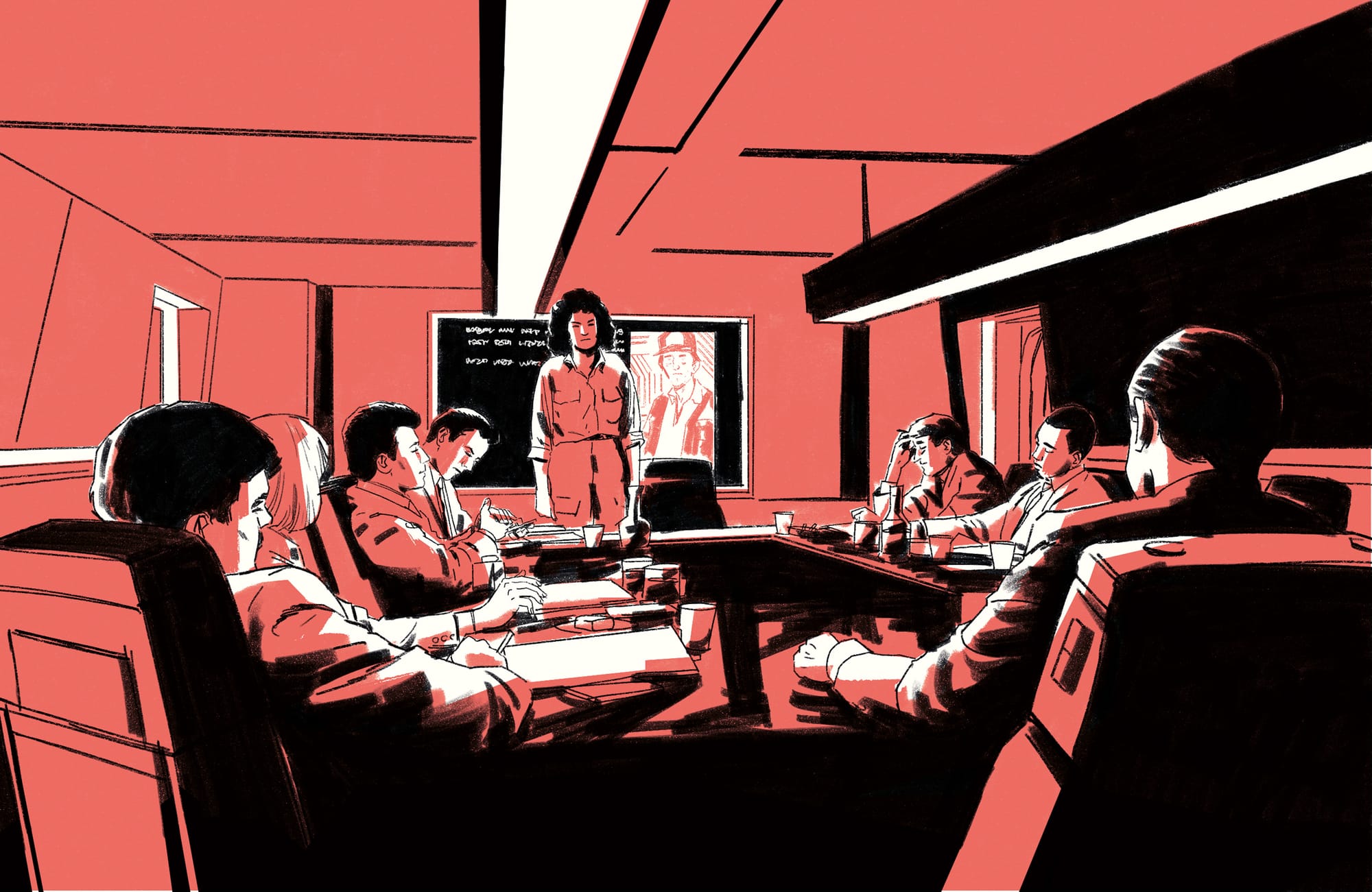
"What was completely new about the East India Company (EIC) in the 1750s was they militarised at an unprecedented level, starting off with a few thousand sepoys, growing to 20, then a 100, then 199. So by the 1820s, the EIC had 260,000. The crucial moment to me is 1799, which is when the Company’s army becomes double the size of the British Army." - William Dalrymple
A colonial army working as a private security force, protecting the assets of a multinational company? Sounds familiar. The study of history is there to help us understand our past, our present and warn of a possible future. So is good science-fiction. Thanks to Aliens, I learned about the East India Company before I knew about the East India Company. They were just called Weyland-Yutani. Sometimes known as The Company.
Of course, this may not have been Cameron's intention. He was principally interested in pivoting the genre of "Alien 2" from haunted house to a war film (that nonetheless kept one foot in the horror genre), and in doing so, reflecting America's own diminished hubris in the wake of Vietnam. It is much more, on it's surface, an exploration of a corporate-led, imperial, Pax Americana licking it's wounds than it was about the British Empire. But I think extrapolating a vision of Reagan's deregulated corporate America into the future inevitably creates a sci-fi version of the EIC. Certainly that feels like what Dan O'Bannon, Ridley Scott, production designer Michael Seymour, and concept artists like Syd Mead and Ron Cobb were aiming at in the first film.
That's what I love about Alien. All of these voices and their different conceptions of capitalism, labour, and history, are part of it's DNA. As long as an Alien film is even moderately faithful to it's origins, it will always be an anti-capitalist, anti-imperial, pro-worker text in it's bones.
"A commercial company enslaved a nation comprising two hundred million." - Leo Tolstoy on the East India Company
Looking around at the world in 2026, Aliens couldn't feel more relevant to me. If corporations got better at hiding that they were more powerful than nation-states, they have stopped hiding that fact. Big Tech companies are not only attempting to colonise our attention, our art, and our ability to think for ourselves, they are also literally colonising the physical world. Either via hyperscale data centres, lobbying for more extractive, environmentally destructive energy consumption, or with the mining of materials that are going to be crucial in AI chip production.
"Several features mark AI as an imperial technology rather than a merely commercial one. First is the return of scarcity that it enables. An empire is, at its heart, a system for controlling finite strategic resources: able-bodied humans, arable land, grain, metals, and minerals [...] The moment a technology’s frontier comes to depend on vast quantities of scarce inputs, its production becomes a matter of geopolitics." - Niall Ferguson, Lisa Klaasson and Eric Schmidt
Musk and Bezos are already talking about colonising space. Mining it, building data centres there, and even backing up humanity:
“We want to make sure there’s enough of a seed of human civilisation somewhere else to bring it back and shorten the length of the dark ages.” - Elon Musk
Have any of these bellends thought about using their untold wealth to make life better on Earth? Of course not. They lack the media literacy, intelligence, and fundamental humanity to understand that films like Alien and Aliens are cautionary tales. If Musk wasn't so attached to the letter X - I could absolutely see him, with no trace of irony, renaming SpaceX as Weyland-Yutani for the lols.
"The great corporation-states of the European imperial era - the Dutch and British East India Companies - minted their own coins, fielded private armies, levied taxes, and bargained with kings as equals. They drove imperial domination by creating trade monopolies, defending them with military force, and ruthlessly exploiting the periphery." - Niall Ferguson, Lisa Klaasson and Eric Schmidt
"True, today’s tech giants don’t have standing armies, nor have they conquered territory. Nevertheless, like the East India Company, they are increasingly integrated with their country’s military and have swayed events on the battlefield, particularly in Ukraine." - William Dalrymple
For his part, Musk is now restricting the use of his government-subsidised space satellite system Starlink, to Ukraine. For days afterwards it was unclear as to whether the US Government had asked him to do that or if he did it unilaterally.

In Aliens, there's little mention of nation-states back on Earth. But the Colonial Marines are, within the text of the film at least, referred to as US Colonial Marines. Suggesting that they are the army of the United States government, loaned out to mega-corporation Weyland-Yutani. Much like the British army would be used by the EIC. Perhaps that's why The Company is so intent on harnessing the xenomorphs - their own private army that doesn't ask for a pay check or report to a nation-state.
What led these marines to enlist? Were there other options available to them in this future of corporate controlled mining colonies? Are you either paid to extract resources or paid to protect them? Is there art or culture in this future? Welfare? There's certainly no glimpses of that in the films. Does one have to enlist in order to get the right to vote? Part of the terror of the original Alien is the crew's incredibly pragmatic response to finding themselves suddenly trapped in a horror film: Will I get overtime for this?
When I was in London recently, one of the things I noticed on the tube was that the carriage was full of two different types of ad. One was for private healthcare. The other was army recruitment. Wealth inequality in a nutshell. Is this where all that increase in defence spending is going? If all the other jobs are getting stolen by AI, is our future destined to be bodies sacrificed on the altar of Resource Wars? The most recent UK budget was announced this Wednesday. In it, Chancellor John Healey promised to increase defence spending to 3% of GDP without raising taxes or suggesting a wealth tax. So that money will have to come from us. In the days since, the media appear to be criticising the government over not spending even more on defence and not making additional cuts to welfare. I feel like I'm going crazy.
When watching the empty braggadocio of Hudson, or the pernicious incompetence of Gorman, one can't help but wonder - what if these men had vocational options other than enlisting in the marines?
"States can master corporations. The taming of the mighty East India Company proves it. Because of the power of the company’s corporate lobby, the British Parliament took 85 years, three parliamentary interventions, a famine, a bankruptcy and the bloodiest colonial uprising of the century to get it back under control, and by then, the damage in India was done.
The instruments still exist. What is lacking is the political nerve to use them." - William Dalrymple
"We live in capitalism. Its power seems inescapable. So did the divine right of kings. Any human power can be resisted and changed by human beings. Resistance and change often begin in art, and very often in our art, the art of words." - Ursula K. Le Guin
Order of Service
- Alien (1979)
Of course. - Aliens (1986)
See: this post. - Alien 3 (1992)
I always loved the sound of the original premise. Monks eschewing technology on a wooden planet where Ripley and a xenomorph crash-land. Using Alien to explore one more complicated aspect of modern America: religion. The backup option - a prison planet that puts America's obsession with mass incarceration under the microscope - wasn't a bad one. But studio interference and a messy development process leaves the film feeling messy and unsatisfying. Fincher does his best and the film looks good. But even the "assembly cut" (that Fincher hasn't approved - he refuses to have anything to do with the film) can't save it. Despite all this, there's something so nasty, so bleak, so inherently Alien and anti-studio about this film, that you've got to kind of admire it. Imagine a film that has this much studio interference ending a trilogy with: "Everyone who you've been rooting for dies." - Prometheus (2012)
I've tried to see the masterpiece that others have started to see in this. I think mostly people have over-corrected because it got monstered on release. It's beautifully shot and has big, smart, stupid ideas. It's capital G Gothic. That alien abortion scene is legitimately brilliant. But I don't think it coalesces into a coherent film. I don't care about scientists acting dumb - that was a silly criticism at the time - but I do care about character actions feeling consistent and motivated and not at the behest of plot. But again, this much studio money being used to say: God exists and he HATES you is very funny. - Alien: Covenant (2017)
Flawed in ways that are similar to Prometheus, but then feels obliged to be an Alien film at the end where it doesn't have anything new to add. But the rest of the film is this delightful Haunted Gothic Castle Frankenstein stuff. A really dark ending. I could easily swap Prometheus and Covenant around on this ranking. They both have interesting ideas and don't completely work, but I appreciate the desire to do something new with the IP. Both films' biggest mistake? Forgetting to centre the working class in space. - Alien Resurrection (1997)
Jean-Pierre Jeunet and Joss Whedon go together like acid blood and the hull of a spaceship. The newborn is bad. - Alien: Romulus (2024)
Look, in many ways this should rightfully be number three or four on this list. It's well shot, got some great set pieces (anti-gravity acid and the Don't Breathe style facehugger sequence), features a superb cast, has a lot of slimy practical effects, and centres working class protagonists - space miners (who are also minors thanks to their parents all dying due to unsafe working conditions). But there's an idiosyncrasy to the Alien films (even at their worst) that feels lost. The corners sanded off. It felt safe and like the untameable DNA of Alien had finally had a leash put around it. All the influences are other Alien films. It's full of Fan Service, mirrored shots from previous films, and deepfake recreations of beloved actors. It feels like the disneyfication of Alien. A repeatable, reliable cash cow. I can't lie, I had a good time for the most part - but I don't like what it represents. I've written more about this here.
Exhumed Contents
- Happy Halloween! That's me all done. I'll be travelling over the next couple of days but will hopefully have a postscript piece ready for Weds/Thurs. For now: thank you so much for reading along, getting in touch, and sharing these. It really means a lot. If you've enjoyed having Grave Offerings to read this month, you can buy me a coffee to say thank you, but I know times are tough so just telling a friend about it/sharing on social media would be thanks enough!
- Here's me around age 9 opening the best Christmas present of all time, a scale model of the USS Sulaco's Drop Ship:


- I find this letters page of Starlog, where James Cameron nerdily responds to the nerdiest criticisms of his film deeply endearing.
- The James Cameron Blank Check mini-series is great. The Aliens episode is a fun one as you might imagine.
- The Anarchy: The Relentless Rise of the East India Company by William Dalrymple is excellent. I'm only a few chapters in as I take ages reading non-fiction, but I recommend what I've read so far.
- Dalrymple and Anita Anand host a podcast about Empires through history which I need to dig into myself. There's a 26 episode mini-series on the East India Company, seven episodes on the Empire of Scotland and two on the "Empire of Art" which all sound worth digging into.
- Empire of AI by Karen Hao and Kate Crawford's Atlas of AI are both important reads.
- If you're looking for some current Alien content, friend of the newsletter Kieron Gillen is writing Alien vs. X-Men which should be on the shelves in your local comic store!
- RIP Patrick Stewart. The first horror film I wrote about on this newsletter was Green Room (which he delivers a great, chilling performance in) but obviously I'll most remember him barking orders on the bridge of the Enterprise. More Perfect Union shared a nice compilation of clips of him being a vocal, forthright socialist.