Mike Drop
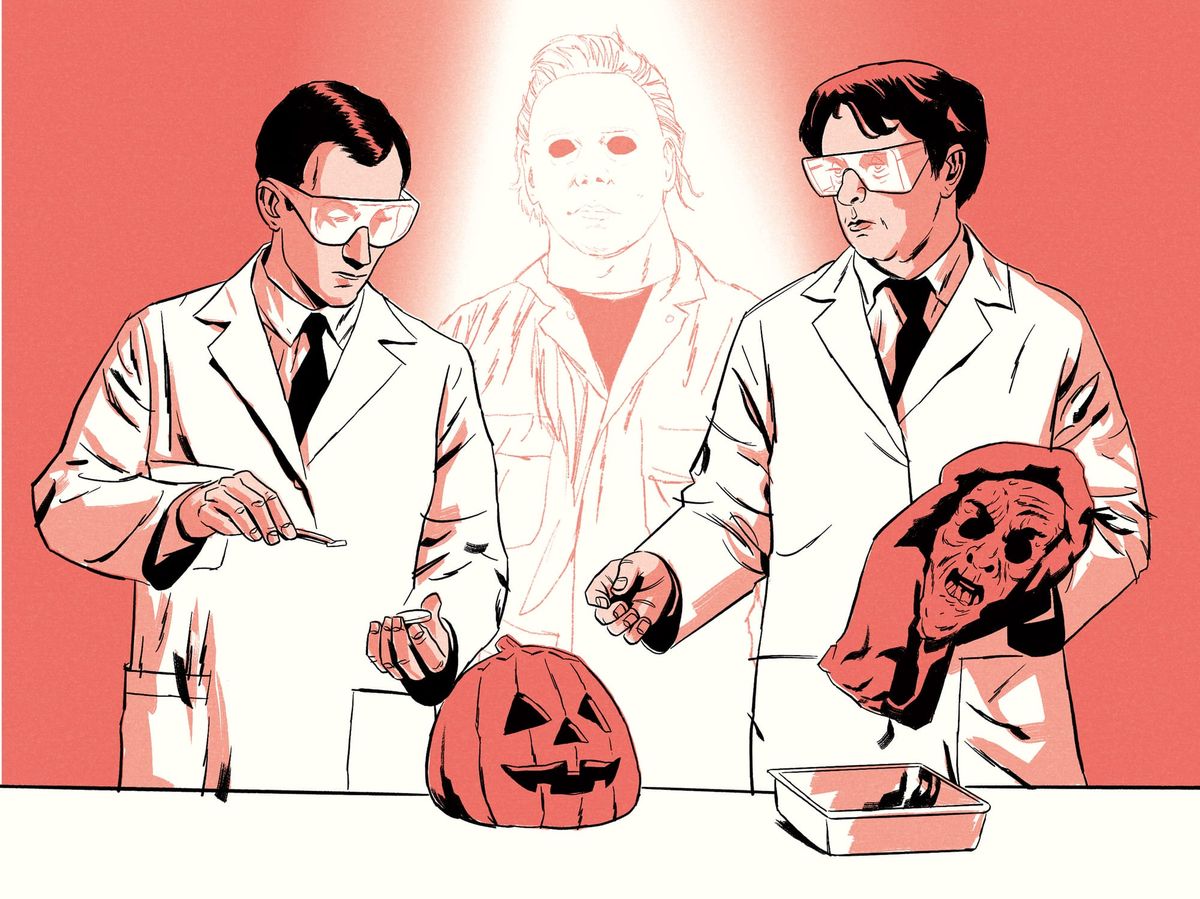
On Michael Myers, Samhain, and Season of the Witch
This is part of a series of essays about my favourite horror sequels. Read the introduction here, and the full archive here. Subscribe for free to have it delivered to your inbox every other day in October. If you're enjoying it, you can show your appreciation by buying me a coffee or sharing it with friends.
Spoilers: I try my best not to spoil the films I discuss, but if spoilers ruin your viewing experience, it might be safer to watch the films before reading.
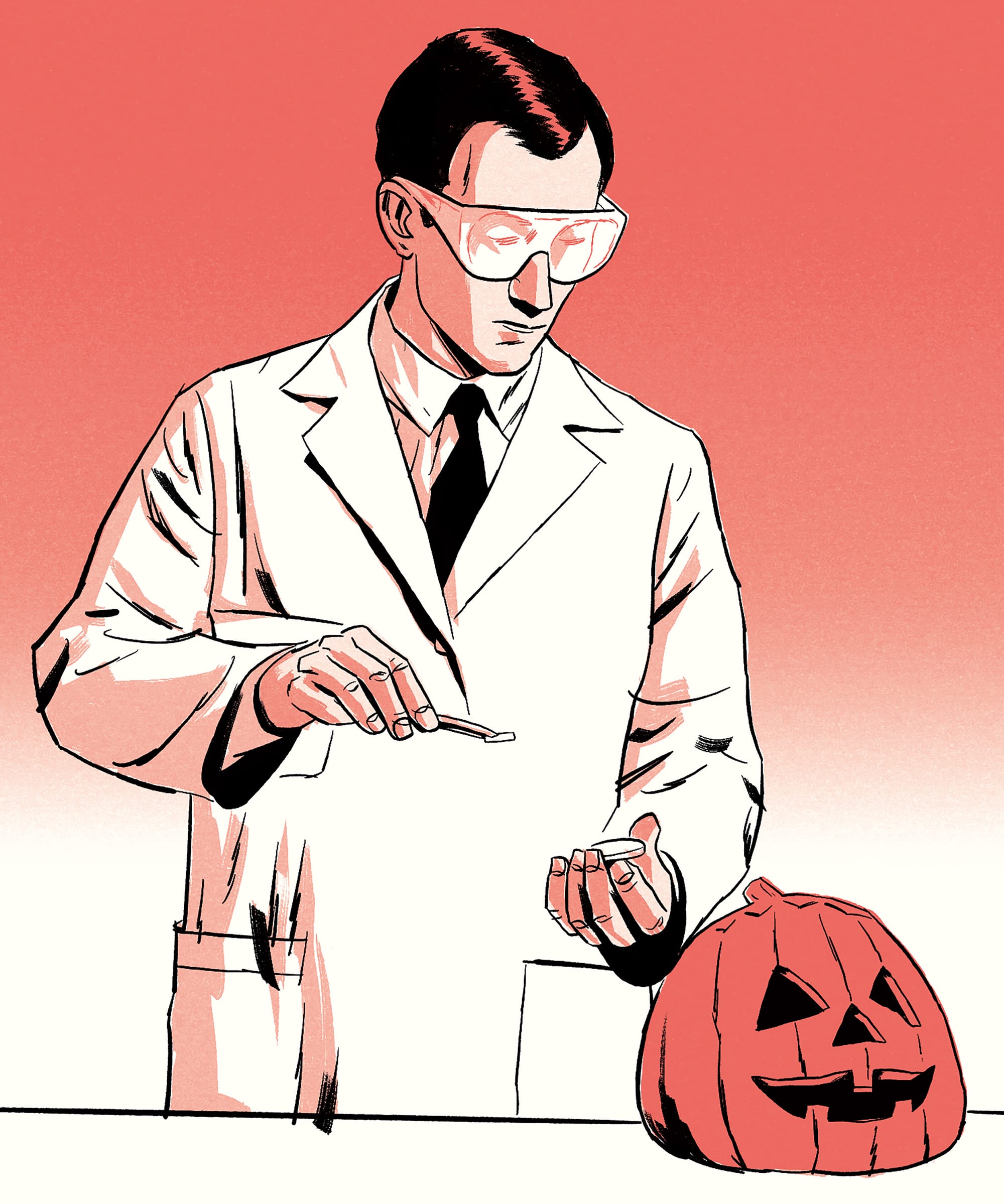
Halloween III: Season of the Witch (1982) Dir. Tommy Lee Wallace
Plot Summary: When a toy shop owner is killed in his hospital bed, his daughter and doctor investigate the murder and in doing so, uncover a terrifying conspiracy.
"The Halloween movie I love the most is the one I made back in 1978, the one I directed. Others are other people’s visions. That’s the way it goes. That’s what happens when you give up. I didn’t want to direct sequels. I didn’t think there was story left. Boy, was I wrong, huh?" - John Carpenter
Who, or what, is Michael Myers? For Debra Hill and John Carpenter, the writers of the original Halloween, he was a combination of various inspirations: Part masked giallo killer, part embodiment of The Babysitter and The Man Upstairs legend, part Ed Gein, part Zodiac killer, and part Yul Brynner in Westworld. His name? He's named after an English film distributor who got Carpenter's Assault on Precinct 13 into the London Film Festival.
"That's where my reputation kind of began, so I felt I owed him. So that was my tribute to him, he was this dearest, dearest man." - John Carpenter
He's a man in a mechanic's overalls and a modified Captain Kirk mask. He's rich America's fear of the working class. He's The Shape; a supernatural force, the embodiment of pure evil. He's Laurie Strode's brother out to kill every member of his family. He's a killer controlled by an evil cult. He's the inevitability of death. He's a sexual deviant. He's a kid who was bullied at school. He's the fears of a quiet, small-town community made manifest. He's a metaphor for what Trump does to America. He's the Boogeyman. He's everywhere and nowhere. He's in your house right now.
Personally? I think he's pretty boring.
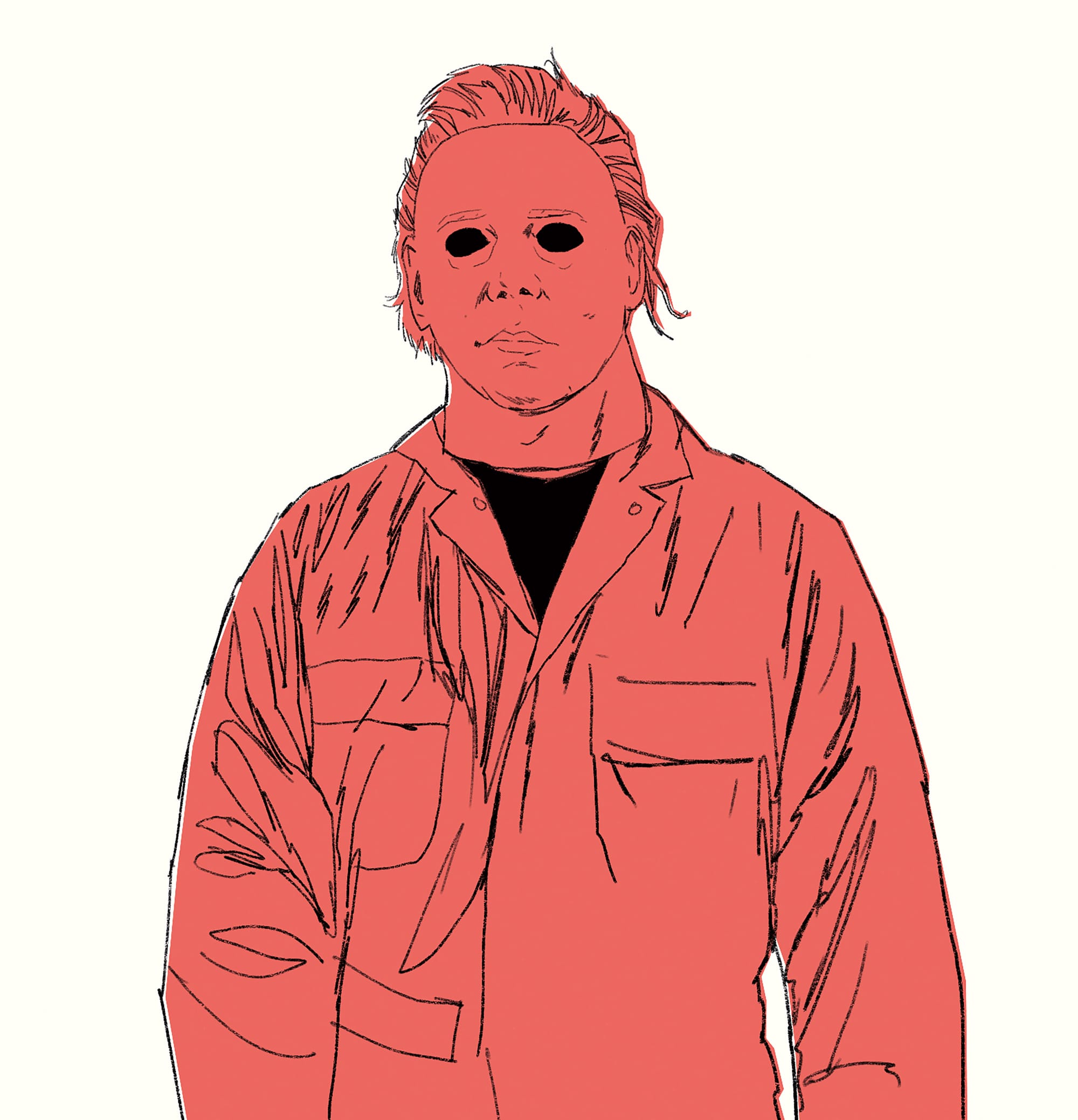
He's been in TWELVE Halloween films now, and each iteration, each sequel, reboot and requel has desperately tried to find compelling ways to continue his story. A story that isn't a story. He's a silent, unstoppable killing machine. Where do you go with that? How do you find something new to say with Michael Myers? God knows people keep trying. And audiences keep coming back to see the results.
Who is Michael Myers? To producers, he's a reason to print money.
Debra Hill and John Carpenter wanted nothing to do with any sequels. They were already developing The Fog for Embassy Pictures. But Halloween producer Irwin Yablans believed he had been promised the rights to that film, so he sued. The settlement led to Embassy keeping The Fog while Hill and Carpenter were obliged to help produce a sequel to Halloween for Yablans. Under metaphorical gunpoint, they wrote a screenplay for Halloween 2 and ended it by killing Myers and Donald Pleasance's Dr. Loomis. Carpenter refused to direct it ("I had made that film once and I really didn't want to do it again.") Art Director and editor of the first film, Tommy Lee Wallace was lined up to direct, but walked away when he read the script.
"I hated the script. The arms race of violence in horror movies had just gone insane in the years since the first Halloween. I think John felt he needed to compete in that marketplace if he was going to do it at all, which is the exact opposite of the original." - Tommy Lee Wallace
Wallace had an outline for a sequel that would join Jamie Lee Curtis' Laurie Strode five years later at college. A secure, gated campus not dissimilar to the set-up of Halloween H20. Instead, Rick Rosenthal stepped into the director's chair for a story that took place in the immediate aftermath of the first film. Rosenthal made an admirable stab at an imitation of Carpenter's style, seeing the film as a continuation of the first. Carpenter, fuelled by beer and at a loss for where to go with the story, added what he later described as a "silly" and "foolish" twist: that Laurie was, in fact, Michael Myers' sister. It's an understandable narrative alley to go down to explain Myers' Terminator-esque obsession with Laurie, but a blind one, and one that has haunted the franchise ever since.
I don't know if my expectations have just been lowered by the majority of cynical horror sequels in the intervening years, but I think there's a lot to like about Halloween 2. It's no masterpiece like the original, but there's great stuff in there about the traumatic effects of Myers on the Haddonfield community, and a lean, stripped down efficiency to it all taking place in the hospital. Has anyone done a siege horror in an Emergency Room? The Pitt + horror? I'd watch that.
Interestingly, despite Carpenter's reticence to do a sequel to Halloween, Bob Clark, writer and director of the seminal Black Christmas, suggests it is itself sort of an unofficial sequel:
"[Carpenter] asked me if I was ever gonna do a sequel and I said no. I was through with horror, I didn't come into the business to do just horror. He said, 'Well what would you do if you did do a sequel?' I said it would be the next year and the guy would have actually been caught, escape from a mental institution, go back to the house and they would start all over again. And I would call it Halloween." - Bob Clark
Halloween 2 was a success in the box office. Hill and Carpenter's legal obligations had been fulfilled. But Yablans wanted more. Debra Hill said she fainted when a third Halloween was suggested to them. She and Carpenter agreed to help shepherd a third film on the proviso that Michael Myers wasn't involved. Their idea was that Halloween could become an anthology of unconnected horror stories that take place on the night of Halloween. Horror films that would be about, or relate to, the night of All Hallows' Eve, but could be completely unrelated to each other. Carpenter saw it both as a tidy payday (he's always been refreshingly honest about the financial motivations of some of his decisions) and a way of helping new filmmakers:
“I let my producer’s side come out when they offered me the sequels. They offered a nice sum of money. I also had a lot of hope for giving new directors a chance to make films, as I have been given a chance with low-budget films.” - John Carpenter
Freed from the unkillable grip of Michael Myers, Hill and Carpenter set to work creating something entirely, refreshingly, new for Halloween 3. On the advice of Joe Dante, they hired British sci-fi writer, Nigel Kneale - known for his work on The Stone Tapes and the hugely influential Quatermass series - to write it. Carpenter was a huge fan of Kneale. His film Prince of Darkness was something of a tribute to the writer's work. Kneale later responded: "With a homage like this, one might say, who needs insults?"
Joe Dante, was lined up to direct but he dropped out when Spielberg and John Landis offered him a segment in the cursed Twilight Zone Movie. Hill approached Tommy Lee Wallace again and this time, with Myers out of the picture, he said yes.
"As I was preparing to respond with an emphatic no, she hastened to point out that it would have nothing to do with the first two. It was a no brainer. I said I would do it." - Tommy Lee Wallace
Halloween 3 is far from a perfect film. Honestly, if you've not seen it, prepare yourself for a wild viewing experience - with robots, witchcraft and all sorts of character and structural non-sequiturs. But it's a brave creative swing and one that, had it been successful, could have changed the calculus of horror franchise thinking in Hollywood. I want to have seen a Halloween franchise that was just original stories made by fresh new horror talent. A brand name and IP put to good use, rather than wheeling a geriatric Michael Myers out for one more tired killing spree.
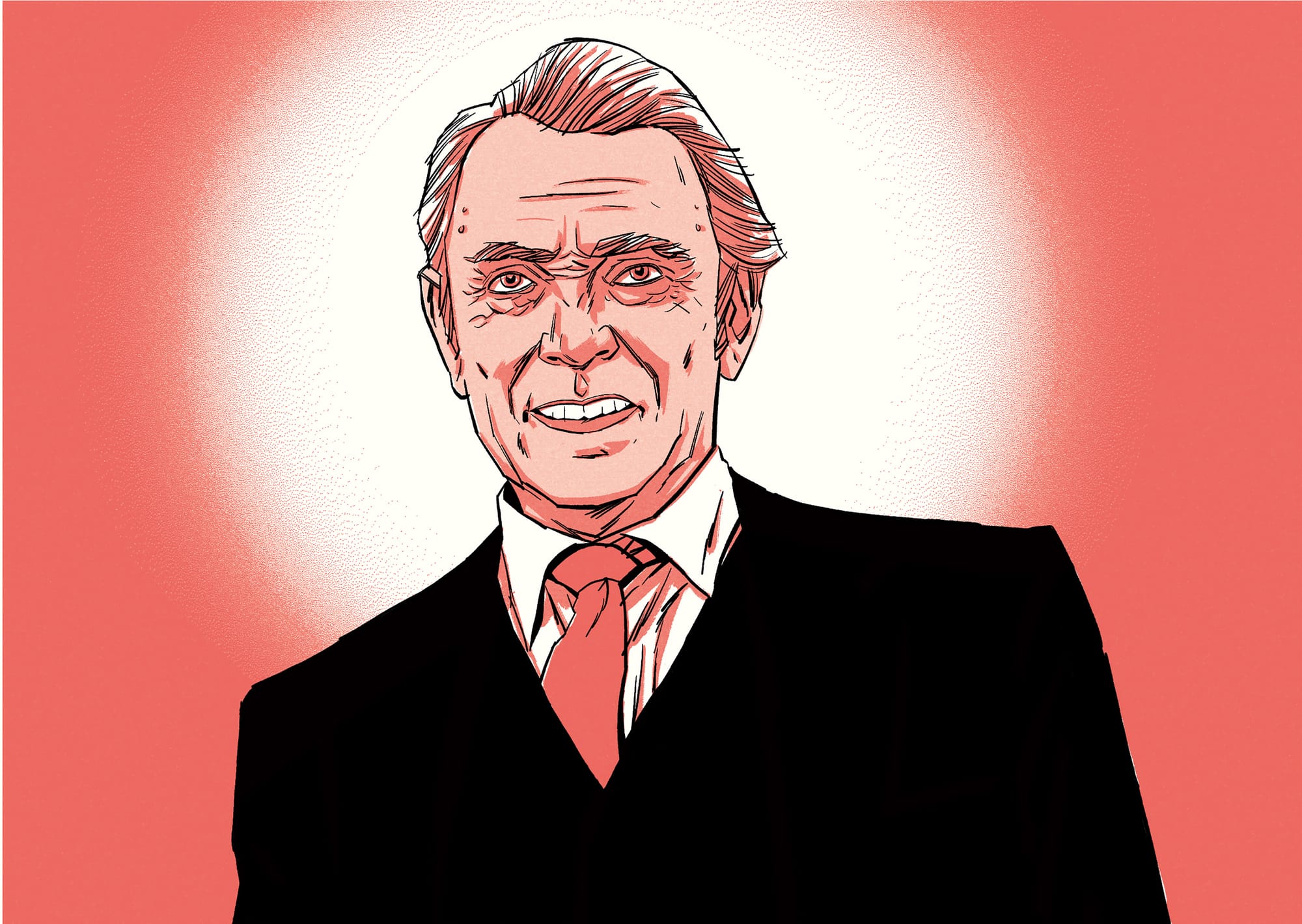
Halloween III: Season of the Witch is at it's heart, like a lot of Nigel Kneale's work, about the confluence of technology and magic. Partly a folk horror in the vein of The Wicker Man, and partly a sci-fi techno-thriller. You can read the main antagonist, Conal Cochran, and his dastardly plan to sacrifice the youth of America to the Old Gods as a critique of unrestrained capitalism. Or the consumerist appropriation of Samhain (carve a turnip, you cowards). Or a treatise on the unsustainability of corporate growth. Or even as a kind of Celtic revenge fantasy. There's also the theme of TV Bad, of modern advertising literally melting our brains and killing us, which hits different these days as **stops writing to check phone, spends the next half hour watching reels on Instagram** Sorry, what was I saying?
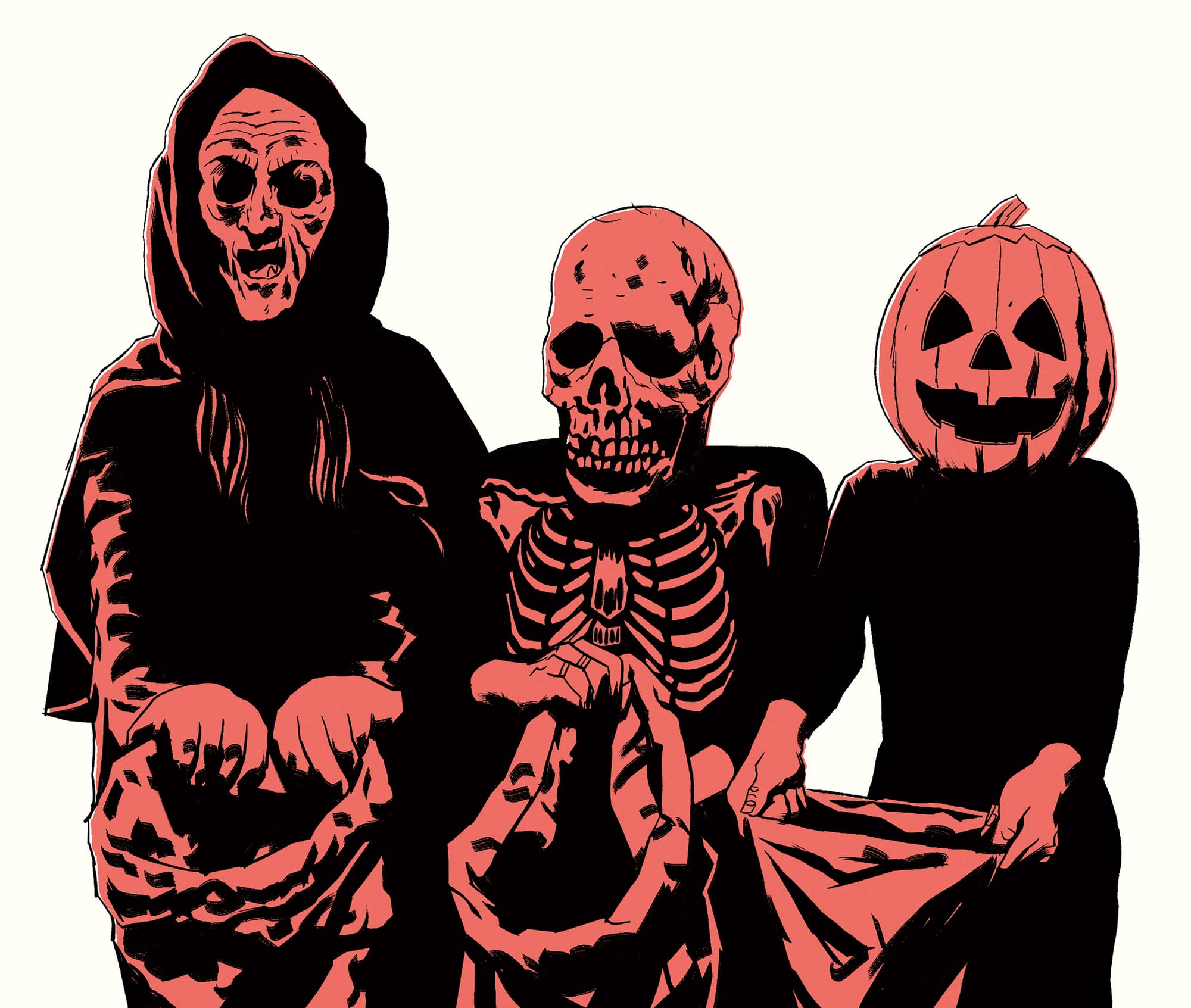
In the world of Halloween 3, as with Return of the Living Dead, the first film exists - so we still get to enjoy clips of it accompanied by Carpenter's iconic synths. But we're also treated to a new score for the film by Carpenter and Alan Howarth. It's arguably one of Carpenter's best and that's from a packed career of stone-cold classics. Halloween 3's music, specifically, was cited by Adam Wingard as a key influence on the sound of The Guest which similarly uses playful musical stabs to startle you. Audio Lewton Buses. Eagle eyed viewers will also spot the familiar Jack O'Lantern, Witch, and Skull masks from Season of the Witch pop up in the background of scenes in The Guest and in David Gordon Green's Halloween requel trilogy.
[On the subject of music: Fair warning if you're susceptible to an earworm - the TV jingle that repurposes London Bridge is Falling Down will never leave you.]
I think there's an argument to be made that there's a xenophobia towards the Irish contained in the film. According to Wallace, Kneale's original script played this up much more and they had to tone it down:
"His biographer told me he suspected Kneale was attempting satire but, if so, I don’t think he did it skillfully enough. It just felt like he was coming down on the Irish in a kind of insulting way." - Tommy Lee Wallace
Other changes were made, increasing the gore, and generally Americanising the dialogue. Eventually, weary from an unsatisfying time in Hollywood, Kneale asked for his name to be removed from the credits entirely.
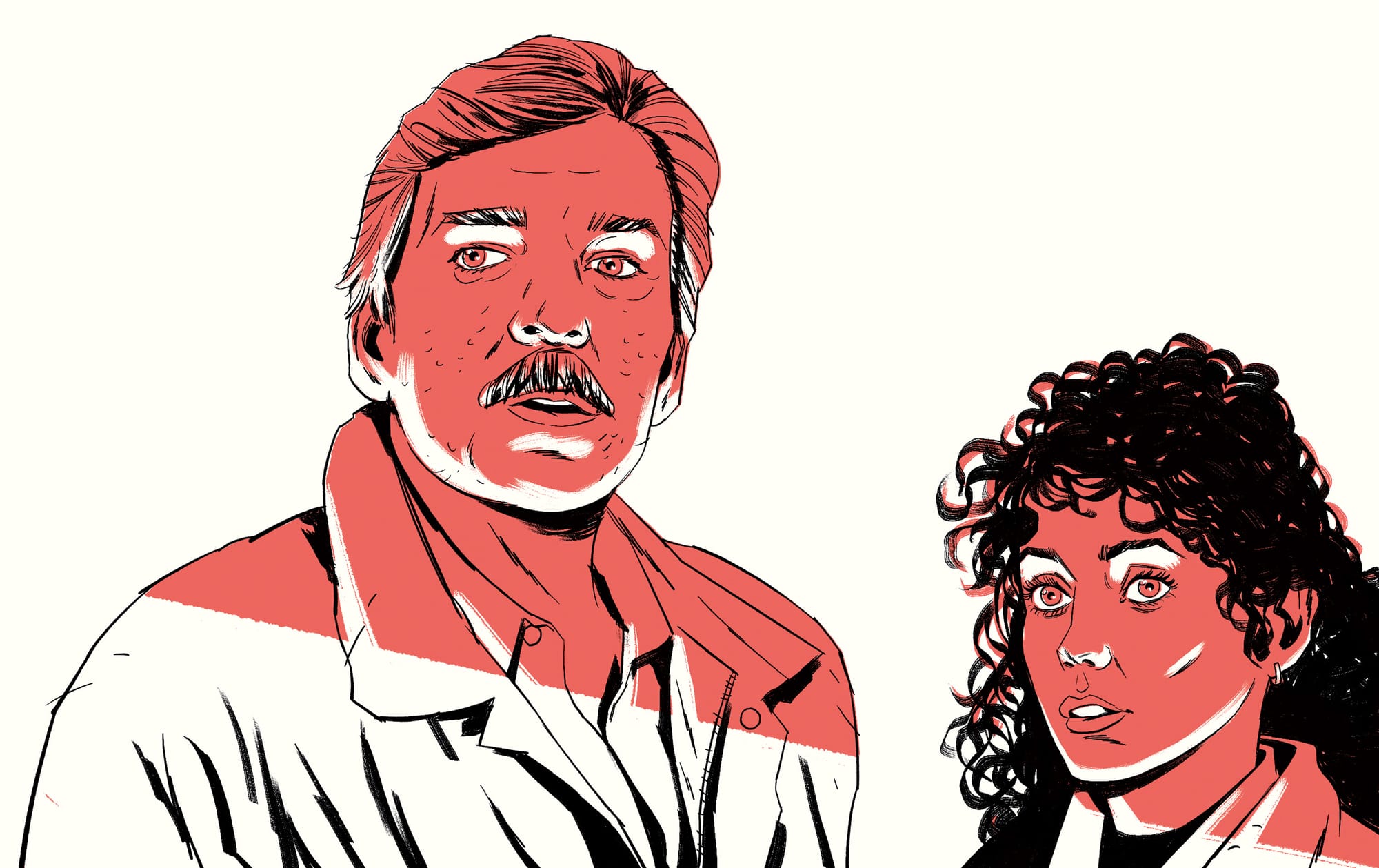
Horror stalwart Tom Atkins (The Fog, Night of the Creeps) played the lead role as Doctor Challis. A womaniser, hard drinker, and dead-beat dad who spends the runtime of the film investigating the nefarious plot of Conal Cochran mainly to avoid staying at home and looking after his children.
"He’s a real human being on screen. He’s also kind of a shit who turns his back on his family responsibilities, seems a bit lax at work and is probably an alcoholic. Yet he’s also likeable. Only an actor like Atkins could pull that off." - Tommy Lee Wallace
He was joined by Stacey Nelkin and Dan O'Herlihy. It's a great cast and the film looks excellent. Shot by legendary cinematographer Dean Cundey who photographed the original Halloween, The Thing, Jurassic Park, and many more classics. There are some images in the film that feel immediately iconic when you see them.
More than anything, the film is interesting. Full of ideas, wild visuals, and a text that be read and interpreted in a multitude of ways. It feels like nothing else from that era and is it's refreshing to see what Debra Hill would call a "pod" horror (owing more to Invasion of the Body Snatchers than the original Halloween) in an era more commonly known for "knife" horror.
It also has a bracingly dark ending. One that the studio wanted to change, but Carpenter backed Wallace and said it was up to him. Wallace held his ground.
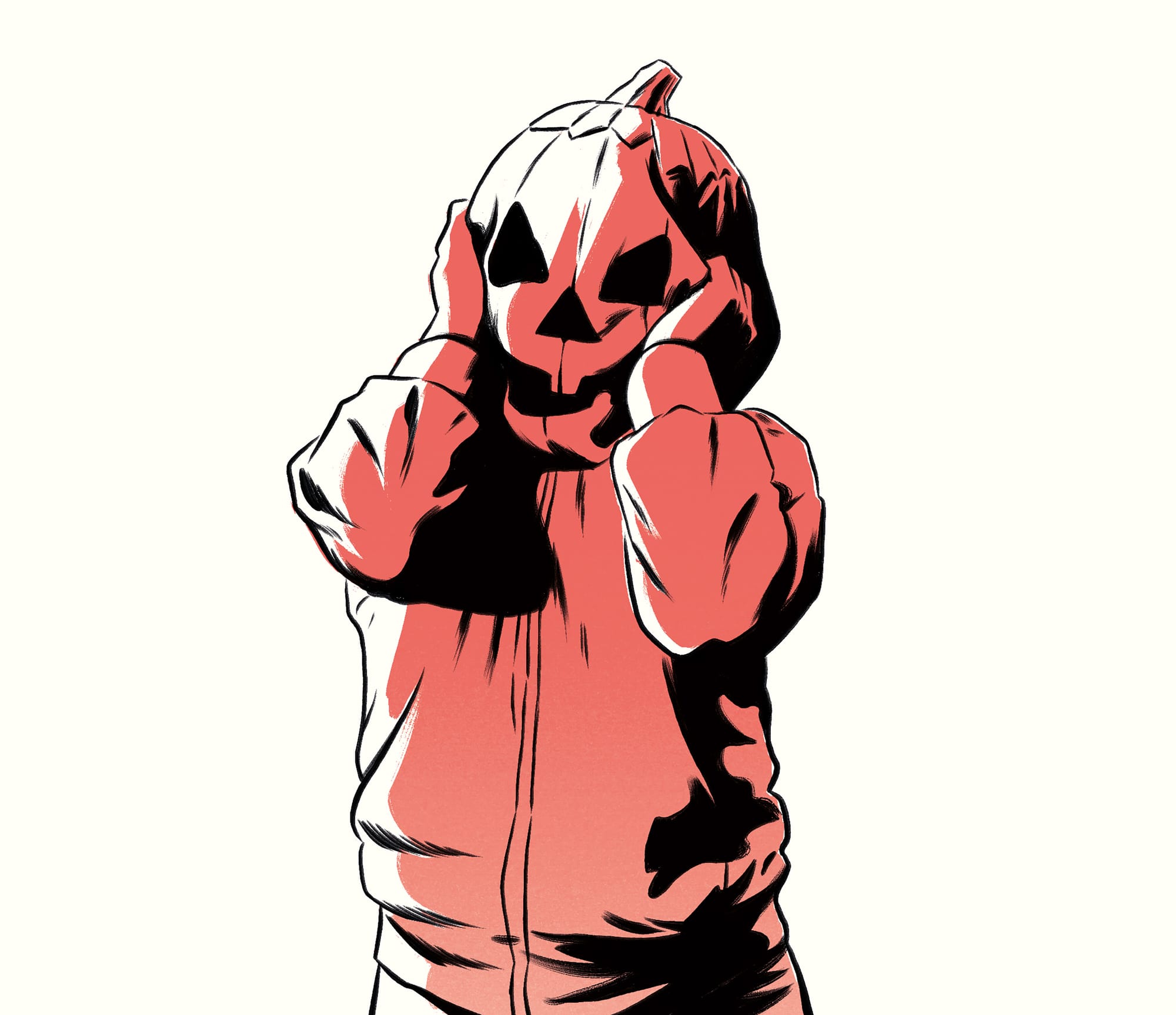
"I thought, stupidly - this shows you how dumb I am - I thought that we were done with telling stories about Michael Myers and the guy in the mask. I thought there’s not much more to say" - John Carpenter
"If it had been called Season of the Witch instead of Halloween 3 I think it would have been a success. People were disappointed because they were expecting to see Jamie Lee and the Shape." - Debra Hill
The film had a decent opening weekend and then swiftly bombed. It was out of cinemas by the second week. Audiences felt cheated that it didn't have any connection to the first two Halloweens. Some have argued that that reaction might not have been so strong had the second film not set a precedent, but we'll never know. It led to the studio returning to safe ground and the warm, crushing embrace of Michael Myers. No doubt, this is also the reason his name is in the next three film titles.
The series reached a natural end point with the sixth film The Curse of Michael Myers, before being rebooted, remade, and rebooted again. The franchise currently stands at thirteen films. Whichever timeline you pick, Laurie Strode either dies (twice) or watches everyone she loved die (also twice). I wish she'd been given a break.
As it is, we will just have to imagine an alternate timeline where we get an annual One Good Scare (everyone's entitled to one), set on Halloween, that incubates the next generation of horror filmmakers.
Order of Service
[In my opinion, all of the Myers-starring sequels are somewhere between fine to bad. I think other people feel differently about this franchise so this is, like them all, a very personal ranking.]
- Halloween (1978)
Of course. - Halloween III: Season of the Witch (1982)
See: this post. - Halloween II (1981)
A stripped down, almost real-time continuation of the first film. Quietly and subtly about trauma in a way future films by Rob Zombie and David Gordon Green more loudly purport to be. - Halloween 4: The Return of Michael Myers (1988)
If you overlook the cowardice of abandoning the anthology approach and ret-conning the deaths of Myers and Loomis, this is fun. A perfect fall/autumn vibes film with a deliciously cruel ending. - Halloween H20: 20 Years Later (1998)
Does everything that the 2018 David Gordon Green reboot does but less obnoxiously. I like the school setting. I like Laurie necking wine as a high-functioning trauma survivor. I like staring at Josh Hartnett's mystifying '90s hair. The film becomes a bit dull in the final act. But then, that's true for most of these sequels. - Halloween (2018)
Halloween H40. It's fine. Judy Greer innocent. - Halloween 5: The Revenge of Michael Myers (1989)
Mostly out of ideas but with a tense laundry-chute sequence and all the police are accompanied by comical pratfall music, as they should be in all films. Loomis is just screaming at a small child for most of this one which is not unenjoyable. - Halloween Kills (2021)
The idea of a town driven to murderous, hateful depths after years of unresolved trauma is sort of interesting but deeply nihilistic. Fundamentally, I believe in the wisdom of crowds and solidarity. This film seems to hold them in contempt. Always nice having more Will Patton though. - Halloween: The Curse of Michael Myers (1995)
"Starring and introducing Paul Rudd." The cult storyline completely misunderstands the power and enduring appeal of Michael Myers by trying to explain him. I liked seeing Donald Pleasance briefly have a chance to play a more measured, recovering Loomis before descending into Haddonfield and seeing his psyche shattered once again. - Halloween: Resurrection (2002)
Busta Rhymes beats up Michael Myers with his martial arts prowess and says "trick or treat motherfucker". The rest of the film is a very late '90s/2000s critique of reality TV fame. We have Scream at home. But I can't lie, I had fun with it now and again. Justice for Laurie, but fair play to Curtis for getting her pay check. - Halloween Ends (2022)
A completely confused film. It almost attempts a Halloween 3 and tries something completely different. Exploring the corrupting influence of a dark power on an impressionable young mind. A riff on another Carpenter film - Christine - but for the Trump era. But it's not brave enough to leave Myers and the Strodes out of it. The result is a poor version of both films. - Halloween 2 (2009)
This one has its defenders but to me it felt overlong, juvenile, and brutal in a very '00s horror way that I just don't vibe with. Took a lot of gratuitous nudity, absolutely punishing violence, dialogue written by a 14 year old boy (but actually a grown man in his 40s), and artless self-satisfied dream sequences to say: trauma is hard to live with. Cheers Rob. - Halloween (2007)
But at least it didn't just remake the first film and add 40 minutes at the start with Young Michael Myers being bullied at home and at school. Watching all the Halloween films has at least revealed to me that I am not a fan of Rob Zombie. Very dumb film.
Exhumed Contents
- And that's film/post number 15! Just one more left. It'll be posted, like all of these have been, in two days. On Saturday 31st: Halloween. I hope you've all got fun plans this weekend!
- I've recommended this before, but it's worth plugging The Annual Ghost Town Pumpkin Festival again. A free game to download on your computer (mac/windows/linux). Carve your own pumpkin, leave it for others to discover, and check out other people's pumpkin art. There's even an evil manor with puzzles.
- Stand Alone - a half hour documentary on the making of Halloween 3.
- You know what Halloween 3 reminds me most of? An episode of Eerie Indiana. If you, like me, grew up watching that show, I think you'll get on board with the film.
- 25 Years of Terror - a movie-length documentary on the Halloween franchise.
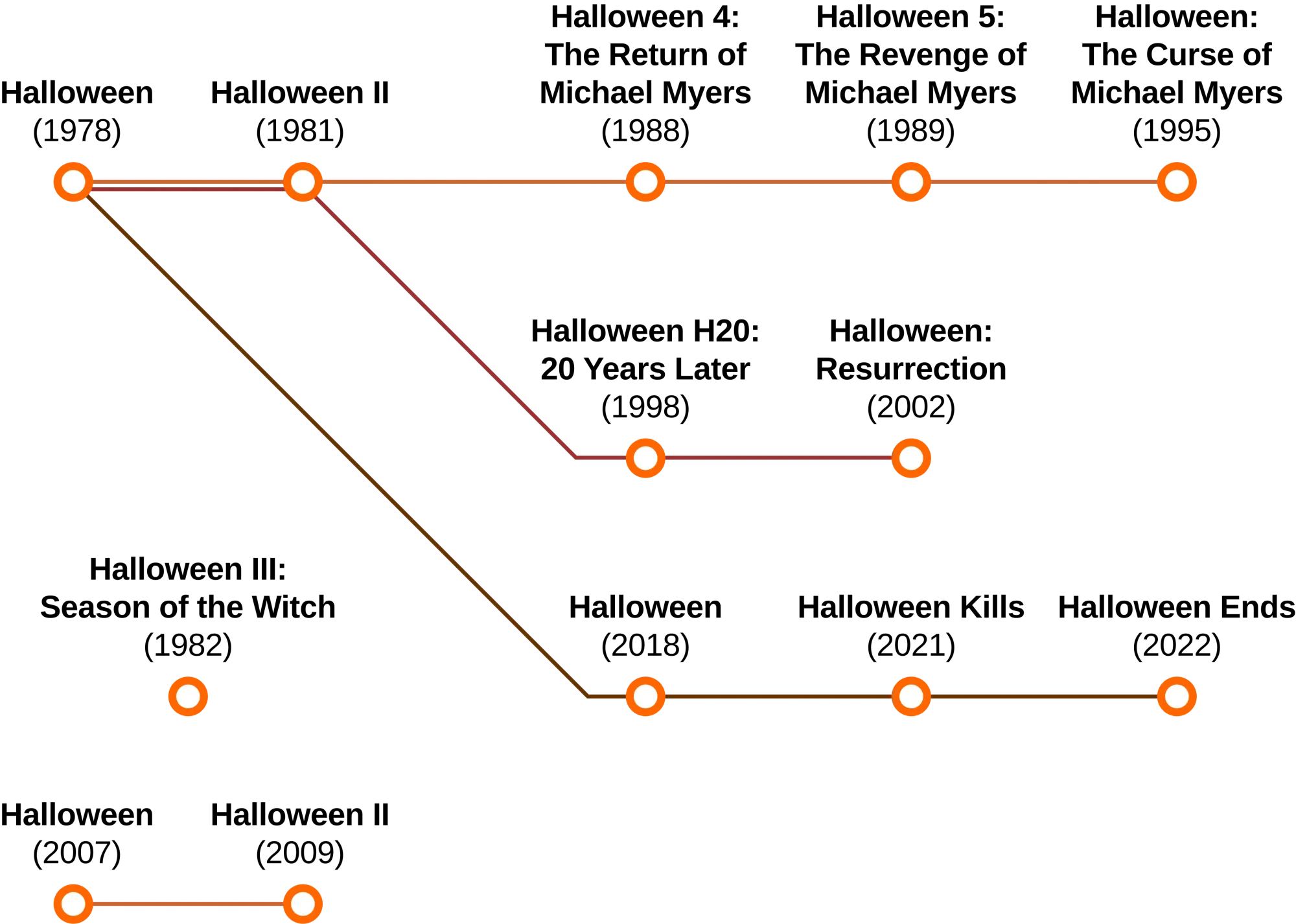
- A helpful timeline infographic for anyone who needs it (from the wikipedia page):
- An interview with Debra Hill in an old copy of Starburst magazine from, I think, 1983?
- Read about all the differences between Nigel Kneale's original script and the finished Halloween 3 here.